
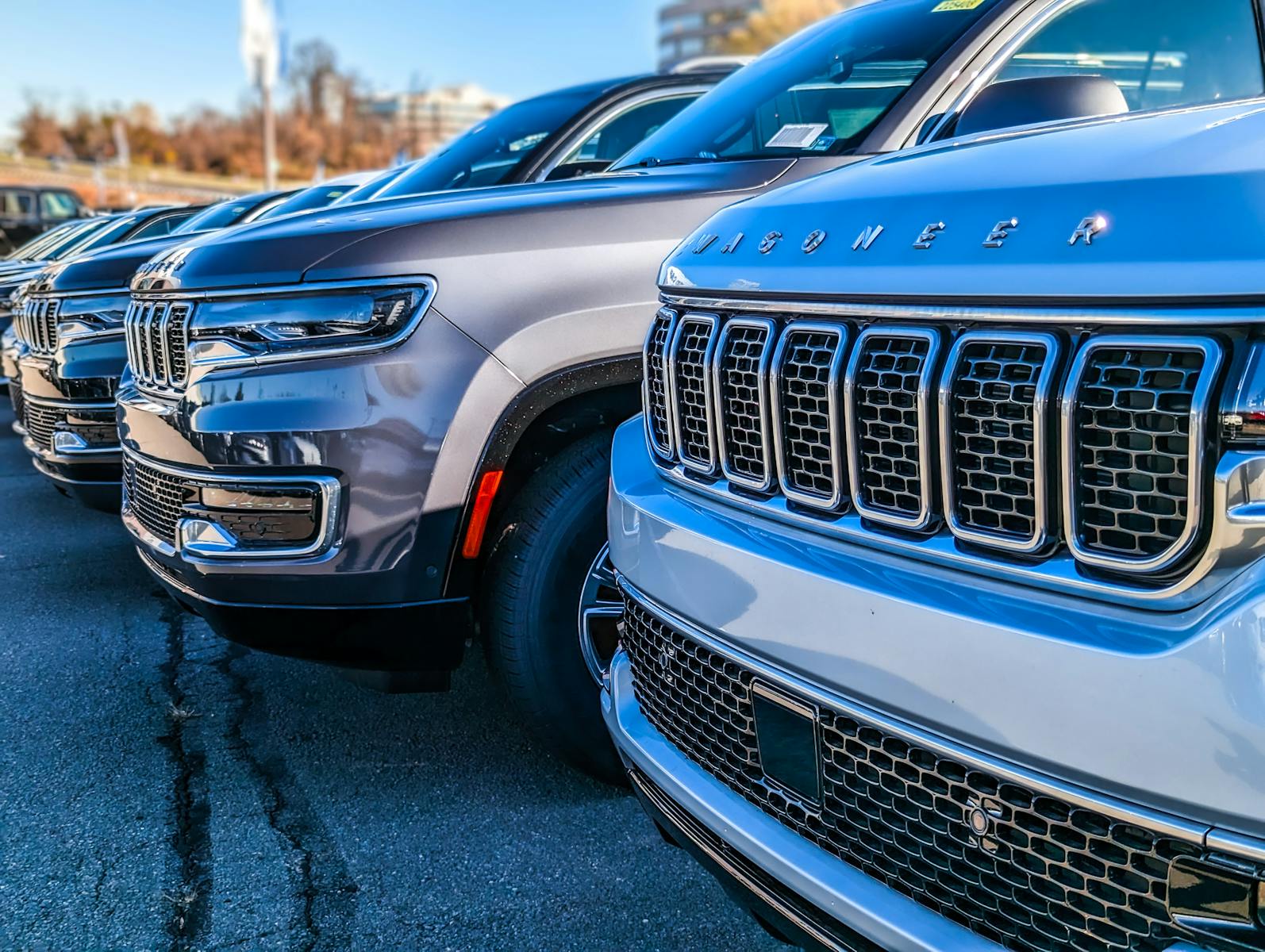

He wasn’t even looking for a “deal.” He just wanted a truck that didn’t come with a backstory. Something clean, something boring, something he could finance without feeling like he’d signed up for a scavenger hunt through other people’s mistakes.
The dealership made it easy to believe that’s what he was getting. The truck sat out front with shiny tires and that aggressive “I can tow a house” stance, and the salesperson did the whole calm, confident routine—no weird gaps in the story, no sweaty evasions. When the guy asked the obvious question—“Any accidents?”—the answer was immediate: clean history, clean Carfax, clean everything.
So he bought it. He drove it home, parked it like a trophy, and spent the first week doing the normal new-to-you vehicle stuff: pairing his phone, setting his mirrors, noticing little quirks. It was only after the honeymoon period that he started to get the nagging feeling that the truck was… slightly off, in a way he couldn’t put into a single sentence.\

The “clean Carfax” confidence
On paper, the purchase looked airtight. The dealership had printed the Carfax and slid it across the desk like a hall pass, the kind of move that signals, “Look, we’re not hiding anything.” No reported accidents, no salvage branding, normal ownership history, nothing that would make a cautious buyer pump the brakes.
That clean report did a lot of heavy lifting in his brain. It let him ignore the little things that might’ve otherwise triggered a deeper inspection—like how one panel gap looked a hair tighter than the other side, or how the bed didn’t line up perfectly with the cab if you stared too long. Trucks get used, trucks get bumped, and not every imperfection is a conspiracy.
And the dealership leaned into that vibe. They weren’t selling him a mystery; they were selling him reliability. The guy left feeling like he’d done the responsible thing: checked the report, asked the questions, didn’t get emotional about the purchase.
Small weirdness turns into real suspicion
The doubts didn’t arrive as one dramatic moment. They piled up in tiny increments, the way bad news usually does in real life. A faint wind noise at highway speed that seemed to come from one corner. A steering feel that wasn’t dangerous, just… not as centered as he expected for a late-model truck.
Then came the cosmetic stuff he couldn’t unsee once he noticed it. A door that needed a firmer push to latch. A seam in the paint under a certain light that looked less like factory finish and more like someone had tried very hard to blend a mistake into existence.
He did what a lot of people do when they start spiraling about a big purchase: he tried to prove himself wrong. He told himself he was being picky, that he was reading too much into normal wear, that the internet had trained him to suspect scams everywhere. Still, he booked time at a body shop, partly for peace of mind and partly because he wanted a professional to tell him, “Yeah, it’s fine, stop staring at it.”
The body shop visit that changed the whole story
The body shop didn’t do the soothing routine he expected. The tech walked around the truck slowly, quietly, and with the kind of focus that makes your stomach drop before anyone even says a word. Then he started pointing—not at the paint, but at the bones.
Underneath, the guy said, there were weld marks that didn’t belong on a truck like this. Not the clean, uniform kind you’d expect from a factory, but irregular work that suggested repair. He pointed out areas where the metal looked stressed and heat-affected, and spots where undercoating seemed heavier in some places, like someone was trying to make the texture match.
Then came the phrase that made the owner feel like the room got smaller: frame damage. Not “a little bend” or “minor tweak,” but damage that looked like it had been corrected after something major. The tech described it in blunt shop-language—evidence it had been “folded,” the kind of impact that doesn’t happen from bumping a parking barrier.
The owner asked the question any sane person would ask: “Are you sure?” The tech didn’t even need time to think. He said he’d seen enough repaired trucks to recognize when one had been through something violent, and this one had all the tells—repair points in the wrong places, metal that didn’t look like it had aged naturally, alignment hints that didn’t match the truck’s mileage.
Back to the dealership, and the walls go up
He went back to the dealership with that uneasy mix of anger and disbelief, expecting at least a serious conversation. He wasn’t trying to be dramatic; he wanted an explanation. Maybe there was a mistake. Maybe the shop was wrong. Maybe there was paperwork somewhere that made it all make sense.
The dealership, according to his account, didn’t meet him with curiosity. They met him with posture. The first response was basically: the Carfax is clean, so the truck is clean, and if another shop is telling a different story, that’s between him and the other shop.
He tried to keep it practical. He brought up the weld marks and frame damage, asked if they’d done an inspection, asked if the previous owner disclosed anything, asked if they could check their own records. The dealership’s side of the conversation stayed narrow, circling back to the same defense: nothing on the report, nothing to talk about.
That’s when the interaction started to feel personal. Because it wasn’t just a disagreement about vehicle history; it was the dealership looking at him like he was attempting a hustle. The more he insisted the truck had been repaired in a major way, the more they treated him like a guy who woke up and decided he wanted a free buyback.
How a “clean history” can still hide a wreck
One of the weirdest parts of the story is how plausible both things are at the same time: a truck can look great on paper and still be a mess underneath. A Carfax isn’t an X-ray; it’s a database of reported events. If an accident wasn’t reported through insurance, if it was repaired privately, if it happened in a way that didn’t trigger the usual paper trail, the report can come back spotless while the truck carries scars.
The owner, now stuck in that gap between “official record” and “physical evidence,” started doing the kind of detective work people do when they feel cornered. He looked up how frame damage gets documented, what counts as reportable, and how often dealers claim ignorance because the report doesn’t force their hand. He wasn’t trying to become an expert; he was trying to find a lever that would make the dealership take him seriously.
But the big emotional problem wasn’t just the money. It was the feeling of being trapped with a vehicle he didn’t trust. A truck isn’t a decorative purchase; it’s something you put family in, something you drive on highways, something you assume will behave predictably when you need it to.
And once a body shop tells you they see evidence of a major structural repair, every creak and wobble turns into a question. Is the alignment off because it needs a normal adjustment, or because the geometry of the truck isn’t what it used to be? Is that tire wear just cheap tires, or a symptom of a frame that’s never going to be truly straight again?
By the time the story hits its current point, nothing feels clean anymore—not the Carfax, not the dealership’s confidence, not the owner’s sense that buying a used vehicle can be a normal transaction. He’s left holding two versions of reality: one printed neatly on a report the dealership keeps waving like a shield, and one scraped into the metal under the truck where the welds don’t lie. And the worst part is the standoff, because the dealership can act like the paperwork ends the conversation, while he’s the one who has to decide whether to keep driving something a professional basically described as a rebuilt secret.
More from Steel Horse Rides: