

He’d been calling it his “project car” so long it had basically become a family nickname. A mid-2000s Mustang GT, black paint that looked decent from ten feet away, the kind of car you buy because you’re in love with the idea of it and then spend your weekends learning what your mistakes cost. It wasn’t perfect, but it was his—his long, expensive, stubborn work-in-progress that lived in the garage like a half-finished promise.
The guy had rules about it, too. Nobody drove it without asking, nobody learned stick on it, and nobody took it out “just for a quick run,” because quick runs had a way of turning into tow trucks. So when he woke up on a Saturday and walked into the garage to find an empty spot where the Mustang normally sat, his first thought wasn’t “maybe someone borrowed it.” His first thought was, “Oh no.”
Then he noticed the little things that made his stomach drop further: the garage side door wasn’t locked like he always left it, and his spare key hook—normally a neat lineup—was missing one ring. He didn’t even have to guess who. His younger brother had prom that night, and he’d been making comments for weeks about how “insane” it would look to roll up in a V8 instead of someone’s mom’s crossover.
The prom pitch that wasn’t really a question
Apparently, the brother had tried to “do it right” earlier in the week. He’d floated the idea over dinner, all casual, like he was just brainstorming, not lobbying. “It’s prom, man. One night. I’ll be careful,” he’d said, and the guy had shut it down with the kind of no that’s meant to end a conversation.
It wasn’t just possessiveness. The car was mid-repair, the clutch engagement was finicky, and the transmission had been making a faint whine in third that he hadn’t diagnosed yet. He’d also spent months saving for parts, and he’d finally gotten it drivable enough to do short test runs without flinching at every sound.
The brother didn’t argue much in the moment, which should’ve been the tell. He just went quiet in that way teenagers do when they’re already rewriting the story in their head. The guy assumed the “no” had landed, because why wouldn’t it?
The empty driveway and the sick feeling in his gut
By late afternoon on prom day, the guy had called and texted twice. No answer. He got that hollow feeling where your mind starts assembling worst-case scenarios like it’s trying to be helpful.
The parents were unhelpful in the way that made it worse. His mom said she’d seen the brother “getting ready” and figured he was at a friend’s house. His dad shrugged and said something about “boys and their cars,” like a missing Mustang was a normal, harmless rite of passage.
It wasn’t until a neighbor mentioned seeing the Mustang roll out earlier—“Looked good, sounded loud”—that it clicked into something sharper than worry. The brother hadn’t just disobeyed him. He’d planned it, taken the spare key, and done it without leaving so much as a text.
He brings it back like he returned a library book
The Mustang came home after midnight. The guy heard it before he saw it: a weird, strained noise under the exhaust note, like the car was complaining in a language he understood too well. When the headlights swept across the driveway, he was already at the front window, watching the approach like a bouncer waiting for trouble.
The brother parked crooked, sat in the driver’s seat for a second too long, then got out grinning. Prom suit half-wrinkled, boutonniere bent, that excited post-event buzz on his face like he’d just gotten away with something. He did the whole, “Yo, thanks man,” routine—except there was no “thanks” because he hadn’t been given permission in the first place.
And when the guy demanded to know what happened, the brother tried to slide past it. He said it “ran great,” that it was “so fun,” and that everyone loved it. He said it like the car had been a rental, like it wasn’t someone else’s money and time under that hood.
The problem was he couldn’t keep the lie clean for more than a minute. When the guy asked why it sounded off, the brother shrugged and said, “It’s probably fine. It just started doing a thing on the way back.” That was the moment the guy realized he wasn’t getting an apology—he was getting a performance.
The test drive that confirmed the damage
They didn’t even make it around the block before the car told the truth. The guy pressed the clutch, went to put it into second, and it resisted in a way that made his stomach clench. When it did go in, it shuddered like the drivetrain was trying to spit the gear back out.
Third gear was basically a coin flip. There was grinding—real, unmistakable grinding—and a sudden slip that felt like the transmission stopped being a transmission and started being a bucket of angry metal. The guy pulled over immediately, because he knew the difference between “a weird sound” and “you’re about to turn this into a bigger bill.”
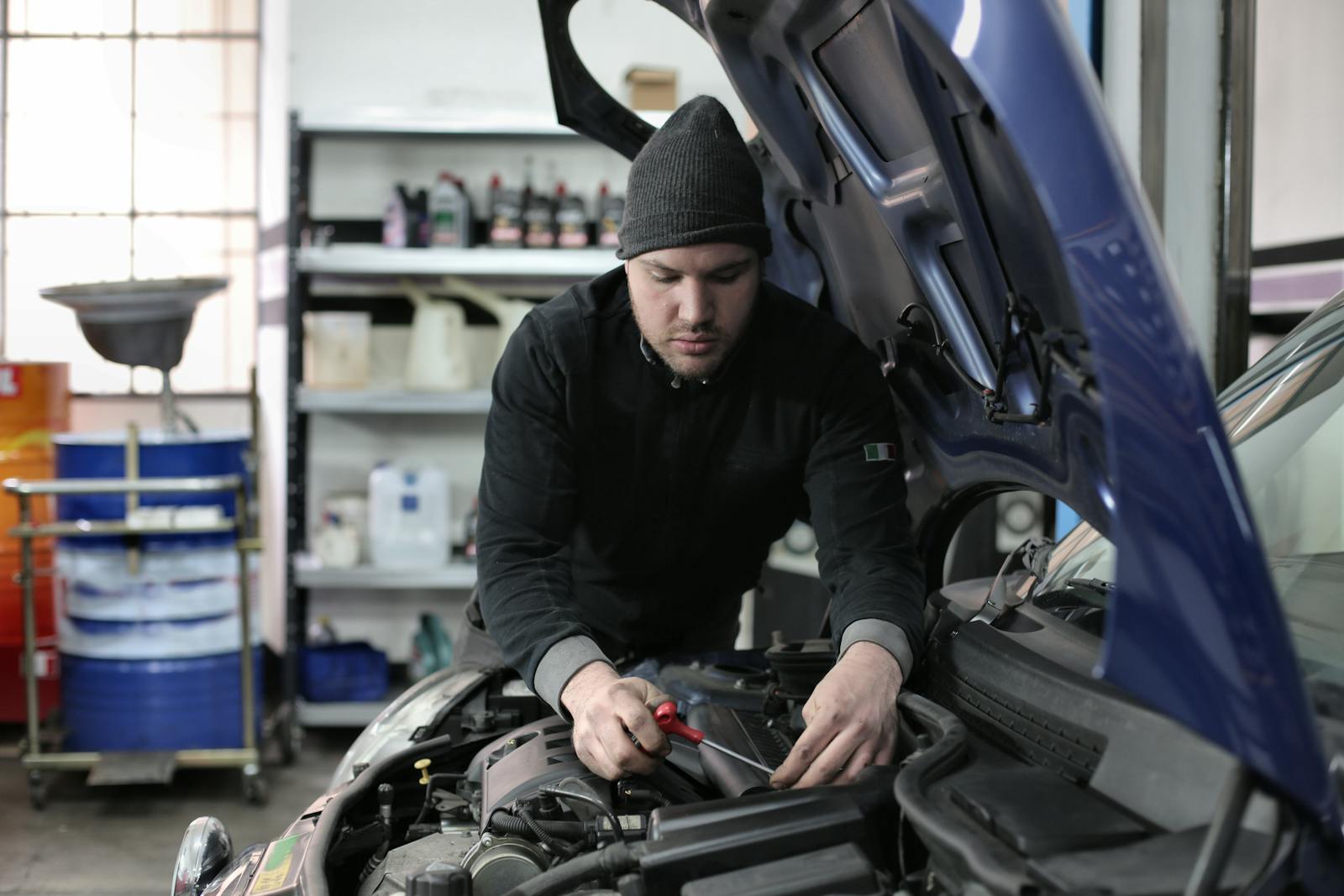
Back in the driveway, he popped the hood and then immediately hated himself for doing it, because obviously the problem wasn’t under the hood. He checked fluid anyway because that’s what people do when they’re panicking and need something to look at. Nothing obvious was leaking, which somehow made it worse, because it meant the damage was internal and expensive.
When he finally asked, slowly and clearly, “What did you do?” the brother did the classic dodge. He claimed he “didn’t race it,” then admitted he “might’ve accelerated a little” leaving a light because his date wanted to hear it. Then, after a pause, he said a friend “told him to dump it” so he did—once—because “it’s a Mustang, that’s what it’s for.”
The family argument turns into a loyalty test
By morning, the house had that tense, quiet energy like everyone was waiting to see who would explode first. The guy had the car up on ramps, trying to convince himself he could diagnose his way out of it. Meanwhile, the brother was sleeping in like he’d just had a big night and deserved recovery time, not like he’d potentially turned a working transmission into scrap.
When the guy confronted him again, the brother’s attitude shifted from casual to defensive. He kept saying it was “an accident,” like that should wrap it up. He started talking about how the guy “never lets him do anything,” how it was prom and it “mattered,” as if the significance of the dance was supposed to cover the cost of the damage.
The parents stepped in, and that’s where it got messier. His mom leaned toward the “boys will be boys” version of events and suggested the guy was being dramatic until they knew “for sure” what was wrong. His dad said the brother “shouldn’t have taken it,” but then followed it with the softener: “It’s family. You can’t treat him like a stranger.”
The guy wasn’t even asking to treat him like a stranger. He was asking for the one thing his brother hadn’t offered: accountability. Not an “if it’s broken, sorry,” not a half-laugh and a shrug, but the acknowledgment that he’d stolen something, abused it, and returned it hoping the owner wouldn’t notice.
The price tag hangs in the air, and so does the resentment
Once a mechanic friend took a look, the preliminary verdict was what the guy feared: the transmission was toast, or close enough that trying to “baby it” would just scatter more damage through the drivetrain. The estimate wasn’t a neat, simple number, either. It was the kind of cost that comes with options—rebuild, used replacement, labor—and all of it landed somewhere between “painful” and “impossible” for someone who’d been saving slowly, part by part.
The brother did what people do when they realize consequences are real. He started saying he could “help pay,” but in vague ways: maybe from his summer job, maybe if the parents pitched in, maybe they could find a cheap junkyard unit. It wasn’t nothing, but it also wasn’t a plan, and it didn’t come with the part that mattered most—owning the choice that caused it.
The guy’s bigger fear wasn’t just the bill. It was the fact that the brother had gotten away with the heist at all, that the spare key had been accessible, that his own house had treated his boundaries like suggestions. Now every time he looked at the empty space in the garage, he wasn’t thinking about horsepower or parts or progress. He was thinking about trust, and how quickly it got traded for one night of looking cool.
What stuck with him most wasn’t even the sound of the gears grinding, though he said that noise replayed in his head like a bad memory. It was the brother’s face when he returned the car—smiling, relaxed, unbothered—like he’d simply borrowed a jacket and hung it back up. The transmission could be replaced with enough money and time, but the weird new tension in the family, the unspoken question of who’s going to make this right, just sat there in the garage with the car, unresolved and heavy.
More from Steel Horse Rides: