


It started the way neighborhood drama usually does: a note on a windshield that feels way more personal than it should. The guy at the center of it—let’s call him Mark—walked out one morning with coffee in hand and found a bright orange “courtesy notice” tucked under his wiper. The message was polite in that HOA way that’s technically polite but also kind of a threat: his vehicle was in violation of the community’s ban on “commercial vehicles.”
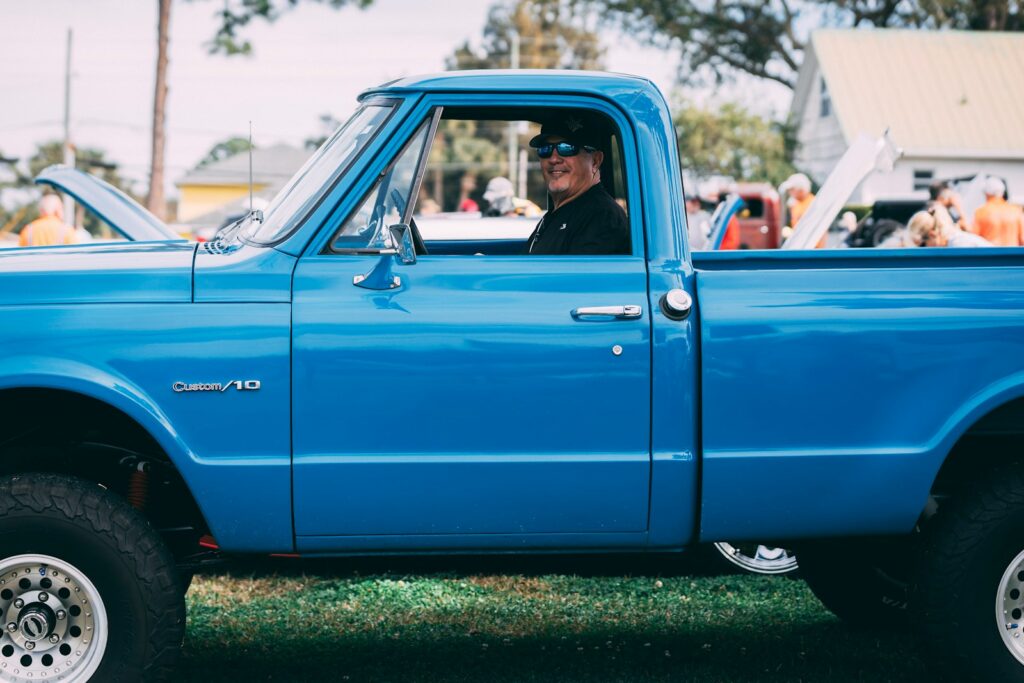
Mark didn’t even think of his truck as a “commercial vehicle.” It was a mid-size pickup he used for work sometimes, sure, but it wasn’t plastered with logos, it didn’t have ladders strapped to the top, and it fit in his driveway like every other truck on the block. Still, there it was—printed letterhead, the HOA’s contact email, and the vague warning that continued violations could lead to fines.
What made it sting wasn’t just the notice. It was the view from his driveway. Two houses down, one of the HOA board members had not one, not two, but three actual work vans—white, boxy, and unmistakably business-related—lined up like a small fleet. And somehow, those were apparently invisible to the rulebook.
The rule that wasn’t supposed to be complicated
Mark did what most people do when they’re suddenly told they’re breaking a rule they didn’t know existed: he went digging. He pulled up the HOA’s CC&Rs, read the section on parking twice, and found the usual language—no RVs, no boats, no trailers, and no “commercial vehicles” parked overnight in driveways or on the street. The problem was that “commercial vehicle” wasn’t really defined.
It was one of those terms that sounds clear until you actually try to apply it. Does it mean anything used for work? Anything with a company logo? Anything over a certain weight? Mark’s truck had none of the obvious signs, and the registration wasn’t in a business name. If anything, it was the kind of truck half the neighborhood had, just in different colors.
So he emailed the property manager listed on the notice, asking for clarification and a copy of the enforcement policy. He kept it measured, because he knew how these things go—one wrong tone and suddenly you’re “hostile.” He also asked, casually, whether the rule applied to vans parked two houses down, since those seemed more clearly “commercial.”
The selective enforcement starts to show
The response he got back was the kind that makes your jaw clench even if the words are technically fine. The manager said the board had determined Mark’s vehicle “meets the criteria of a commercial vehicle” and that he needed to park it in his garage or off-site. When Mark asked what criteria they were using, the answer basically boiled down to: the board knows one when they see one.
Mark pointed out, again, that the board member’s vans were parked openly and had been for months. He didn’t accuse anyone directly, but he asked whether the HOA planned to enforce the rule consistently. That’s when the manager’s tone shifted into that bureaucratic fog where nothing is anyone’s responsibility—complaints about other homes had to be “submitted separately,” violations were “investigated as reported,” and enforcement was “at the board’s discretion.”
Which, in HOA-speak, can mean: yes, we’re picking and choosing. And the more Mark looked, the more it felt like someone had decided his truck was annoying, and the rule was just the tool they grabbed off the shelf.
The meeting where everyone pretends it’s not personal
Mark took it to the next HOA meeting, partly because he wanted answers and partly because he wanted to see if anyone would say the quiet part out loud. HOA meetings are a specific kind of weird: neighbors who wave at each other while walking dogs suddenly become courtroom-ish, citing clauses and talking through the chair. Mark waited through discussion about landscaping, pool gate codes, and someone’s complaint about trash cans being out “too early.”
When it was his turn, he laid out the simple version. He’d received a violation notice for a truck with no commercial markings, while a board member down the street had three clearly marked work vans parked in plain view. He asked the board to define “commercial vehicle” and apply the definition equally.
That’s when the board member with the vans—let’s call him Dale—spoke up, and the air in the room changed. Dale said his vans were “essential for his livelihood,” and that he had “special permission” because he was “in and out” at odd hours. He didn’t say the exact words “it’s different for me,” but the logic landed that way.
Mark asked who granted that permission and where it was documented, because the CC&Rs didn’t mention exceptions for livelihood. The board president stepped in quickly and said they could “review” the policy, but that Mark still needed to “comply in the meantime.” Basically: stop parking your truck, and we’ll talk later about whether the guy with three work vans is allowed to keep parking his three work vans.
Paper trails, photos, and the uncomfortable part
After that meeting, Mark did what people do when they realize “talking it out” isn’t going to work: he started documenting everything. He took photos of his own truck from multiple angles to show there were no logos, no racks, no decals. He also took photos—time-stamped, on different days—of Dale’s vans, which were not subtle: company name, phone number, and a service list printed right on the sides.
Mark submitted a formal complaint about the vans through whatever portal the HOA used, attaching the photos and asking for the same standard to be applied. He also requested the minutes from the meeting and any written approval for exceptions. And because he was starting to feel like the issue wasn’t just parking, he asked for the HOA’s enforcement history—how often this rule had been cited, and under what circumstances.
The HOA’s replies got slower and more evasive. The manager said they didn’t have to provide certain records “in the format requested.” The board said exceptions were handled “case by case” and didn’t always require written documentation. And then, like clockwork, Mark got a second notice for his truck, this time with an actual fine attached.
That was the moment it stopped feeling like a misunderstanding and started feeling like punishment for pushing back. Mark paid the fine under protest—because unpaid fines can snowball into liens, and he wasn’t interested in learning that lesson the hard way. But he also sent another email pointing out that Dale’s vans were still there, every night, like nothing had happened.
The neighborhood splits into teams, quietly
Neighborhoods don’t always explode when something like this happens. Sometimes they do the opposite: they fracture softly. Mark noticed who stopped chatting at the mailbox and who suddenly had “somewhere to be” when he walked up. A couple of neighbors privately told him they’d gotten similar notices over the years for minor stuff—planters, fences, “too many” holiday decorations—and they’d learned to keep their heads down.
Other neighbors were more blunt. They said Dale had been on the board forever and ran the place like it was his personal project, and the property manager basically took direction from him. Someone mentioned that Dale’s business was “good for the community” because he’d helped fix things at the clubhouse. Another person joked—only half joking—that you didn’t want to end up on Dale’s bad side unless you liked paperwork.
Meanwhile, the vans stayed put. If anything, Mark noticed them more because now it was a daily reminder that the rule wasn’t about keeping the neighborhood “residential” or “orderly.” It was about who could bend it. The most infuriating part wasn’t even the vehicles; it was the way the board kept insisting this was neutral enforcement while behaving like the opposite.
Mark started exploring options that sounded exhausting: mediation, an attorney letter, trying to rally enough homeowners to demand a policy vote, maybe even running for the board just to get a seat at the table. None of it was quick, and none of it was guaranteed. And he was still stuck with the basic problem of where to put his truck every night in a neighborhood where driveways were apparently only acceptable for some people.
The whole thing hovered in that miserable HOA limbo: the kind where nobody is screaming, but the pressure keeps building anyway. Mark could comply forever and swallow the resentment, or he could keep pushing and risk becoming the neighborhood’s designated “problem.” And every time he drove past Dale’s house and saw those three work vans sitting there like a dare, he was reminded that the rule wasn’t really the rule—power was.
More from Steel Horse Rides: