
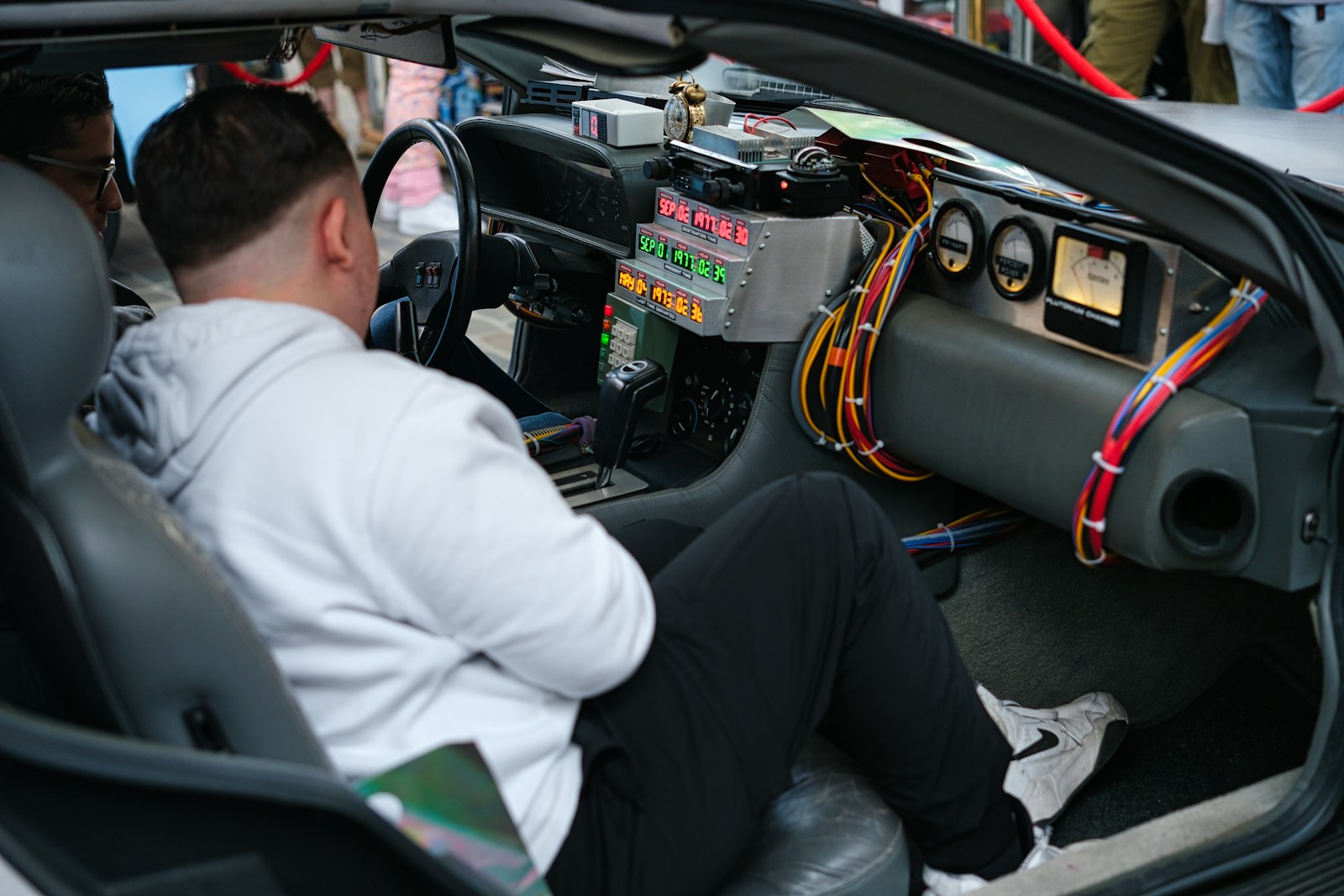

He didn’t call it a “project car” because it sounded cute. He called it that because the thing was genuinely in progress—hood up on weekends, parts stacked neatly in labeled bins, a rolling puzzle he’d been slowly putting back together after work.
The car itself was parked where it was allowed to be parked: on his driveway, not on blocks, not leaking anything, not spilling into the street. It wasn’t pretty yet, sure, but it was also clearly being worked on and clearly not abandoned. The problem wasn’t the car. The problem was the neighbor across the way who’d decided it was a personal mission to get it written up.
And the part that made the whole situation feel like a comedy with teeth was that the neighbor’s driveway had its own centerpiece—an absolute eyesore that somehow never seemed to make it onto anyone’s “community standards” radar. Think sagging tarp, flat tires, and that look of “this hasn’t moved since the last time someone said ‘two more weeks.’”
The first notice showed up like a warning shot
It started with one of those HOA letters that tries to sound friendly while threatening you with fines. “Unapproved vehicle,” it said, or “inoperable vehicle,” depending on which version he got that week. He reread it twice because, from where he stood, his car was sitting in plain view with current tags and enough movement around it to make it obvious it wasn’t dead.
He did what people always recommend: he checked the rules. The language was vague in the way HOA language always is—no “junk vehicles,” no “vehicle repairs visible from the street,” no “non-running cars stored on driveways.” The problem was that “junk” can mean anything if someone is motivated enough.
So he cleaned up. He made sure tools weren’t visible, kept the parts inside the garage, and even threw a cover over the car when he wasn’t actively working. He figured that would be that, because it’s hard to claim “eyesore” when you’ve basically turned your driveway into a neat little automotive operating room.
Then he realized the complaints were coming from one place
The second notice arrived less than two weeks later, right after he’d spent a Saturday afternoon installing a new starter. He hadn’t left anything out. There wasn’t oil on the concrete. The car was backed into the driveway like it had been every day since he bought it.
That’s when he started paying attention to the rhythm of it. Notice comes. He adjusts. Notice comes again. It wasn’t random enforcement; it was someone watching for the moment he slipped up—or watching even when he didn’t.
He didn’t need a confession, either. The neighbor had the kind of energy that makes it obvious: lingering by their mailbox when he pulled in, staring a beat too long, the tight little half-smile people use when they want you to know they’re keeping score. Once, he caught the neighbor standing near the curb with their phone held chest-high, like they were definitely not taking a picture of his driveway.
He tried the simplest approach first: a polite conversation. Something along the lines of, “Hey, if my car is bothering you, tell me and I’ll make sure it’s covered and tidy.” The neighbor didn’t deny anything. They just pivoted to the HOA rules and said they “didn’t want property values affected,” which is the HOA equivalent of saying, “I’m doing this for your own good.”
The real driveway crime scene sat untouched across the street
Every time he walked out to his own driveway, his eyes landed on the neighbor’s situation, because it was impossible not to see it. The neighbor had an old truck or SUV—something big and dull—parked at an angle like it had been dropped there. One tire was visibly low, the interior looked packed with random items, and there was a faded cover half hanging off it like a wrinkled bedsheet.
It wasn’t a “project.” There were no tools, no progress, no weekend ritual of repairs. It just sat there, slowly collecting grime and making the whole street look like someone gave up halfway through moving out.
He wasn’t trying to be petty at first. He honestly assumed the HOA didn’t know, or that maybe the vehicle was somehow “approved” because the neighbor had lived there longer or was friendly with someone on the board. But after the third notice—after he’d already complied, adjusted, and proven it wasn’t abandoned—he started to feel the sting of the double standard in a way that’s hard to unfeel.
So he documented everything. He took date-stamped photos of his car covered, uncovered, during work, after work, clean driveway, no visible parts. And, yes, he took photos of the neighbor’s driveway too, because if the HOA wanted to play the “aesthetics” game, he could play it with receipts.
The HOA meeting turned into a weird little theater production
He went to the next HOA meeting with a folder, which is how you know a person has been pushed past the “I’ll just ignore it” stage. He expected a bland conversation about rules, maybe a request to keep the car in the garage. Instead, he got a strange performance where everyone pretended they were being neutral while clearly reacting to the fact that he’d shown up prepared.
The HOA rep doing the talking kept repeating the same phrase: “We received complaints.” Not “we observed a violation,” not “we verified the car is inoperable,” just “complaints.” He asked what specific rule he was breaking when the car had tags, wasn’t on blocks, and wasn’t being worked on overnight. The answer was something squishy about “appearance” and “community standards,” which didn’t exactly scream enforceable.
Then he slid the photos across the table—his driveway, and the neighbor’s driveway. He didn’t do it with a grin. He did it the way people do when they’re tired of being singled out and want everyone to stop pretending the issue is the rules instead of the person weaponizing them.
There was a pause that felt like someone dropped a glass in a quiet room. A couple board members looked down at the pictures and did the kind of slow blink that says, “Okay, now we have to deal with this.” And the neighbor, sitting there with stiff posture, did not look surprised. They looked annoyed, like he’d broken the unspoken rule that you’re supposed to take harassment quietly.
Petty enforcement turned into open neighborhood tension
After that meeting, the notices didn’t stop immediately, but they got… stranger. One letter complained about “items visible” in the driveway even when he’d been meticulous about storing everything inside. Another suggested the car needed to be “fully covered at all times,” which wasn’t actually written anywhere in the HOA rules he’d read line by line.
Meanwhile, the neighbor’s vehicle situation across the street suddenly shifted. The cover got tugged on more carefully. The vehicle was moved a few inches like someone wanted to create the illusion of activity. At one point, a different car appeared in front of it, almost like a shield, but it didn’t last.
They stopped waving. Not that they’d ever been warm, but now there was a crisp, deliberate coldness. If he came outside while they were out, they’d turn away or suddenly “remember” something inside. One afternoon he heard the neighbor mutter something to their spouse about “people who think the rules don’t apply to them,” loud enough to be overheard but soft enough to deny.
He kept doing what he’d been doing: working on his car in daylight hours, keeping the area clean, keeping his paperwork in order. But the whole thing had changed how his own driveway felt. It wasn’t just his hobby spot anymore; it was a stage where someone else was constantly trying to catch him doing something wrong.
The last update was the most frustrating part, because it didn’t resolve anything cleanly. The HOA hadn’t outright dropped the issue, but they also hadn’t been able to cite a clear, consistent violation. He was stuck in that limbo where the rules are vague enough for someone to keep poking, but not clear enough for him to fully “win” and be left alone.
And across the street, the neighbor’s driveway eyesore still sat there, daring anyone to pretend this was about appearances. The real conflict wasn’t the car, or even the HOA. It was the feeling of being watched and targeted in your own home, and the uncomfortable truth that some people don’t want a nicer neighborhood—they want a neighborhood where they get to decide who gets picked on next.
More from Steel Horse Rides: