

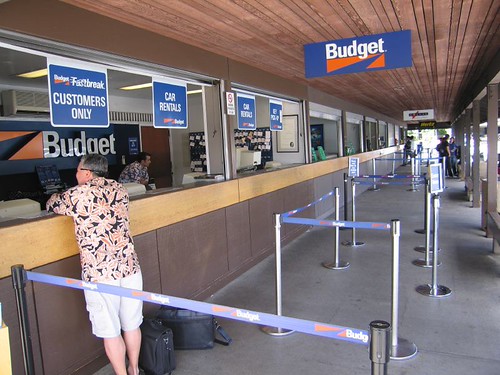
He’d rented cars plenty of times before, so he wasn’t the wide-eyed first-timer wandering up to the counter with a credit card and blind trust. This trip was a quick in-and-out situation: a few days in a mid-size SUV, mostly highway miles, back to the airport before lunch. The rental company was one of those big-name chains with bright lights, a long line, and employees moving fast like they were trying to outrun the crowd.
The only thing that made him pause was the vibe at pickup—hurried, slightly annoyed, like the staff had already decided every customer was going to be a problem. The agent slid the keys across the counter and pointed at a clipboard like a teacher tapping a worksheet. “Just sign here. Any existing damage is marked,” she said, already turning to the next person.
He didn’t argue, but he also didn’t do the thing they subtly pressure you into doing: grabbing the keys and sprinting to the garage like it’s a race. He walked out to the vehicle, took a breath, and did his usual lap with his phone out. Not because he was paranoid, he told himself—because he’d learned the hard way that “marked on the form” sometimes meant “good luck proving it later.”
The pickup walkaround they don’t really want you to do
The SUV was parked under harsh fluorescent lighting that made every smudge look like a scratch and every scratch look like a crime scene. He started filming from the front grille, panning slowly like he was documenting a used car sale. He got the hood, the bumper, the headlights, the windshield, and the roof, then moved to the passenger side.
That’s where he spotted it: a scuffed section on the rear passenger door, low enough that it looked like someone had scraped it against a post or another car’s bumper. Not catastrophic, but obvious—gray paint transfer on the darker panel, plus a shallow gouge that caught the light. He zoomed in, took still photos from a couple angles, and made sure one shot included the date and time stamp on his lock screen reflection, because he’d gotten into that habit after one too many “when did you take this?” questions.
He checked the paperwork on the clipboard that was tucked into the cupholder. The little diagram of the car had a few vague X’s on it, but nothing that clearly matched the door scrape. So he walked back inside, stood off to the side until an employee made eye contact, and said he needed the damage noted.
The employee looked like he’d asked her to do taxes. She followed him out, glanced at the scuff for about one second, and shrugged. “It’s cosmetic. It’s fine,” she said, like the word “cosmetic” was a magic spell that prevented future arguments. He didn’t bite. “Can you just mark it?” he asked, and after a sigh that could’ve powered a wind turbine, she did—scribbling on the paper with the kind of pen strokes that suggested she hoped the ink would bleed through and end the conversation.
A normal trip… until the return desk changed the tone
The actual rental period was boring, which is exactly how you want it. He used the SUV for airport-to-hotel, a couple meetings, a grocery run, then back to the airport. No curb kisses, no parking garage pillars, no mystery bumps—just a regular car being a regular car.
Return day started smooth. He fueled up, pulled into the drop-off lane, and did the same ritual in reverse: quick walkaround, quick video, a couple photos of the odometer and fuel gauge. The attendant with the handheld scanner seemed neutral, almost friendly, and said, “All set,” in that practiced way people do when they’ve said it a thousand times.
He thought it was done until his phone buzzed while he was waiting at security. Subject line: “Damage Recovery Notice.” The email was dressed up in corporate politeness, but the message underneath was blunt: they were charging him for damage to the rear passenger door, plus “administrative processing,” plus loss-of-use. There were photos attached—close-ups of the exact scuff he’d noticed at pickup—presented as if they’d just discovered it under a microscope.
What made his stomach drop wasn’t even the number, though it wasn’t small. It was the casual confidence of it, like they assumed he’d sigh, grumble, and pay because arguing with rental companies feels like yelling into a wind tunnel. The kicker was a line that said something along the lines of, “Damage not reported at time of rental pickup,” which was the kind of sentence that makes you wonder if they’re disorganized or if they’re betting on you being disorganized.
The first round of customer service: polite dismissal with a script
He called the number listed and got someone who sounded like they were reading from a laminated card. He explained, calmly, that the damage was there when he picked up the vehicle, and that he’d reported it. The rep did that thing where they pause just long enough to imply they’re checking something, then said, “Our records indicate the vehicle was rented in good condition.”
He asked what “records” meant. The rep said the checkout report didn’t have that damage noted, and the photos taken at return showed it, so it was his responsibility. When he mentioned he’d had the employee mark it, the rep asked if he had documentation, with a tone that implied, of course you don’t.
He did, though. He had his own photos and video from pickup, plus the scribbled checkout sheet he’d snapped a picture of before driving away—one of those small acts you do because you don’t trust paper to survive a system. He told the rep he could email everything and asked for an address.
They gave him a generic inbox and a case number, which felt like tossing a message into a well. The rep ended the call with, “Someone will review and get back to you in 7–10 business days,” which is corporate for “we hope you’ll forget.” Meanwhile, the charge was set to hit his card in less than 48 hours.
When the photos hit their inbox, the story stopped being simple
He didn’t just send one picture. He sent a tight little package: a pickup walkaround video showing the scuff in context, time-stamped photos with multiple angles, and the shot of the checkout form where the employee’s scribble was supposed to represent “rear passenger door.” He added the return walkaround too, mostly to show there wasn’t new damage—just the same scrape sitting there like it always had.
Then he waited, and the waiting was the worst part because you can feel the timeline trying to squeeze you. Every hour that passed was another hour closer to the charge posting, another chance for them to say, “We can’t dispute it after it’s processed,” or some other rule that only exists when it benefits them. He checked his email like a person waiting for test results.
Two days later, he got a reply that didn’t read like the first rep’s script. The tone was suddenly careful, like someone higher up had actually looked at the attachments and realized they couldn’t bulldoze him. They asked for “original files” instead of screenshots, which was a weird pivot—like they were trying to see if metadata could give them an out.
He sent the originals. The video file name, the embedded timestamps, the lighting that clearly matched the pickup garage—all of it made it hard to argue these were taken later. And because the scuff had a very specific pattern—paint transfer shaped like a half-moon smear—it was unmistakably the same damage in their “return” photos.
The company’s version of backing down: vague apologies and a refusal to explain
Another day went by, and then the email came: “After further review, we have decided to waive the damage charges associated with your rental.” No acknowledgment that the damage had been pre-existing, no explanation for why the checkout report supposedly didn’t show it, no mention of the employee he’d asked to mark it. Just a bland, slippery sentence and a note that the charge would be reversed “within 5–7 business days.”
He wasn’t satisfied, because the whole thing felt less like a mistake and more like a test. He replied asking for confirmation in writing that his account wouldn’t be flagged, and that there would be no collections attempt. The response he got was short and strangely defensive: “The matter is considered closed.”
That’s when the more unsettling possibility settled in. If his photos hadn’t existed, would they have “decided” differently? The damage photos they sent him were so clearly staged for documentation—tight angles, crisp focus—that it didn’t feel like a casual inspection snapshot. It felt like a file that had been waiting for a customer to attach to.
He kept watching his credit card statement until the reversal actually posted, because by then he didn’t trust “waived” to mean “gone.” He also saved every email, every file, every case number, and made a note of the exact dates and times, like he was building a binder for a court case he hoped he’d never have to file.
The last thing he did was the pettiest and also the most rational: he uploaded the pickup video and photos to a cloud folder and shared it with himself in two places, just in case his phone decided to die at an inconvenient time. He couldn’t shake the feeling that the company wasn’t embarrassed—they were irritated he’d made it inconvenient. And that’s the part that lingered after the money came back: not relief, exactly, but the awareness that the only reason the scam didn’t stick was because he’d taken two extra minutes in a parking garage and refused to be rushed.