


She’d already done the responsible thing. Her car had been making that not-quite-right sound for a week—nothing dramatic, just a dull clunk when she turned and a vibration that came and went like it was testing her patience. So she booked an appointment, rearranged her workday, and drove it to a small independent shop with decent reviews and a waiting room that smelled like burnt coffee and tire rubber.
The plan was simple: get it checked, pay for whatever the obvious fix was, and be done. She wasn’t expecting a relationship with this mechanic, or a saga. She just wanted her car back without feeling like she’d been talked into buying the automotive version of an extended warranty from a mall kiosk.
But once the car was on the lift and the mechanic came out wiping his hands on a rag, the conversation shifted fast. He had that calm, confident tone that makes you feel like you’re being unreasonable if you ask too many questions. And he kept saying variations of the same thing: “I can do the minimum, sure… but if you want it to be safe, you’ll want to do one more repair.”
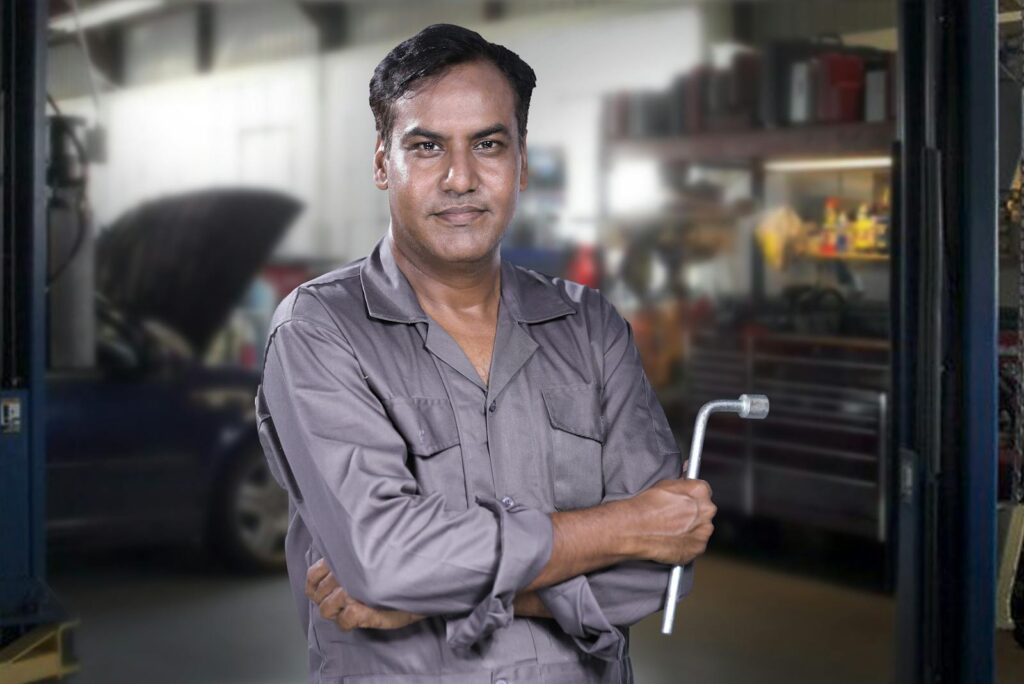
The “One More Repair” Pitch
He started with the obvious issue, the one she’d basically guessed from the symptoms. It wasn’t cheap, but it was within the range of “annoying but fine,” and she told him to go ahead. That should’ve been the end of it, but he lingered at the counter like he was waiting for an opening.
Then he pulled out the add-on. Something else was “on its way out,” he said, and if she didn’t address it now, she’d be right back in a month—maybe stranded, maybe causing damage to other parts. The way he framed it wasn’t aggressive; it was worse than that, actually. It was paternal, like he was doing her a favor by spelling out reality.
She asked what would happen if she didn’t do it. He shrugged and gave her that half-smile mechanics have mastered, the one that says, It’s your funeral without using those words. He told her he couldn’t “in good conscience” let her drive out without recommending it, and that it would be “smart” to handle it while they already had the car apart.
It wasn’t that she didn’t believe cars could have multiple problems. It was the pressure and the pace of it, the way her reasonable hesitation got treated like ignorance. After a few minutes of back-and-forth—her asking for a number, him saying it depended, her asking if it was urgent, him saying it was “borderline”—she agreed to the “one more repair” just to stop feeling like she was failing a pop quiz.
The Bill, the Vibes, and the Driveway Smile
When she came back later, the car was waiting out front, freshly parked like it was posing for a photo. The mechanic handed her the invoice and ran through it quickly, tapping lines with a pen. The total was higher than she’d braced for, and the line item for the extra repair sat there in black and white, suddenly less like a smart preventative step and more like a dare she’d accepted.
She paid because what else was she going to do—argue after the work was already done? He told her it should feel “night and day” better and to call if anything seemed off. There was even that little upbeat moment where she slid into the driver’s seat and thought, Okay, this is over. I handled it.
The first few minutes of the drive felt normal. The sound she’d hated was gone, or at least quieter, and the steering felt a little tighter. She let herself relax, the way you do after spending money you didn’t want to spend but telling yourself it was the adult move.
Then, about halfway home, the dashboard lit up like a slot machine. A warning chime went off—one of those sharp electronic beeps that makes your stomach drop instantly. The engine started to sputter, and for a couple seconds she tried to convince herself it was a fluke, like the car was just “resetting” after repairs.
Dead on the Way Home
It didn’t reset. It died.
Not in a graceful “pull over at the next exit” way either, but in that terrifying slow fade where you feel the power steering get heavy and the gas pedal turn into a suggestion. She wrestled it onto the shoulder, hazards blinking, heart thudding like she’d just narrowly avoided something worse.
When she tried to restart it, it coughed once and went quiet. She sat there gripping the wheel, staring at the steering column like she could will it back to life. The absurdity hit her a second later: she’d just handed over a pile of money to fix her car, and she couldn’t even get home from the shop without it turning into a brick.
Her first call was to the mechanic, because that’s what you do when you’re trying to be reasonable. Maybe a sensor got jostled. Maybe something simple came loose. She expected an annoyed sigh at worst and a “bring it back in” at best.
He didn’t pick up. It went to voicemail.
She called again. Still voicemail. She texted—short, factual, no accusations. “Car died on the way home. I’m on the shoulder. Please call.” Then she waited, watching cars blur past, feeling every minute stretch out longer because she was stranded and embarrassed and suddenly very aware of how alone a shoulder feels when your car is nonfunctional.
Silence, Dodging, and the Feeling of Being Played
After she got the car towed—back to the same shop, because where else could it go on short notice—she tried again. Now she wasn’t just asking for help; she was trying to figure out if she’d been scammed, or if she was about to have to fight for basic accountability. The shop phone rang and rang, like nobody was there, even though it was still during business hours.
The next day, when she finally got someone to answer, it wasn’t him. It was a staff member who sounded cautious, like they’d been handed a script or at least a warning. They said they’d “leave a note” for the mechanic and asked what the issue was, in that tone that makes you repeat yourself more politely than you want to.
She explained it: the extra repair, the big bill, the car dying almost immediately, the tow back to their lot. The staff member didn’t argue with her, which should’ve been reassuring, but instead it felt like the kind of calm that comes from not taking you seriously. They said the mechanic would call her when he could.
He didn’t. Hours went by, then another day. When she called again, she got less warmth and more defensiveness—“He’s busy,” “We’ll see what we can do,” “Did you sign the invoice?” The more she tried to keep it calm and linear, the more it started to feel like she was being managed, like her problem was something they could stall until she got tired.
And the part that stuck in her throat was how quickly the tone changed from “safety” to “not our problem.” The same guy who’d talked about conscience and responsibility was now a ghost. It made the “one more repair” feel less like a recommendation and more like a setup: get her to agree, get the money, then disappear behind a wall of missed calls.
The Invoice Becomes a Weapon
When she showed up at the shop in person, she didn’t come in screaming. She came in with the invoice in her hand and a kind of shaky determination that said she’d spent the last 48 hours replaying every sentence. The waiting room felt smaller this time, like the chairs were judging her for being back so soon.
The mechanic eventually emerged, but not with the friendly confidence from before. He kept his distance, spoke louder than necessary, and acted like she was interrupting something important. She pointed out—plainly—that the car died minutes after leaving, and that she’d been calling and texting with no response.
His first move was to separate the events. What he fixed, he implied, was one thing; what happened after could be another. Cars are complicated, he said. Stuff fails. He mentioned “unrelated issues” and used the phrase “unfortunate timing,” like it was weather and not a machine they’d just worked on.
She asked for specifics. Did the “one more repair” have anything to do with it? Was something installed incorrectly? Could they at least diagnose it without charging her again? He didn’t give a clean answer, just circled back to policy, inspection fees, and the fact that she’d authorized the work.
She realized, standing there, that the invoice wasn’t just a bill—it was their shield. Everything she felt was contained in that one line: customer approved. She hadn’t approved being stranded. She hadn’t approved being ignored. But on paper, she’d signed consent for the work, and now they were acting like the story ended there.
By the time she left, she didn’t have a repaired car or a clear explanation, just a sense of being cornered by bureaucracy and social discomfort. The tow had already cost her, the repairs had cost her, and now the conversation itself was starting to feel like it would cost her more—more time off work, more phone calls, more energy spent proving she wasn’t imagining things.
And that’s where it sat: her car parked uselessly on their lot, his phone suddenly always unanswered, and her stuck in that miserable middle space between “maybe it’s a coincidence” and “he knew exactly what he was doing.” The worst part wasn’t even the breakdown—it was the silence after, the way “call if anything seems off” turned out to mean “call, and watch us pretend we can’t hear you.”
More from Steel Horse Rides: