
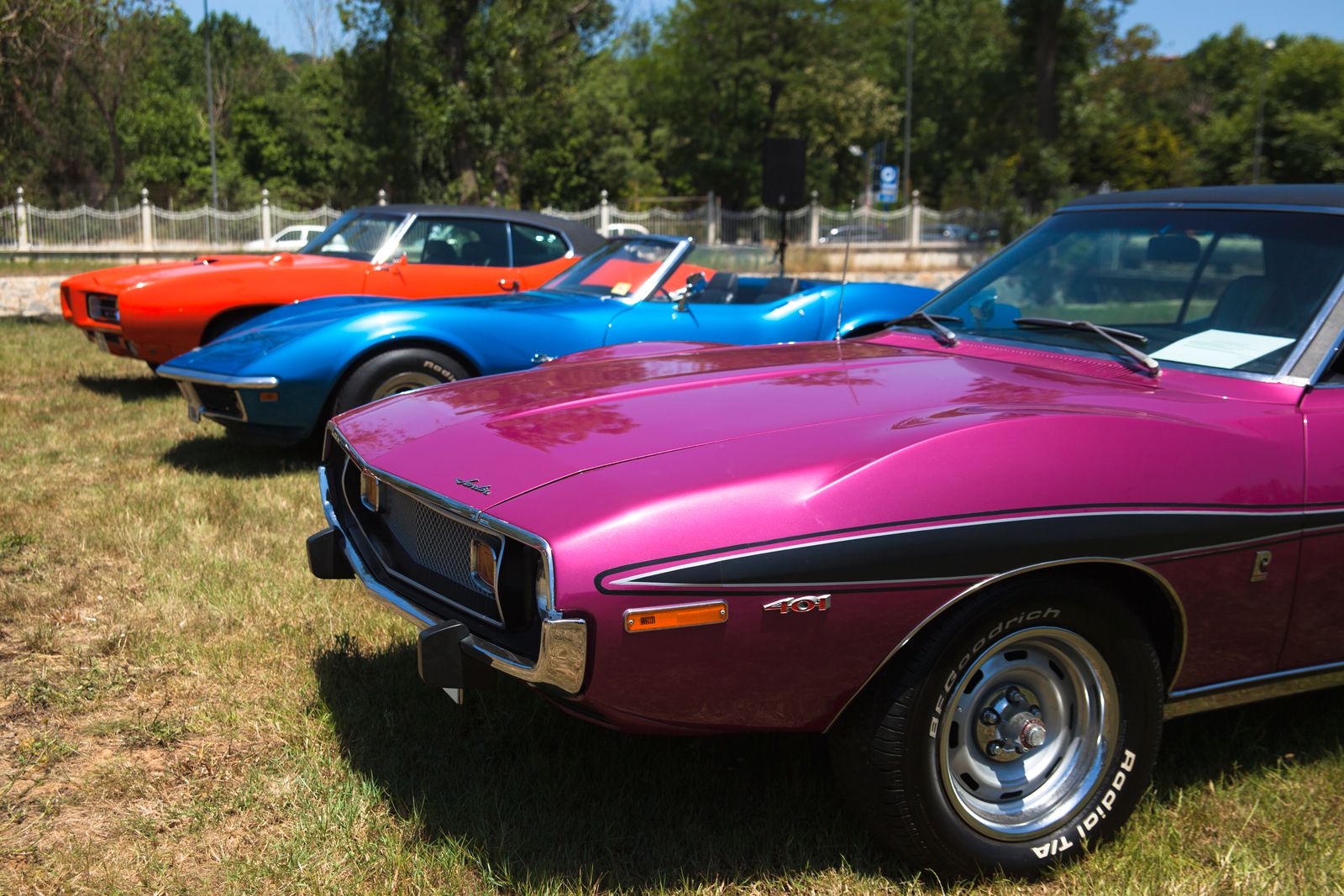

An AMC Javelin AMX that would have struggled to clear $20,000 a decade ago now routinely trades in the $30,000s, and the top examples are pushing well past $40,000 at major auctions. That is not a rounding error. According to sale data tracked by Classic.com, the average transaction price for a second-generation Javelin AMX now sits around $32,696, with a 2026 sale reaching $42,900 for a 1974 AMX and a Go-Pack-equipped 1973 car bringing $30,500. Five years ago, numbers like that for an AMC would have gotten you laughed out of a swap meet.
The bargain everyone forgot about
For decades, AMC’s muscle cars were the answer nobody wanted to hear when the question was “what should I collect?” Hagerty’s own market analysts describe AMC values as “finally stirring” after years of sitting flat while GTOs, Chevelles, and Mopars climbed into six-figure territory. That gap is exactly why collectors are circling now. A Pontiac GTO Judge or a Chevelle SS454 in comparable driver-to-excellent condition has been trading in the $60,000-to-$90,000-plus range at the same auction weekends where a Javelin AMX barely cracks $30,000 — the AMC has simply never been priced for what it actually is: a factory big-block muscle car with genuine scarcity built in.
Scarcity that the GM cars can’t match
Here’s the number that ought to matter more than it has: American Motors built roughly 19,134 Javelin AMX and standard AMX units combined across the entire run from 1968 to 1974, a fraction of the volume Pontiac, Chevrolet, and Ford pushed out of their muscle car lines in a single model year. Scarcity alone doesn’t guarantee value — plenty of rare cars stay cheap forever — but scarcity paired with a genuinely quick, race-proven drivetrain (the 401 cubic-inch V8 could run low 14s in the quarter-mile in period magazine testing) is the exact recipe that turned Mopar’s once-overlooked B-body cars into six-figure auction stars starting in the early 2010s.
The floor has already moved
The bottom of the AMC market tells the real story. A rough, needs-everything 1972 Javelin AMX sold for just $7,500 in a 2024 auction, according to Classic.com’s tracked sales data — but that same listing set shows asking prices now reaching $52,000 for well-sorted cars, and finished restorations are the ones pulling the $40,000-plus results. That spread between floor and ceiling is widening, which is precisely the pattern that shows up in a market a couple of years before mainstream money notices it. When the cheap cars stop being cheap and the expensive cars start setting new highs simultaneously, that is a market repricing itself in real time, not a fluke sale.
Why the timing lines up
Part of what’s driving renewed interest is simple math: buyers priced out of a $150,000 GTO Judge or a Hemi Cuda are looking for something with a comparable factory story — a genuine, low-production muscle car built by an underdog manufacturer that had to fight for every sale against Detroit’s Big Three. The Javelin AMX checks that box in a way a garden-variety Camaro or Mustang from the same years cannot, because AMC never had the production volume to flood the market with survivors. Hagerty notes that even with recent gains, most AMC muscle cars remain what the company calls “Big Bad bargains” relative to their GM and Mopar contemporaries — which is another way of saying there’s still room to run before the AMC market catches up to where the fundamentals say it should be.
A ceiling built on a real car, not hype
Unlike some of the “sleeper” muscle car theories that never pan out, the Javelin AMX has the underlying hardware to justify buyer confidence. The 1971-1974 AMX came standard with a 401 cubic-inch V8 rated at 330 horsepower in early form, four-wheel disc brakes were available years before most GM pony cars offered them, and the styling — that long hood, short deck, and forward-canted grille — has aged into something that reads as genuinely distinctive rather than derivative of a Camaro or Mustang. Auction houses like Barrett-Jackson have started giving these cars prominent docket placement rather than burying them in late-afternoon lots, which itself signals a shift in how the market treats them; a 1973 Javelin AMX crossed the block at Barrett-Jackson’s 2024 Scottsdale sale as a featured entry rather than an afterthought.
What the auction data is really telling you
You don’t need to be a spreadsheet person to see the pattern: rising floor prices, new highs at the top, and a widely acknowledged value gap versus mechanically comparable rivals are the same three ingredients that preceded every major muscle car market correction of the last twenty years. The AMC Javelin and AMX aren’t undiscovered anymore — the auction results already prove that — but they’re still priced like they are, and that mismatch rarely lasts.