

A customer took his car to a different shop and walked out with a scary diagnosis: a bad wheel bearing, a new hub assembly and a new control arm, or his wheel could be in real danger. There was just one problem. His regular mechanic, @mainly_mechanics, had replaced that control arm not long before. When the car came back to his bay, the mechanic tracked the whole problem down to a single loose nut.
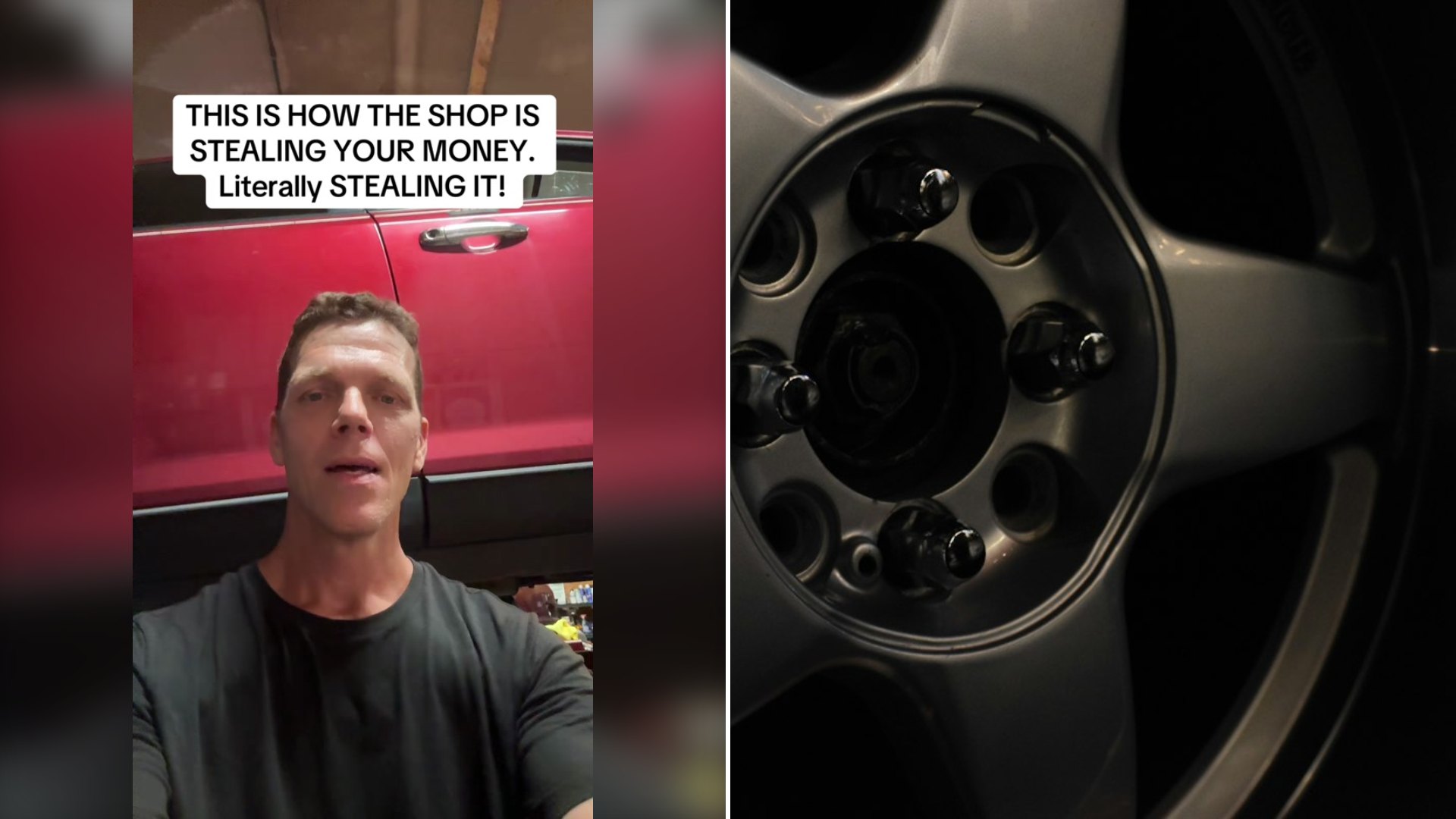
The mechanic, who goes by Justin in the video, opens by showing exactly how he believes the trick works. He grabs a wheel on a car in his shop, pushes and taps on it, and shows there is no play at all. Then he pops off the center cap, puts a socket on the axle nut behind it and loosens it. Suddenly the same wheel wobbles.
“All of a sudden this wheel that didn’t have any play in it before,” he says, now looks like it needs a bearing. He acts out the next step with a mock salesman’s voice: “Hey Mr. Customer… You need a wheel bearing and you need a control arm.”
Then he makes it clear this was not a hypothetical. “This is a real story by the way,” he says.
What His Regular Mechanic Found
According to Justin, the customer called him confused. “Hey Justin, didn’t you just replace my control arm?” He had, and he was positive about it, so he told the customer to bring the car back in.
Sure enough, the control arm was brand new. But the wheel really did have a lot of play when he checked it. Something else did not add up, either. The other shop had quoted a wheel bearing and hub assembly, yet he says this vehicle does not have a bolt-on hub assembly at all.
Before writing up his own quote, he decided to check something. He put a socket on the axle nut, the large nut that holds the axle shaft in the wheel hub, and it was “extremely loose.” Axle nuts have to be torqued to a very specific specification, so he snugged it up with his impact gun, then finished it to spec with a torque wrench.
The play disappeared. “There is no play,” he says. No new bearing, no hub, no control arm.
@mainly_mechanics
In his caption, he says it was evident the other shop loosened the CV axle nut to add play and make the bearing look bad. He says they quoted the customer “almost six or seven hundred dollars for a wheel bearing” on top of the control arm. What bothered him most was that nobody even looked closely enough to notice the brand-new part. “They must be so comfortable doing this,” he says, “that they have gotten so lazy.”
His advice is short: be careful when you go to a new shop, especially if you do not already have a relationship with one, and trust your gut.
How to Protect Yourself From Bogus Repairs
Most mechanics are honest, hardworking people, but a scare-tactic quote can cost you hundreds of dollars. A few habits make you a much harder target.
Find a regular shop before you need one. The customer in this story was saved because he had a mechanic who remembered his car and the work already done on it. Ask friends and neighbors who they trust, and use that shop for oil changes and small jobs so you build a history.
Keep your repair records. A folder in the glove box or a photo of every invoice on your phone lets you say, “That part was just replaced in March.” That one fact unraveled this whole quote.
Ask to be shown the problem, and ask questions. If a shop says your wheel has play, ask them to show you, and ask what they checked to rule out other causes. A good technician will happily explain. Remember that being shown a wobble is not the same as proof of a bad part, as this video makes clear.
Get a written estimate. Many states require shops to give you a written estimate before work begins, and you can always ask for one anywhere. Do not authorize work over the phone that you do not understand.
Ask for your old parts back. Requesting the replaced parts is a simple way to confirm the work was done and the part was actually worn.
Get a second opinion on big or surprise repairs. If a “safety” repair shows up during a visit for something minor, it is fair to pay for the diagnosis, drive carefully to another shop, and have them confirm it.
Signs of a Truly Bad Wheel Bearing
Wheel bearings do wear out, and a genuinely failing one should not be ignored. Common symptoms include a humming, growling or grinding noise that gets louder with speed and may change when you turn left or right, a vibration in the steering wheel, uneven tire wear, or an ABS warning light on some vehicles where the sensor is part of the hub.
Also keep in mind that a loose axle nut is a safety issue in its own right. If you ever have work done that involves removing a wheel or axle, it is reasonable to ask the shop whether everything was torqued to the manufacturer’s specification, and to have a trusted mechanic check it if something suddenly feels off afterward.
If you believe a shop deliberately misled you, you can file a complaint with your state attorney general’s consumer protection office or your state’s automotive repair regulator where one exists. Keep the estimate, invoices and any photos, because documentation is what makes a complaint stick.
More From Steel Horse Rides
- Ignoring The Check Engine Light Is Risky, But Paying For A Diagnostic You Could Skip Is Not Smart Either, So Here Is How Free Code Reading Works And When To Worry
- Running Part Time 4WD On Dry Pavement Can Bind Up The Drivetrain And Lead To A Painfully Expensive Repair Bill, So Learn When To Shift Your 4×4 Properly
- Mechanic Says a Ford Dealer Plugged a Sensor Jumper Into the Wrong Spot on a 1997 F 150 and Sent the Truck Down the Road With the Pins Mismatched