
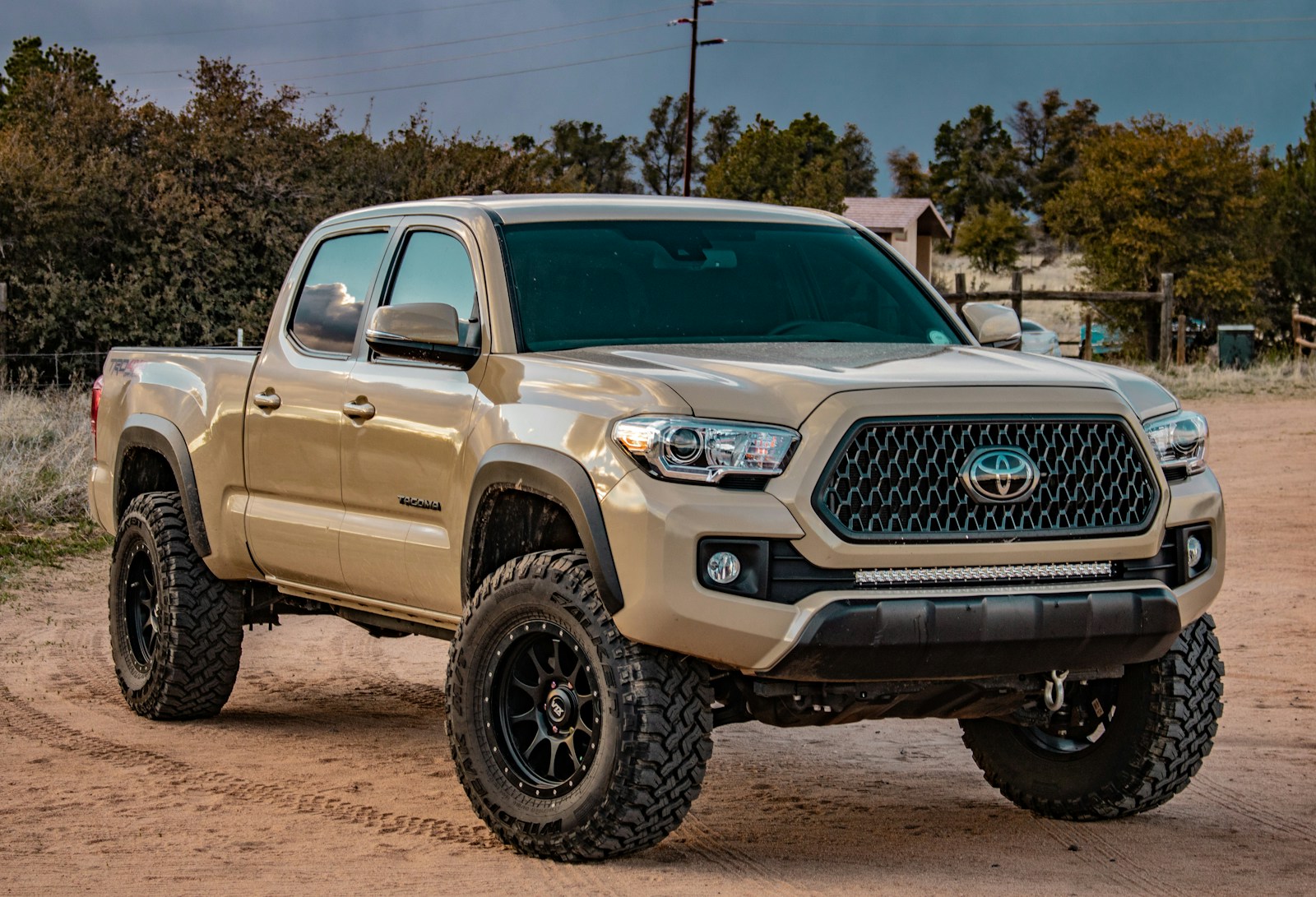

He wasn’t trying to flip it. That was the first thing he told anyone who asked why he’d dropped a chunk of money at a county auction on a truck that looked like it had spent the last decade being used as a shelf. He’d wanted one of those older, increasingly hard-to-find rigs—boxy, simple, built before everything turned into sensors and plastic covers—something he could keep forever.
The listing photos were the usual auction stuff: harsh lighting, a few angles, a shot of the odometer that didn’t really prove anything, and a caption that basically translated to “good luck.” Still, the body lines were there under the oxidation, and it had the trim package people hunt for. The buyer—let’s call him Matt—saw “rare truck” and “runs” and heard the little voice in his head whispering, this is the one.
He trailered it home like a trophy, parked it in the driveway, and immediately did what truck people do when they’re excited: he started making lists. First it was the obvious stuff—fluids, belts, brakes, tires. Then it became the deeper, more obsessive stuff—correct badges, the right wheels, sourcing a factory radio just to have it, even though nobody listens to the radio anymore.

The Auction Find That Turned Into a Whole Identity
For months, Matt lived in that pleasant little world where every weekend had a mission. He pulled the bed, treated the surface rust, found a junkyard door that didn’t sag, and spent too much money on weatherstripping because the cheap stuff never fits right. The truck slowly stopped looking like an abandoned project and started looking like something that could roll into a cars-and-coffee without being laughed off the lot.
He posted progress pics in group chats, and people egged him on like they always do. “That thing’s coming back,” one friend said, and Matt took it personally, like the truck was responding to compliments. It wasn’t just wrenching; it was therapy with a socket set.
The paperwork was thin, but not unheard of for an auction vehicle. There was a bill of sale, some vague chain-of-custody language, and a title that looked legit at a glance. Matt figured the state inspection was just the last annoying hoop—something you do once everything’s roadworthy.
He cleaned the cab so well you could’ve eaten off the floor mats. He replaced the cracked steering wheel, not because it mattered for inspection, but because he couldn’t stand touching a wheel that felt like a dried riverbed. By the time he finally booked the appointment, he was in that smug, exhausted phase where you can’t wait for someone official to tell you you did a good job.
The Inspection That Got Weird, Fast
It started normal. The inspector walked around the truck with a clipboard, checked lights, tested the horn, nodded at the tire tread. Matt stood off to the side trying to look casual, like he hadn’t spent three nights in a row chasing down a mysterious squeal that turned out to be a slightly bent dust shield.
Then the inspector asked him to pop the hood and went quiet in a way that didn’t feel like “concentrating.” He leaned in toward the VIN plate location, stared a little too long, and rubbed his thumb along an edge. It was a small movement, but it landed like a bad chord—Matt’s stomach tightened before he even knew why.
“Where’d you get this?” the inspector asked, still looking at the metal.
Matt gave the whole story—auction, bill of sale, restoration, planned weekend trips, the dream. The inspector didn’t argue or accuse; he just got that careful tone people use when they’re trying not to set off an explosion. He said the VIN stamping didn’t look “factory,” and then he said the sentence that made the whole garage feel colder: it looked like the VIN had been cut from another vehicle and welded onto this one.
Matt laughed once, like it was a joke that hadn’t landed. The inspector didn’t laugh back.
The Weld Marks and the Second VIN
The next part wasn’t cinematic; it was painstaking and humiliating. The inspector brought out a light and pointed out tiny inconsistencies Matt had never noticed: the weld bead that didn’t match manufacturer spot welds, the slight distortion in the metal around the plate, the way the stamping depth varied in a pattern that looked more like human work than a factory press.
Matt did what anyone would do—he started arguing with reality. Maybe it was repaired after a fire. Maybe it was a replacement panel. Maybe the previous owner had done a bad patch. The inspector listened, then asked if Matt knew where the hidden VIN stamps were on that generation of truck.
Matt didn’t. Most people don’t, until they have a reason to learn.
They went looking. Behind trim, under grime, in the places manufacturers tuck numbers specifically so they’ll still exist if someone tries to get clever. When they found it, the hidden VIN didn’t match the one on the plate. And once you see two different identities on the same vehicle, you stop thinking in terms of “paperwork issue” and start thinking in terms of “crime scene.”
The inspector stepped away and made a call. Not a dramatic “hands where I can see them” call—more like a routine escalation, the way you call your manager when a register comes up short. But the effect was the same: Matt went from proud owner to guy standing next to a vehicle he suddenly wasn’t sure he was allowed to touch.
Fifteen Years of Someone Else’s Problem Suddenly Becoming His
What came back from the database check was the kind of information that makes your skin crawl because it connects your driveway to someone else’s worst day. The hidden VIN came back as a pickup reported stolen fifteen years earlier. Different color back then, different state, different owner name attached to the original report.
It explained things Matt had shrugged off as “auction weirdness.” The title that seemed legit but oddly clean. The lack of service records. The way certain bolts looked like they’d been disturbed more times than necessary. Somebody, at some point, had decided this truck would live again under a different identity, and they’d done the metalwork to make it happen.
Matt kept saying, “But I bought it legally,” like repeating it could force the universe to respect it. The inspector didn’t really disagree. He just kept coming back to the same reality: the state didn’t care that Matt had good intentions if the truck itself was stolen property wearing another truck’s VIN like a mask.
When law enforcement got involved, the vibe shifted from awkward to sickeningly polite. They asked Matt for documents, took photos, and walked him through what would happen next as if they were explaining a delayed flight. Nobody called him a thief, but nobody treated him like an innocent guy with a hobby, either.
The Fallout: A Truck That Can’t Be His, and a Seller Who’s Nowhere
The truck was flagged, and Matt was told not to drive it while the case was sorted. Depending on the state and how the investigation played out, it could be impounded as evidence or reclaimed by the original owner’s insurance company, if the claim was still on the books. Even if the original owner had moved on, the VIN being stolen meant the truck had a legal black cloud hanging over it.
That’s when Matt started doing the frantic math people do when their life collides with bureaucracy. He wasn’t just out the auction price; he was out months of parts receipts, specialty tools, paint work, and all those “might as well replace it while I’m in there” expenses that add up faster than you want to admit. You can’t exactly file a warranty claim on heartbreak.
He tried tracking down the auction house, thinking there had to be some protection. He got the usual wall of disclaimers: vehicles sold as-is, buyer responsible for verification, no guarantees. The seller listed on the paperwork wasn’t a normal private party; it was some intermediary name that led to a dead-end address and a phone number that went straight to nowhere.
Friends who’d been cheering him on shifted into detective mode. They sent him links about title washing, VIN swapping, and how often stolen vehicles get reborn in rural auctions after passing through a few hands. The more he learned, the worse it felt, because it meant this wasn’t some rare lightning strike of bad luck—it was a system that worked just well enough for someone to keep trying it.
Matt kept going back to the garage and just staring at the truck. It looked better than it had when he bought it, which made the whole thing feel like he’d restored evidence for free. He could point to every improvement he’d made, and none of it mattered, because the one thing he couldn’t fix was the truck’s past.
And that’s where the story stays stuck: a beautiful, resurrected pickup sitting in limbo, wearing a welded-on identity that finally got noticed, while the person who did the cutting and swapping is long gone. Matt’s left with a truck he loves but may never legally own, plus the gnawing thought that somewhere out there is the person who woke up fifteen years ago to find their pickup missing—only to have it reappear in someone else’s driveway, repaired, polished, and still not really home.
More from Steel Horse Rides: