

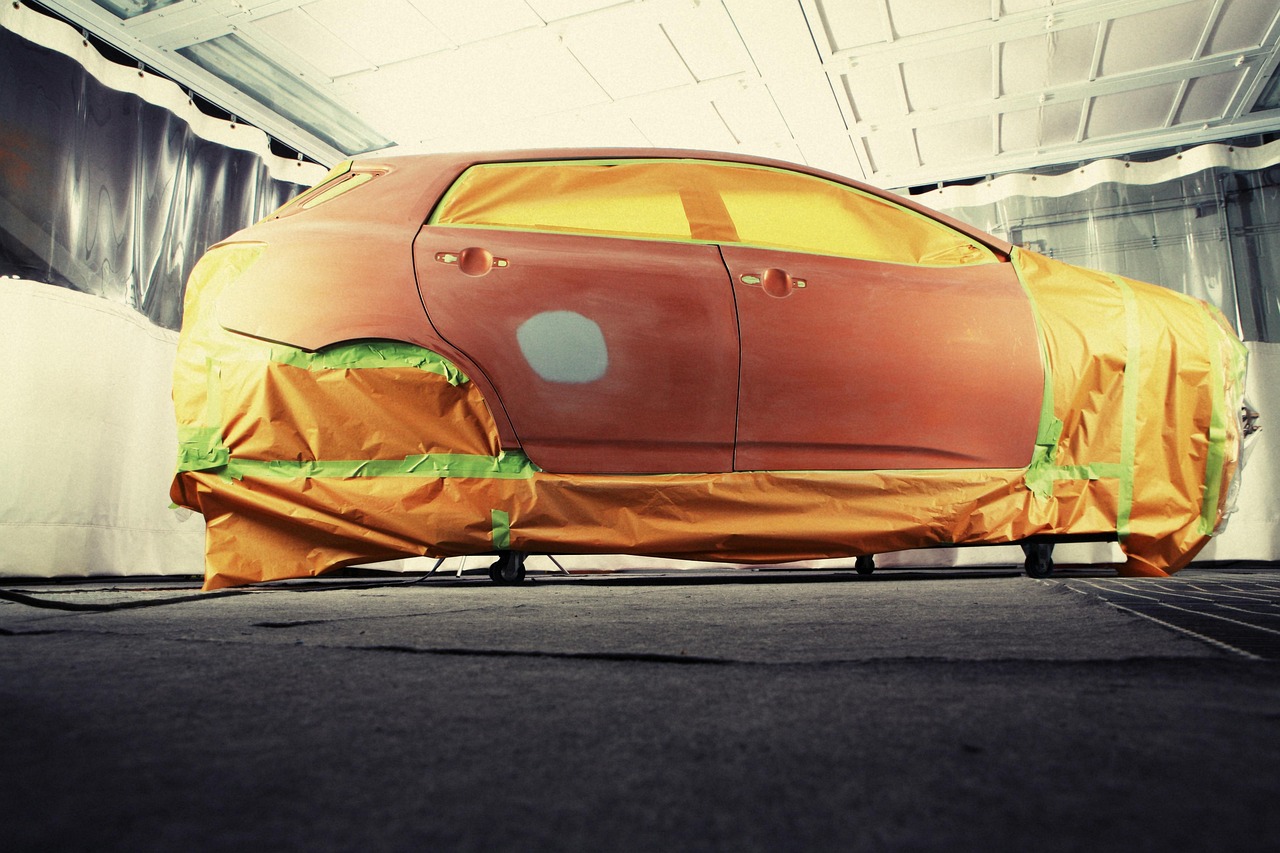
He wasn’t some shop owner with a booth and a mixing room. He was a backyard guy with a driveway, a rented compressor that sounded like a dying lawnmower, and a sedan he’d been slowly bringing back from the dead for two years. The plan was simple: spray it once, do it right, and stop thinking about paint forever.
That’s how he justified the $4,200 hit for PPG single-stage and the rest of the materials. Friends had teased him for buying “the good stuff” for a car that still had junkyard seats and a dash that cracked if you looked at it wrong. He didn’t care—he wanted that deep, glossy, old-school single-stage look, and he wanted to say he did it himself.
The day he sprayed it, everything looked like it was finally clicking. The panels laid down slick, the color popped under the garage lights, and he had that giddy, adrenaline-brain feeling like he’d just cheated the system. Then he touched the door jamb the next morning and felt his fingertip drag like it had landed on warm taffy.
The “premium paint” confidence spiral
He’d been prepping for weeks: sanding, wiping, re-sanding, arguing with himself about whether the surface was “clean enough” or “just clean-ish.” His garage setup was the usual DIY Frankenstein—plastic sheeting, a box fan with furnace filters duct-taped to it, and a hope that the neighbor wouldn’t decide to mow mid-coat. It wasn’t professional, but it was the kind of thing that works when everything else goes right.
And he’d convinced himself it would, because he’d paid for materials like a pro. The paint came in the heavy cans with the crisp labels, and the activator and reducer were lined up like ingredients for a chemistry experiment. He’d watched enough spray videos to talk about “flash time” and “orange peel” like he’d been doing it since high school.
The only problem with confidence is it makes you skim. He’d read the tech sheet, sure, but more like someone reading a recipe while already preheating the oven. The mixing cups were marked, the ratios were written on masking tape, and he was moving fast because once you start, you’re on the clock.
Spray day: the high point before the drop
He started early to beat the heat, and by mid-morning the car was in full “paint prison,” masked up and looking like it was about to undergo surgery. The first coat went on and it looked wet and even, the kind of satisfying glide that makes you forget every hour you spent blocking the hood. He stepped back between passes, checking reflections like he was inspecting jewelry.
Somewhere in the middle of it, he noticed the paint wasn’t “kicking” as quickly as he expected. Not a full alarm bell, more like a small itch—like, huh, that’s slower than the videos. He blamed the temperature, then the humidity, then the fact that his garage wasn’t a booth and never would be.
He pushed through. He laid down his last coat, cleaned the gun, and sat on an overturned bucket staring at the car like he’d just finished a marathon. That night he went out with a flashlight more than once, checking dust nibs and staring at the shine like it could disappear if he didn’t monitor it.
When “wait for it to cure” turns into a three-week nightmare
The next morning he did the classic mistake: the gentle fingertip test. The paint wasn’t just soft—it was tacky in that specific way that makes your skin hesitate when you pull away. He told himself it was normal and forced himself not to poke it again, because every painter knows you can ruin a finish by being impatient.
Two days later it still felt wrong. By day four, it wasn’t just “soft,” it was grabbing lint if he got too close with a sleeve. He tried to keep the garage closed, but it was summer and the heat made the air feel thick, like the whole space was marinating.
Then the real panic set in: bugs. One evening he opened the door and saw a tiny gnat embedded in the clear, frozen mid-flight like a museum display. He tried to flick it out and stopped himself at the last second, realizing he’d leave a fingerprint crater that would live there forever.
He started doing what desperate DIY guys do when they’re out of their depth: changing one variable at a time like he was debugging code. He ran fans for airflow. He tried a space heater for a few hours, then worried he was cooking the top while the bottom stayed soft. He cracked the garage door an inch and immediately regretted it when the neighborhood dust decided it wanted to be part of the finish.
The awkward discovery: the wrong activator was hiding in plain sight
About a week in, he called the paint supplier and tried to describe the problem without sounding like he’d messed up. He talked about humidity and cure times, and you could practically hear him trying to angle the conversation toward “this is a defective batch.” The guy on the other end asked one question that hit like a brick: “What activator did you use?”
He answered confidently, then walked into the garage to read the label anyway, because suddenly confidence felt like a liability. The can in his hand didn’t match what he thought he’d bought. Same brand family, similar label design, but not the same product line—and not meant for that single-stage system.
The story that emerged was painfully ordinary. He’d grabbed the wrong activator off the shelf while buying a pile of supplies, and the counter guy either didn’t catch it or assumed he knew what he was doing. Back home, the cans sat together, the labels all looked “PPG enough,” and once he’d written his mixing ratio on tape, he never looked again.
Now the explanation was simple and brutal: the chemistry never properly crosslinked. The car wasn’t “taking longer to cure.” It was essentially stuck in limbo, a glossy trap that would happily hold onto fingerprints, dust, and regret for as long as the weather let it.
Three weeks of tacky paint and the slow-motion fallout
By the second week, the smell in the garage had that sweet solvent edge that should’ve faded. He couldn’t drive the car because the paint was too fragile to risk road grit, and he couldn’t even roll it out into the sun without worrying about debris landing in it. It sat there like a hostage, finished enough to hurt, unfinished enough to be a disaster.
Friends came by and did that thing where they try to be supportive but can’t stop themselves from asking to touch it. He became weirdly territorial, hovering near the fender like a security guard. When someone joked that it looked “fresh,” he had to swallow the urge to snap, because fresh was the problem.
He started calling around to body shops, and those conversations were their own humiliation. He’d explain the materials, the wrong activator, the tackiness, and then there’d be a pause where you could tell the person on the other end was deciding whether they wanted anything to do with it. A couple places gave him the soft, careful version of no; others said yes, but only if he understood that fixing it meant sanding or stripping and starting over, not “saving” it with some miracle topcoat.
And the money part was the sharpest edge. The $4,200 wasn’t just a number—it was his “I’m doing it right” budget, his big swing, his justification for the whole project. Watching that expensive paint stay sticky felt like watching cash turn into flypaper.
By week three, the paint was still tacky in spots, especially where it was thicker. It wasn’t dripping or running anymore; it was worse than that, because it looked good from five feet away and betrayed him the second anything got close. He could stand there and see his reflection in the door, then ruin it with one accidental brush of a knuckle.
He stopped posting progress photos. He stopped talking about it like a fun project and started referring to it like a problem he had to manage. The car became the thing he avoided walking past in the garage because every glance reminded him how close he’d been to winning.
The bleak part is there wasn’t a clean ending waiting around the corner—just decisions. Sand it and reshoot, maybe after praying the solvents finally escape enough to make it workable. Pay a shop to strip it and take over, which felt like admitting defeat with interest. Or leave it in the garage longer, hoping time does what chemistry already refused to do, while the tacky surface quietly collects little permanent souvenirs of every day it sits there.