

He’d been waiting on this weekend like it was a holiday. The project coupe had been in pieces for months, and now it was finally wearing fresh color—laid down in his garage like he’d been planning since winter, when the air was too cold and every panel felt like a promise he couldn’t cash yet.
He wasn’t pretending it was a “proper booth” either. Plastic sheeting taped to the walls, box fans with furnace filters zip-tied to them, the floor misted to keep dust down. He’d read enough forum threads to know what he was risking, but he’d also read enough to think, I can pull this off if I’m careful.
The only compromise he kept making, over and over, was the window. He cracked it a few inches for ventilation, just enough to keep the air from turning into a chemical fog bank. The plan was simple: shoot base, flash, then clear—then lock everything down and let it cure while he sat in the driveway staring at it like a man guarding a treasure.
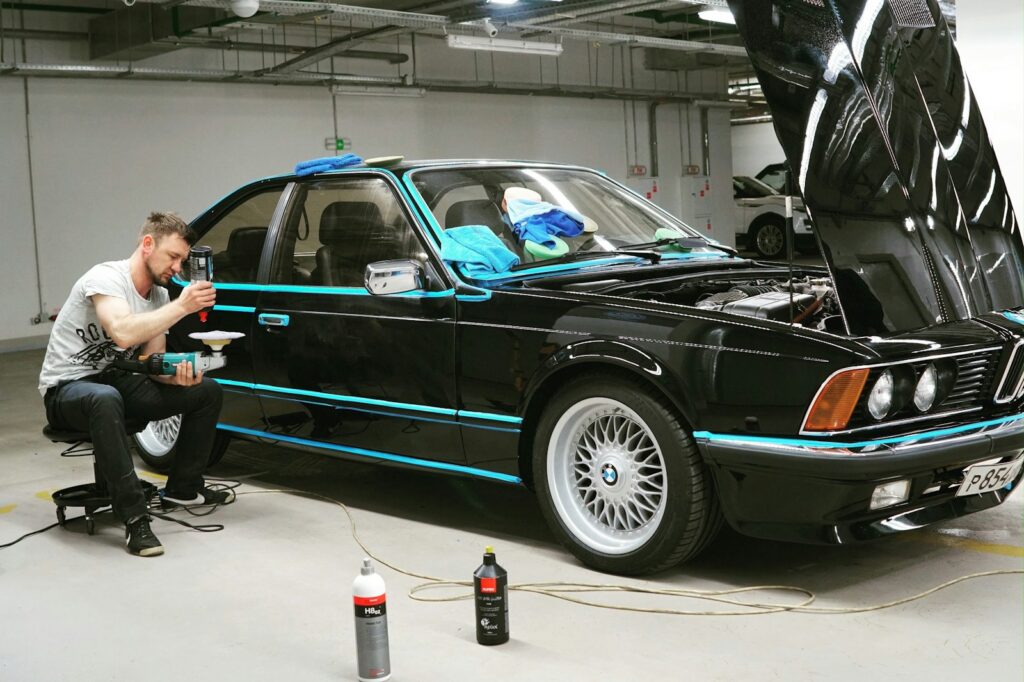
The garage that wasn’t a booth
By late afternoon the garage had that sweet-solvent smell that sticks to your clothes and makes your tongue feel dry. He’d already done the fussy parts: tack cloth, wipe-down, one more pass with the light to check for lint and gnats and whatever else likes to die for automotive paint. The coupe looked almost too clean for a car that used to be a sun-baked shell.
He mixed the clear like he was doing a chemistry lab, squinting at the ratios and checking the temperature because somebody online had sworn the wrong reducer would orange-peel your whole life. Spray gun cleaned, air pressure set, he did a couple test passes on a scrap panel. It laid down glossy and wet, the kind of shine that makes you forget you’re in a garage with a shop vac in the corner.
That’s when the first little doubt crept in. The fans were moving air, sure, but the haze was hanging longer than he liked, and his mask was starting to feel like it was fighting a losing battle. So he did what he’d been doing all day—walked over and cracked the window a touch more, convinced that if it was only open a few inches, nothing big could get in.
The moment the clear went perfect
He started on the driver’s side, working from front to back with that careful overlap rhythm that people only find after they’ve screwed it up a few times. The clear leveled beautifully on the door, then the quarter, then the sail panel—wet enough to flow, not so wet it ran. He was in that rare zone where everything feels synchronized: the gun distance, the speed, the lighting, the air.
He actually paused after a pass to admire it, which is how you know he was feeling confident. The driver’s quarter had that mirror-wet look that makes every garage painter want to text pictures to their friends immediately. Even with the fans humming and the plastic rustling, the garage felt strangely quiet, like it was holding its breath while the clear did its thing.
Then he heard the buzz. Not the distant, polite kind you ignore—this was close, angry, and decisive. He froze mid-step, gun still in his hand, trying to locate it without moving too fast, because moving too fast in wet clear is how you end up wearing your own fingerprints on your paint job.
The yellow jacket that chose violence
It came in through the cracked window like it had a map. He watched it zigzag once, then lock onto the bright, fresh panel like the car had personally offended it. A yellow jacket doesn’t drift the way a gnat does; it commits to a direction, and this one committed straight toward the driver’s quarter, right where the clear was glassy and untouched.
For a second he tried the “don’t panic, just shoo it” approach, waving his free hand in small, careful motions. That only made it orbit faster, like it thought he was challenging it. He took a half-step back, which brought his shoe dangerously close to a drop cloth corner, and you could tell his brain was juggling two disasters at once: getting stung while holding a spray gun, or tripping and smearing a whole side of the car.
The yellow jacket landed dead center in the wet clear like it was sitting down in a freshly poured pool. It didn’t just touch and lift off, either. It sank. You could see the wings catch, then the body, and then it started doing that frantic insect thing—kicking and twisting—engraving itself into the finish with every twitch.
He made this sharp sound that wasn’t quite a swear, because it didn’t feel big enough for words. The garage suddenly wasn’t quiet anymore; it was fan noise, his breathing, and that tiny furious buzzing getting muffled as the clear swallowed it. He stood there with the gun pointed at nothing, watching the quarter panel get ruined in slow motion.
Everybody has an opinion, nobody agrees
He did what most people do when they’re spiraling: he called someone. Not a professional painter—just a buddy who’d helped him block sand and who’d been getting the play-by-play all week. The buddy picked up, heard the words “yellow jacket” and “wet clear,” and immediately started asking questions that were half troubleshooting, half disbelief.
There was an argument inside the argument. His buddy wanted him to leave it alone, let the clear cure, sand it later, don’t touch it while it’s wet because you’ll turn one bug into a crater the size of a quarter. He couldn’t stand the idea of that insect being permanently entombed in the panel, like some cursed amber fossil every person at a meet would find with their eyes six inches from the paint.
He tried to be logical for about ten seconds, then grabbed tweezers like he was defusing a bomb. The problem with tweezers is they don’t grab a bug that’s basically glued into syrup; they grab the top layer of clear and stretch it. He got the yellow jacket out, technically, but it came with strings, and the hole it left behind immediately started to sag and deform like a tiny sinkhole.
At that point the buddy’s tone changed. It wasn’t “I told you so,” but it was close—the kind of exhausted sympathy where someone knows you’re about to make three more choices that turn a bad moment into a long weekend. He dabbed at the spot with the corner of a tack cloth, which just left fibers, because of course it did, and now he had a yellow-jacket crater with a little tuft of cloth like the world’s worst boutonnière.
The cleanup that didn’t clean anything
He tried to save it in the way garage painters always try to save things: one more light pass of clear. The idea was to flow it out, bury the defect, make it disappear under another layer. But that only works when the defect is flat-ish, and this one was a gouged divot with torn clear edges that wanted to wrinkle, not level.
When the fresh clear hit the crater, it looked okay for about a heartbeat. Then it started doing that ugly thing where solvent bites into semi-disturbed paint and creates little ridges and waves. The shine was still there, but now there was texture—like the panel had been kissed by a heat gun in one spot and left to cool wrong.
He shut the gun down and just stood there, helmet lifted, staring at the driver’s quarter as if staring could reverse chemistry. The rest of the car looked incredible, which somehow made it worse. The defect wasn’t a general “garage paint job” flaw you could shrug off; it was a single, specific wound, and he knew his eyes were going to find it every time he walked into the garage.
And because life likes timing, the smell had built up again. He realized the window was still cracked, still inviting the outside world into his not-a-booth. He walked over and shut it, not gently, and that little clack felt like the only thing he could control anymore.
The coupe sat there curing, glossy and gorgeous except for that one spot, and he kept circling it like a dog with a sore paw—unable to stop looking, unable to fix it tonight without making it worse. He’d wanted this weekend to end with a finished car and a quiet kind of pride, but instead it ended with a tiny crater on the driver’s quarter and the knowledge that he’d either live with it or sand back into his fresh work. The worst part wasn’t even the bug; it was how a window cracked “just enough” turned his perfect moment into the kind of flaw that’ll haunt him every time the light hits it wrong.
More from Steel Horse Rides: