

Imagine walking into a barn and finding a 1969 Porsche that has been sitting untouched for the last 30 years. That alone would be a good day. But what @wd.detailing found inside this barn came with a surprise painted right on the body.
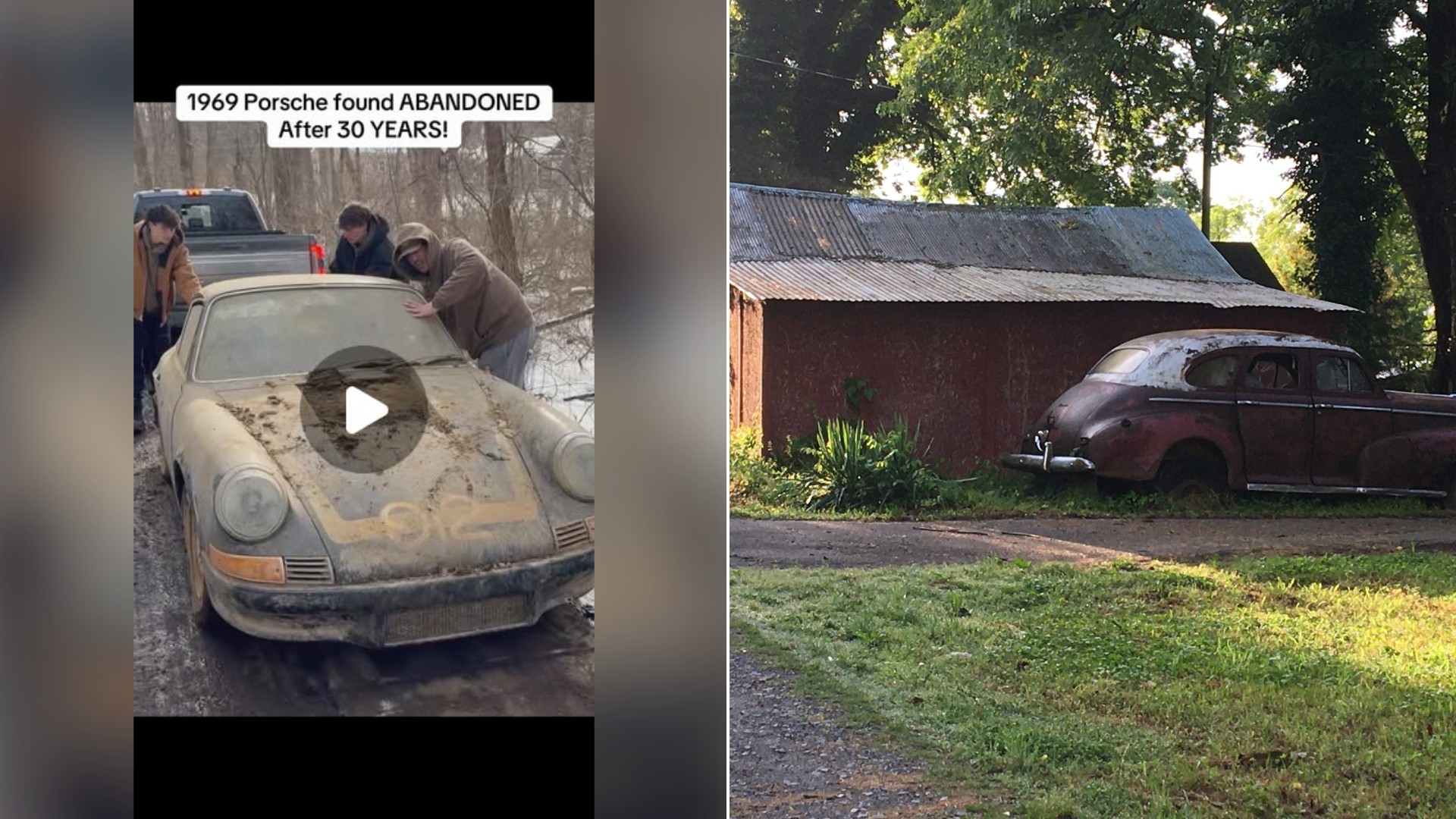
The car wears stripes. Not the subtle, tasteful kind you might expect on a German sports car, but stripes with the paint scheme of a Trans Am. The conclusion is hard to avoid, and the creator says it plainly: someone wanted a Trans Am and bought a Porsche.
It is a funny line, and it lands because it is partly true to life. Car owners have always loved to customize, and sometimes the result is a combination that nobody in the factory would have approved.
View this post on Instagram
Why a 1969 Porsche Matters
The late 1960s were an important time for Porsche. The company’s rear-engine sports cars from this period are some of the most admired classic 911s and 912s among collectors, with their slim bodies and light, delicate feel. The reel does not tell us exactly which model this is, so anything beyond the year is a mystery for now. What we do know is that a Porsche from 1969 is a car with real collector interest, which makes the idea of one sitting for three decades in a barn quite a story.
Just as interesting is the question of what a collector should do about the stripes. Some purists would peel them or repaint to return the car to its factory look. Others might see the stripes as a fun, period piece of personality worth preserving. There is no single right answer, and it depends on the car’s condition, history and the owner’s goals.
The Trans Am Connection
The Pontiac Firebird Trans Am became a pop culture favorite, with bold graphics and stripes that helped make it famous. Those looks were copied on all sorts of vehicles, as owners tried to bring a little muscle car swagger to their own rides. Putting such stripes on a Porsche is a bit like putting cowboy boots on a ballet dancer: unexpected, bold and a little hard to look away from.
What Thirty Years in a Barn Does to a Car
A car that sits that long faces predictable problems. Rubber seals, hoses and tires dry out and crack. Fuel breaks down and leaves a varnish in the tank and lines. Moisture creates rust, especially in low spots such as floors and rocker panels. Mice and other pests may nest in the car and chew wiring. An air-cooled Porsche engine, left unused for decades, needs a careful inspection before any attempt to run it.
A sensible revival goes in steps:
- Document the car as found with plenty of photographs.
- Clean out debris and nests, and check for chewed wiring.
- Drain the old fuel and replace it, and inspect the tank and lines.
- Change the oil and filter, and turn the engine by hand to check for freedom.
- Replace the battery, tires, brake fluid and rubber lines.
- Test the brakes and steering thoroughly before any drive.
Buying a Classic Porsche Wisely
Classic Porsches reward careful buyers. Rust is the great enemy, so inspect the floors, the area near the battery and spare wheel, the front suspension mounts and the rear fenders. Make sure the numbers on the body and engine make sense for the model, and ask whether the engine is original. Look for records, and consider hiring a specialist for an inspection, since the cost of a mistake can be enormous. Parts for these cars are available but not cheap, and a project that looks simple can become costly quickly.
It also helps to join a club. Porsche enthusiasts are organized, knowledgeable and often generous. Members know which shops do honest work, which parts are worth buying and which cars to avoid, and many are happy to help a newcomer.
Stripes, Paint and Originality
If you want to find out what is under a set of old stripes, go slowly. Graphics from that era may be vinyl or paint, and removal methods differ. Gentle heat from a heat gun or hair dryer and a plastic scraper are the safest way to lift vinyl, with adhesive remover for the leftovers. Test a hidden spot first, because the paint beneath may have faded around the stripes, leaving a ghost outline that is almost impossible to hide without repainting the whole panel.
Judges and collectors tend to value original paint and honest patina when the car is a survivor, but they often penalize non-factory changes that cannot be reversed. That is why careful owners think twice, take photos, and choose reversible steps first. A car that can be returned to stock later keeps more options open.
Keep the Story
If the stripes are part of the car’s past, think about what they say. Someone owned this Porsche at a time when they wanted a little extra attitude, and they went to the trouble of adding it. That history is part of the car, and it is the sort of detail that makes a barn find feel like a time capsule. Whether you preserve it or remove it, document it first.
The reel does not tell us the barn’s location, the owner or what the plans are for the car. For more of the cars found behind old barn doors, follow @wd.detailing.
More Stories You May Like
- Barn Find 2002 Pontiac Trans Am WS6 With A Six Speed And A Hurst Shifter Gets Pulled Out Of A Shed After Years Of Sitting And Starts Right Up
- Dealers Use Lowball Trade In Offers And Bundled Deals To Hide What You Really Pay, So Negotiate Your Trade And Your Purchase Price Separately
- Tesla Model Y Owner Drove Around With a Buckled Dented Panel for Two Years Before Finally Calling a Repair Man and Hears Why the Fix Will Not Look Perfect