
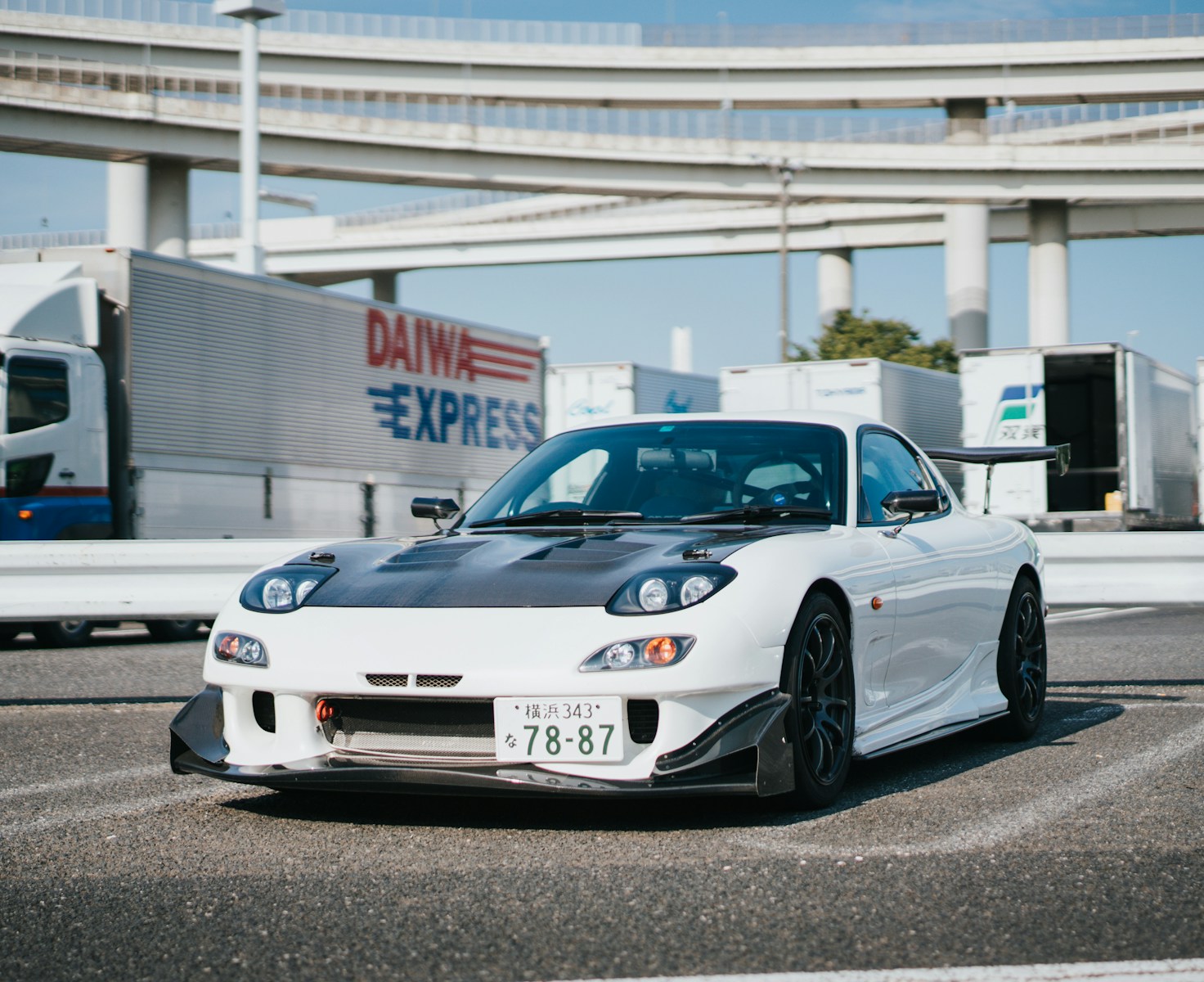

A fresh batch of Japanese performance cars built in September 2001 crossed the federal 25-year import threshold this month, meaning American buyers can now title and register cars like Nissan Skyline GT-R R34s, Mazda RX-7 FD3Ss and Toyota Supra JZA80s from that production window without the gray-market workarounds, “show or display” restrictions, or federal exemption paperwork that applied a month earlier. The eligibility date is not tied to a model year sticker; it is tied to the exact month a specific vehicle rolled off the line, which is why enthusiasts track this rule chassis by chassis rather than year by year.
How the 25-Year Rule Actually Works
Under federal law, a vehicle that is at least 25 years old can be imported into the United States without meeting Federal Motor Vehicle Safety Standards, and the National Highway Traffic Safety Administration is explicit that the clock starts on the vehicle’s actual date of manufacture, not its model year. A car assembled in September 2001 becomes eligible in September 2026, while a car from the same model year but built in December 2001 has to wait until December. Buyers who cannot document the exact build date from a factory data plate need supporting paperwork, such as an original sales invoice or a historical registration record, before Customs will accept the vehicle under Box 1 of the HS-7 declaration that skips the safety-compliance review.
Key Points
- Federal eligibility is based on month of manufacture, so cars from the same nameplate become legal on a rolling basis rather than all at once.
- September 2026 newly clears cars assembled in September 2001, including late-run Nissan Skyline GT-R R34s, Mazda RX-7 FD3S Type RS coupes and Toyota Supra RZ twin-turbos.
- Values for these chassis have already climbed sharply ahead of eligibility, and dealers expect that trend to continue as each new production month clears.
- Passing the 25-year safety exemption does not exempt a car from state emissions or registration inspections, which vary widely by state.
What’s Newly Eligible This Month

The R34 GT-R is the marquee name in this batch. Nissan built the R34 chassis from January 1999 into 2002, and a September 2001 build date lands squarely in the V-Spec II and M-Spec production run, ahead of the ultra-rare Nür special editions that arrived the following February. Pricing for the platform has already moved well beyond where it sat even a decade ago. A 1999 V-Spec sold on Bring a Trailer for a record $320,187 including buyer’s premium, and Hagerty’s own market data shows comparable Midnight Purple II examples changing hands privately for $335,000 or more. Import broker JDMBUYSELL, which tracks its own sale listings, says R34 GT-R values have gone from roughly $30,000 to $40,000 in 2015 to six figures in 2026, with Nür and Nismo Z-Tune cars trading in the low seven figures; the same source notes the less glamorous ER34 GT-T six-cylinder coupe remains available from $20,000 to $25,000 for buyers who want the chassis without GT-R money.
Mazda’s rotary-powered RX-7 is the other headline nameplate. Mazda’s own newsroom confirmed at the time that FD3S production in Japan was set to end in August 2002, which means a September 2001 build is a late-cycle Type RS or Type RB car rather than one of the 1,500 numbered Spirit R send-off editions built the following spring. Toyota’s fourth-generation Supra follows a similar pattern. Toyota’s own corporate history confirms the JZA80 stayed in production in Japan through August 2002, years after U.S. sales had already ended in 1998, and enthusiast pricing trackers report that clean twin-turbo JZA80 Supras that bottomed out around $30,000 in the mid-2000s are now regularly topping $90,000, with the best stock examples closing in on six figures.
What Buyers Should Do
Anyone shopping this newly eligible window should get the exact manufacture date in writing from the seller or an export inspection service before wiring money, since a car built even a few weeks later than assumed is still federally barred from import and registration until its own 25-year date arrives. Buyers should also budget separately for state-level emissions testing, odometer and title conversion from kilometers, and right-hand-drive insurance underwriting, none of which the federal exemption addresses. Because these cars were never sold new in the U.S., replacement parts and factory service records typically have to come through Japan-based specialists rather than a domestic dealer network.
The pattern is likely to repeat every month for years, since Japan’s most collectible performance era ran roughly from the mid-1990s through the early 2000s. What changes each month is simply which specific chassis and trim level crosses the line, which is why serious buyers track build dates the way American classic car collectors track VIN-decoded production sequences rather than treating “25 years old” as a single, fixed calendar event.