
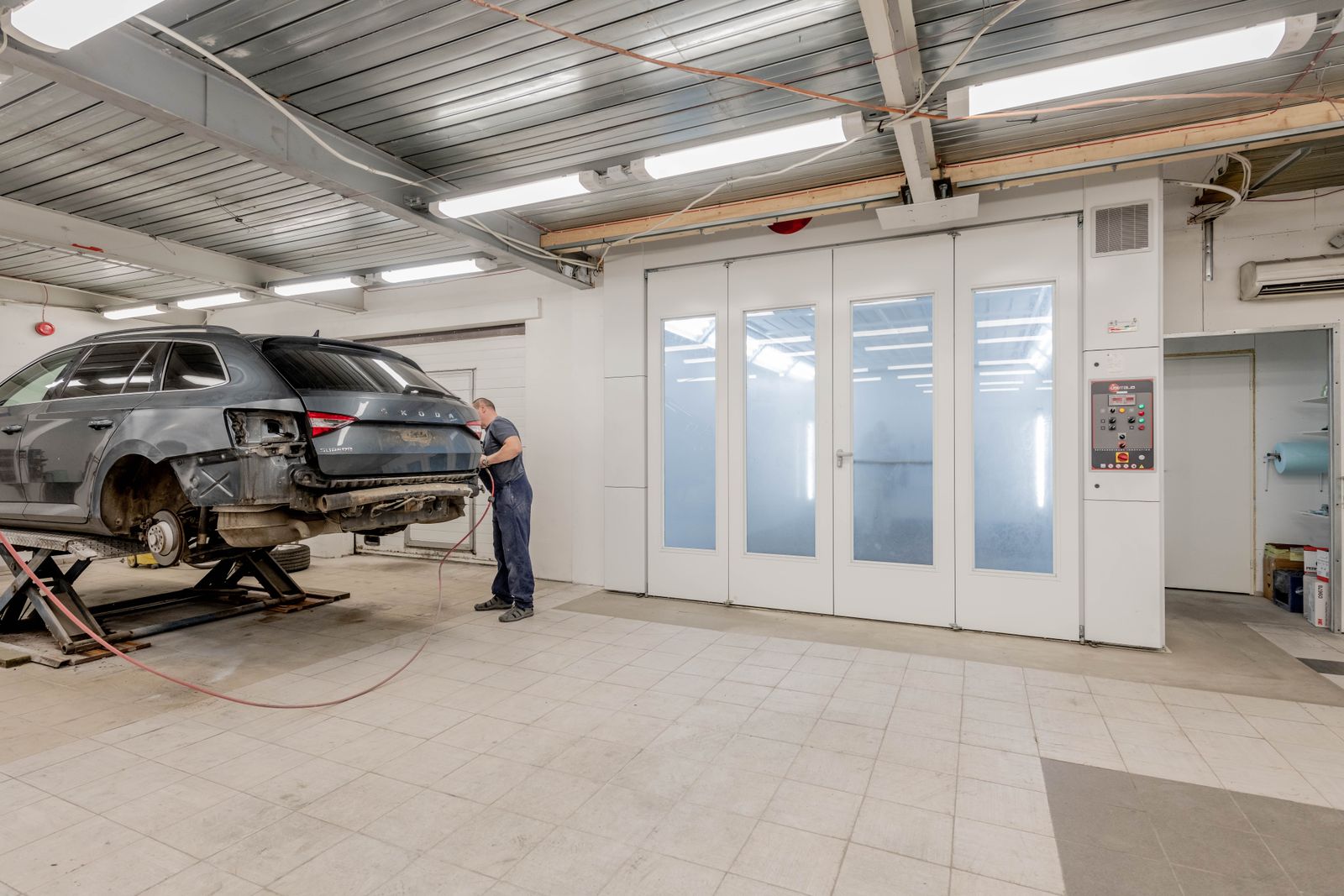

It started the way a lot of car nightmares start: with a brand-new paint smell and a receipt that made everyone feel like the problem was “handled.” The car had been in a decent hit a few months earlier—nothing that made the news, just enough that the rear end was pushed in and the owner couldn’t ignore it. Insurance got involved, an approved body shop got assigned, and a big estimate got signed off: around $14,000, much of it labeled as structural repair and “rear body panel work.”
When the owner picked it up, the car looked good from ten feet away, which is how most people interact with their bumpers anyway. The paint matched, the panel gaps looked passable, and the shop manager did that casual, confident hand-wave over the rear quarter like, “All new, good as factory.” The owner drove away relieved, because the whole point of paying premiums for years is supposed to be that you don’t have to become an automotive forensic investigator.
Then came the parking-lot bump. Not a crash, not a hit-and-run, just a low-speed tap from a shopping cart corral situation—one of those minor nudges that usually leaves a scuff and a story you forget by dinner. But when the owner crouched down to check the damage, something about the bumper edge looked… soft. Not cracked plastic soft, but “this shouldn’t be hollow” soft.
The Tap That Didn’t Make Sense
The mark was small, the kind of thing most people would buff out and move on. But the owner pressed lightly near the scuff and felt the panel give in a way that didn’t match the rest of the bumper. It made a faint crunching noise, like stepping on a cereal box, and that’s when the mood shifted from annoyed to suspicious.
They pulled the bumper corner outward just a bit, thinking maybe a clip popped loose. Instead, a jagged flap of paint lifted like a sticker, and underneath wasn’t the expected black plastic or foam impact absorber. It was brown. Not rust-brown—cardboard-brown.
At first the owner genuinely thought they were looking at packaging that got stuck back there by accident. But then the flap widened, and there was duct tape. Not specialty automotive tape, not even that cloth-backed trim tape. Just standard gray duct tape, layered like someone had been patching a moving box.
The “Structural Repair” That Looked Like Arts and Crafts
The owner took photos, because that’s what people do now when reality starts wobbling. They peeled back a bit more, and the whole thing started to read like a bad prank: cardboard cut into rough shapes, taped in place, and then filled with expanding foam that had hardened into lumpy yellow islands. It wasn’t just one little patch either; it ran along the inside of the bumper cover like the car had been paper-mâchéd back together and then sprayed pretty.
The most unsettling part wasn’t even the materials. It was how deliberate it looked, like someone had spent time making it “hold” long enough to pass a quick glance. The foam wasn’t randomly sprayed; it was used like filler to create the contour, and the tape was there to keep things from sagging while it cured.
The invoice from the shop had lines that sounded expensive: “rear reinforcement,” “pull and measure,” “unibody correction,” “replace energy absorber,” “calibrate sensors.” Seeing cardboard behind fresh paint made those words feel like a different language. The owner sat in the driver’s seat for a minute, staring at the receipt on their phone and then back at the bumper, like they could force it to become true by looking harder.
Back to the Shop, With Receipts
The owner drove back to the body shop the next morning, with the bumper corner held on by the grace of friction and a couple of clips that hadn’t given up yet. The front desk person did the usual polite smile until they saw the photos. Then the smile tightened into that professional “let me get someone” expression that means things are about to become someone else’s problem.
The manager came out and did the classic inspection where they don’t touch anything at first. He leaned in, squinted, nodded slowly, and said something like, “Huh. That’s… unusual.” The owner didn’t yell, but they didn’t have to; the pictures did the yelling, and the invoice did the screaming.
The manager’s first move was to redirect the blame onto the parking-lot bump. He talked about “new damage” and “outside impact,” as if a low-speed tap could manifest cardboard and tape that had been entombed under paint. The owner pointed out that the damage was a tiny scuff, and the cardboard was clearly part of the prior repair, sitting behind a surface that had been painted and blended to match.
That’s when the shop’s tone shifted into defensive bureaucracy. They started talking about “repair methods,” “industry-standard filler,” and how bumpers were “cosmetic,” even though the bill didn’t read like a cosmetic job. When the owner mentioned the word “structural,” the manager said they’d have to “pull the file,” which is shop-speak for buying time.
The Insurance Company Starts Asking Questions Nobody Wants to Answer
The owner called the insurance adjuster from the parking lot, photos ready, invoice open, hands shaking with that specific anger that comes from feeling played. The adjuster’s initial reaction was cautious—insurance people are trained to not commit emotionally to anything—but the silence got longer as the owner described what was behind the bumper. The adjuster asked for the photos, then asked for more photos, then asked if the owner could show where exactly the tape and foam were located.
Within a day, the conversation stopped being about “a concern” and started being about documentation. The adjuster requested the shop’s itemized estimate, supplements, parts invoices, and teardown photos. The shop, which had sounded confident in person, apparently got a lot less conversational when asked for proof that the expensive parts they billed were actually installed.
The owner learned something they didn’t want to learn: when an insurer pays a shop for a repair, it’s based on what the shop says it did, plus whatever the adjuster inspected and approved. If the shop’s documentation is thin and the car leaves looking “fine,” a lot of bad work can hide behind glossy paint for a while. And a “while” can be exactly long enough for the shop to hope nobody ever notices.
There was also the awkward question of why the car didn’t feel obviously unsafe. That’s the trap: a bumper cover can look perfect while the actual reinforcement, absorber, mounts, and alignment underneath are a mess. Cardboard and foam might not immediately affect how the car drives, but they sure don’t behave like engineered crash structures when physics shows up again.
The Second Inspection Gets Ugly
The insurance company scheduled a re-inspection, and this time it wasn’t the casual glance-over that happens at drop-off. They wanted the bumper removed. The shop hesitated, offering to “repair the cosmetic issue” and repaint the corner, like a fresh coat could make everyone forget what the owner had found.
But the owner insisted on a teardown, and the adjuster backed them. Once the bumper came off, the shop’s story had nowhere to hide. Behind the painted surface, the filler job was bigger than it looked from the outside, and the foam wasn’t just smoothing a tiny imperfection; it was taking up space where actual components should’ve been.
As the parts came away, there were more questions than answers. The owner noticed missing fasteners and mismatched hardware. The foam had been sprayed around areas that looked like they’d been bent and never properly pulled back, and the cardboard wasn’t there to “protect” anything—it was there to create a shape where the proper part, or proper metalwork, should’ve been.
The shop tried to frame it as a subcontractor mistake, which is a neat trick because subcontractors rarely sign the invoice. They suggested they’d “make it right,” but wouldn’t say what that meant until they talked to the owner “privately.” That’s when the owner realized the conversation was no longer about repair quality; it was about limiting the blast radius.
Fallout, Paper Trails, and a Car Nobody Trusts Anymore
At this point, the owner didn’t want the same shop touching the car again. The argument wasn’t just “you did a bad job,” it was “you billed thousands for work that looks like a middle school prop project.” The adjuster floated the idea of moving the vehicle to another facility for a full assessment, but that meant towing, storage, and the miserable limbo of not knowing what was actually damaged until someone started peeling layers back.
The body shop, faced with the insurance company requesting documentation and the owner refusing a quiet fix, started getting careful with their words. They didn’t apologize in a clean, satisfying way; they used phrases like “miscommunication” and “it appears” and “we can address your concerns.” The owner, meanwhile, had the kind of anger that doesn’t burn hot—it burns steady, because it keeps finding new fuel in the form of missing parts and vague answers.
There was still the bigger, nastier question hanging over everything: if they did this behind a bumper where it’s easy to hide, what else did they do where it’s harder to see? The owner kept looking at the rear of the car like it was a stage set, wondering which walls were real and which were painted cardboard. And even if the insurance company clawed money back or forced a proper repair, the owner couldn’t shake the feeling that the car had been returned to them as a gamble—one that only got exposed because of a dumb, slow parking-lot bump that wasn’t supposed to matter.
More from Steel Horse Rides: