
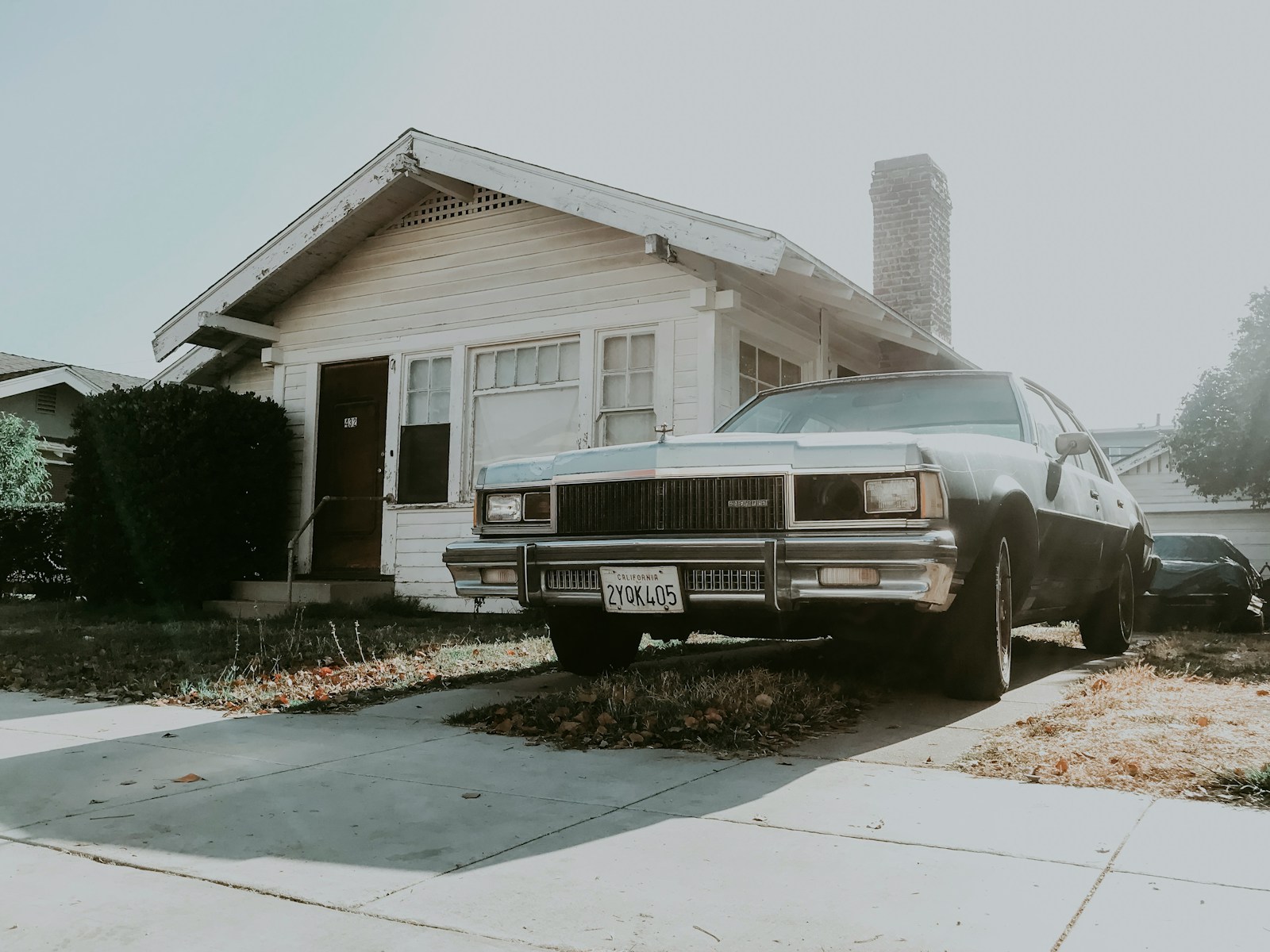

When her grandmother died, the car was the one thing her girlfriend couldn’t bring herself to sell. It was an older, beat-up classic that smelled like vinyl and peppermint gum, the kind of car that came with stories baked into the upholstery. The girlfriend didn’t even pretend it was practical—she just wanted it kept alive, like a rolling little memorial.
Her boyfriend, though, saw a project. He’d been talking for months about restoring “something vintage,” always sending late-night links to paint jobs and engine swaps like he was about to star in his own garage makeover show. So when the girlfriend mentioned the car was sitting in her mom’s driveway, half-covered with a tarp and collecting leaves, he jumped in fast with a plan.
He promised he’d restore it for her. Not “help her find a shop,” not “give it a once-over,” but full-on: tow it to his place, take it apart, fix what needed fixing, and bring it back running. The girlfriend hesitated at first, but he kept saying all the right stuff—how he understood what it meant to her, how he wanted to do this for their future, how it would be “a surprise” when it was done.
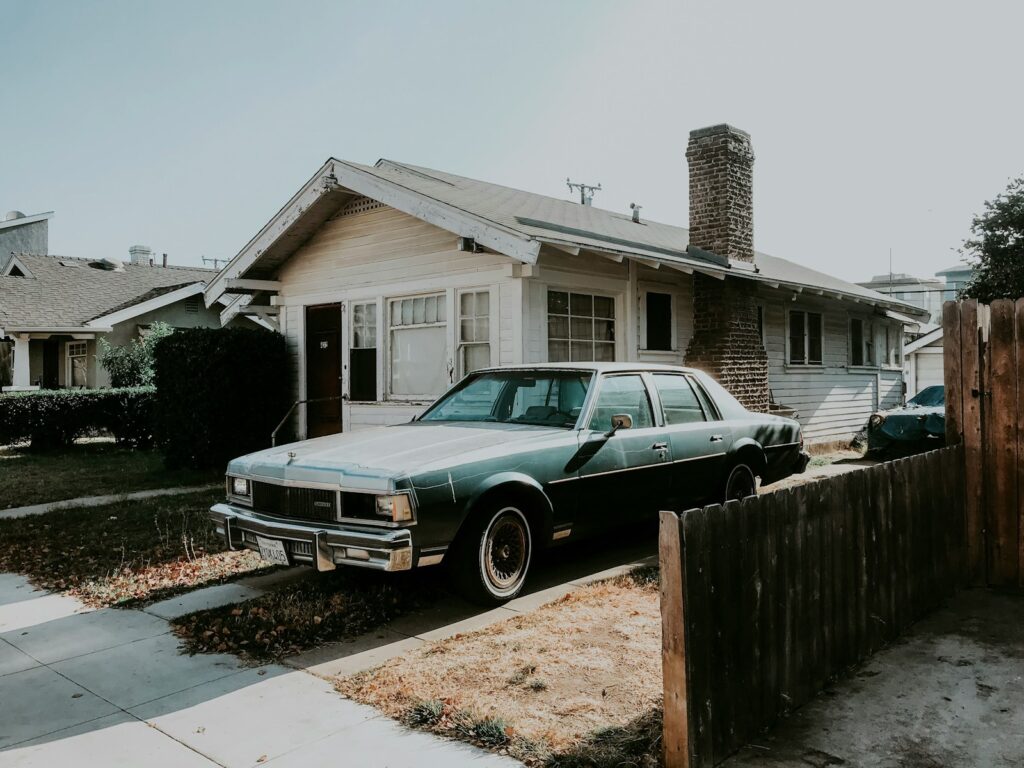
The kind of promise you want to believe
The car wasn’t just old; it was sentimental old. The girlfriend had memories of being driven to school in it, of her grandmother’s hands on that oversized steering wheel, of the same cassette tape that always got stuck in the deck. The car was also, inconveniently, worth money—at least in parts—because certain models had a following and people paid ridiculous prices for original components.
That’s why the family never pushed her to get rid of it. They figured, someday, she’d either restore it properly or sell it to someone who cared, and either way it wouldn’t be junked for pennies. So when the boyfriend offered to take it, her mom asked the normal, cautious questions: where would it be stored, was it insured, and did he actually know what he was doing?
He had answers ready. He had a friend with a trailer, a spot in a garage, and “a list” of what he’d need to do first. He said he’d document everything, take photos, keep all the parts organized in labeled bins like the YouTube guys do, and he’d give updates every week.
The tow day looked almost sweet, in that awkward couple way. The girlfriend took a few photos as the tarp came off and the sun hit the faded paint, like she wanted proof it was still whole before it disappeared into his hands. He joked about how she’d cry when she saw it finished, and she laughed a little too hard, trying not to think about how much trust she’d just handed over.
Eight months of “it’s going great”
The first month was all enthusiasm. He texted her pictures of the car in his garage, then a close-up of the interior, then some dusty bolt he claimed was “original hardware” he’d be cleaning up. When she asked how soon it might run again, he’d say stuff like, “Sooner than you think,” and throw in a heart emoji like that counted as a timeline.
Then the updates started getting vague. A week would pass and she’d ask, and he’d say he’d been slammed at work but made progress. Another week and it was “waiting on parts,” except he never said which parts, and when she asked if she could stop by, he’d say the garage was a mess and he didn’t want her to see it “mid-process.”
At some point, “mid-process” became the entire relationship’s background noise. The girlfriend would bring it up over dinner and he’d steer the conversation away with a kiss and a promise: “I’m close.” He started using the restoration like a shield, too—if she pushed, she was “stressing him out,” and stress was “why projects fail.”
She tried to be the cool girlfriend who trusted him, even as the months stacked up. But she’d also drive past his place sometimes and not see the car, which he explained away as “it’s inside” or “I moved it to my buddy’s shop for welding.” Every time she got worried, he’d sprinkle in just enough detail to sound legit, like mentioning a specific tool or throwing out a paint code.
The first crack: “Why is that part on Marketplace?”
The real shift happened because of something dumb and modern: a scroll at midnight. The girlfriend was in one of those local buy/sell groups, half-looking for cheap furniture, when she spotted a listing that made her stomach drop. It was a recognizable part from the car—something her grandmother had mentioned as being “hard to find”—photographed on a concrete floor, with greasy fingerprints and a price that wasn’t pocket change.
At first she tried to convince herself it was coincidence. But the photos had familiar scuffs, a chip on the edge, and in the background you could see a distinctive pattern of floor cracks that looked a lot like the boyfriend’s garage. The seller name wasn’t his, but the messages were written in that same breezy tone he used in texts: short, confident, slightly smug.
She did what people do when their brain refuses to process the worst possibility. She clicked the profile, checked other listings, and found more: another component, then another, each one described like “rare” and “great condition,” each one priced to move. Some listings were marked sold.
When she confronted him, he didn’t blow up immediately. He went quiet and asked how she’d even found that. Then he tried to act offended, like her noticing was the betrayal, and said he’d sold “a couple extras” to fund the restoration. He made it sound responsible, almost noble—like he’d sacrificed parts so she could have a better car in the end.
When the story stops adding up
That explanation might’ve limped along if he’d been transparent, but he wasn’t. She asked which parts were “extras” and where the money went, and he got slippery, saying it was “mixed in” with other expenses. She asked for receipts, and he said he didn’t keep them because it was “small stuff.”
She asked to see the car, right then. He stalled, saying it was late, he was tired, the garage was a disaster. She pushed harder, and he snapped that she didn’t understand how restorations worked—that you had to tear things down, that it always looked worse before it looked better, that she was being dramatic.
That word, dramatic, landed badly. It wasn’t just a car; it was her grandmother’s car, and the boyfriend knew that, because he’d used that exact sentiment to get his hands on it. Now he was acting like she was an annoying customer complaining about a slow repair job.
She told him she was coming over the next day with her mom. He didn’t like that at all, and suddenly the tone changed from defensive to bargaining. He promised he’d “organize everything” overnight so they wouldn’t panic, and he kept repeating that he had a plan, like saying it enough times would turn it into one.
The return: a chassis and a box of excuses
The next day, the girlfriend and her mom showed up and immediately knew something was wrong. The car wasn’t in a state of “in progress.” It was in a state of “stripped.”
What he had was basically a bare chassis—no meaningful interior, no original trim, missing the pieces that gave it identity. It wasn’t the romantic vision of a restoration, where parts are neatly arranged and labeled; it was emptiness, the kind you get when someone’s been quietly harvesting value and calling it work.
He tried to talk over the shock. He said he’d removed the parts to “refurbish them,” except they weren’t stacked in the garage. He said some were “at a friend’s place,” except he couldn’t—or wouldn’t—produce the friend’s number. He said he’d sold a few things temporarily and could “buy them back,” like rare vintage parts are items you borrow from the universe and return later.
The mom asked a question that cut through everything: where’s the money? He claimed it went into tools and supplies, and when she asked which tools, he gestured vaguely around the garage, where nothing looked newly acquired. The girlfriend stood there staring at the chassis like she was looking at a robbed grave, because in a way, she was.
They loaded what was left onto a trailer, and it wasn’t even a triumphant reclaiming. It was the logistical sadness of strapping down a hollowed-out shell that used to be a whole memory. The boyfriend hovered, still insisting he meant well, still trying to frame it as a misunderstanding, and he kept saying “I was gonna tell you,” even though eight months had passed and the only reason she knew was because she stumbled onto the listings.
By the time they left, the relationship was already dead in the driveway, but the mess didn’t stop with a breakup. The girlfriend now had to figure out what was sold, to whom, and whether any of it could be recovered without paying twice for her own family history. And the part that stuck with her wasn’t even the missing engine pieces or the stripped interior—it was realizing how easily he’d watched her trust turn into inventory, one “sold” listing at a time.
More from Steel Horse Rides: