

Most builders would not brag about pulling the same engine twice. Dan from DD Speed Shop opens this shop video with a confession that has nothing to do with a new part. It looks like a repeat, because this same motor already went into this same car once before, and now he is putting it in again.
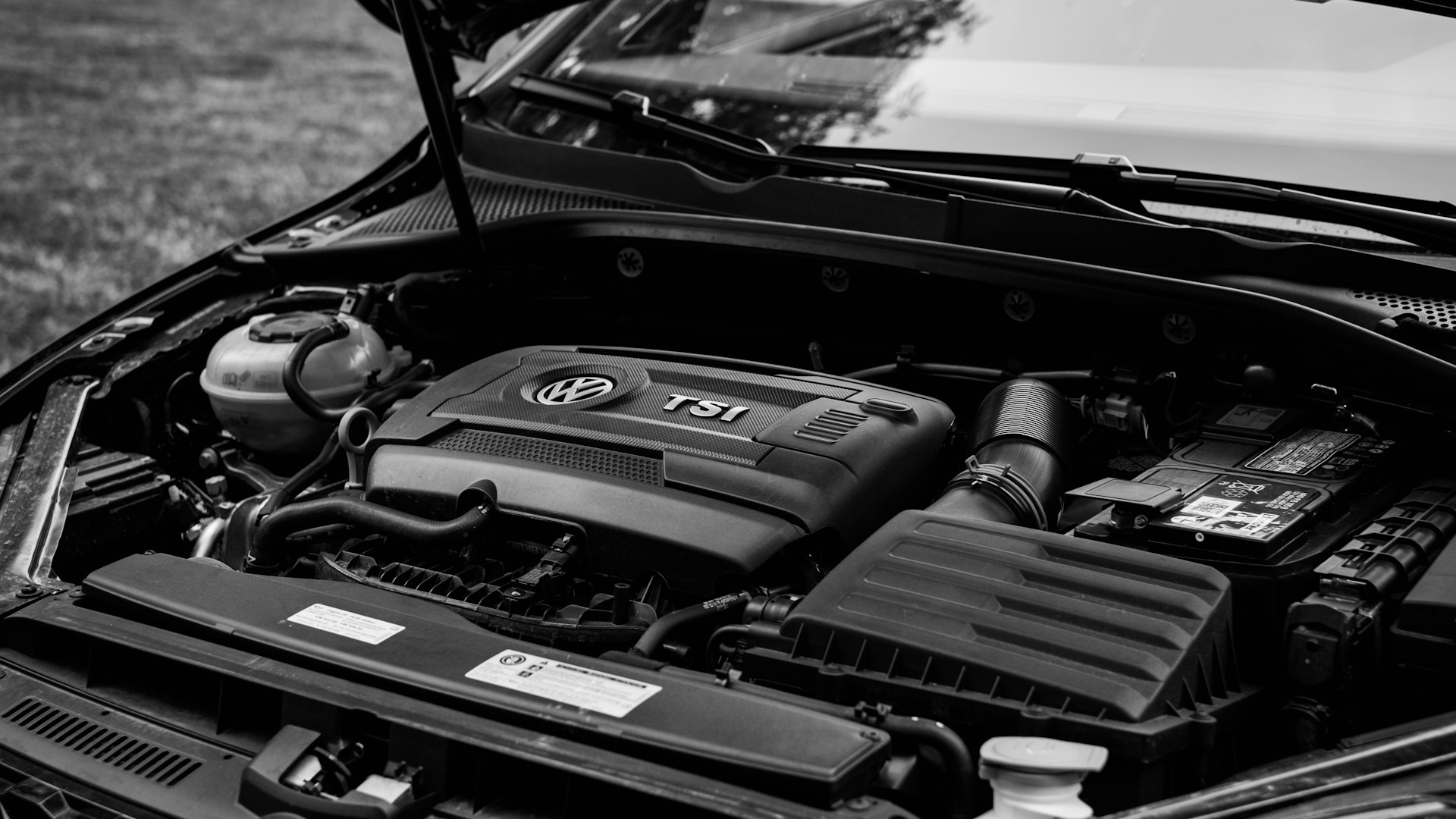
The car is a Tri-Five Chevy Nomad, and Dan says it only looks like a repeat. “It’s totally different this time because it’s the same motor in the same car.”
“I’ve Changed My Mind Obviously On This Car. Shocker.”
The plan had been to build the Nomad cheap. Then Dan realized he had a chassis ready to go, loaded with Speedway goodies, and the cheap plan went out the window.
The motor is a bone stock 350 that he picked up from a driveshaft guy. He also bought the transmission from the man he got the car from, which he says worked out very well.
A Brand New Crossmember Turned Up In The Shed While He Hunted For El Camino Parts
While looking for El Camino parts in the shed, Dan found a brand new Speedway crossmember made for 1955 to 1957 Chevys. It has proper weld brackets and drops low for exhaust, which he calls cherry.
He also dug up a small block Chevy motor mount kit for a 1955 to 1957 car, complete with rubber mounts. He had never used this kit, and he was not sure whether it came in the Speedway order, so he had to find out whether it was a bolt-in deal.
The Nomad’s frame turned out to be a seamless one, which he says is rarer, so the kit might need some modification. His plan was to weld the brackets, because “that’s what we do around here.”
Hood Off, Engine Crane Out, And A Very Low Car That Barely Clears
The hood had to come off first. Dan says they take a lot of hoods off, and he notes that Tri-Five hoods are light, so it simply leaned against the shop wall.
Next, he test fit the mount and liked what he saw. With the brackets hung from the motor mounts, the whole assembly was ready to go in.
The car sits so low now that he jokes the crane may not fit under it. “The price of looking cool,” he says. He lifted the car by the frame and let the suspension droop, and he warned about the risk of lifting with all the weight in the front. He does not want to be the guy who drops a prize Nomad off the lift because of impatience.
Why The Princess Auto Crane Fought Him Every Inch
The engine crane in the shop is a Princess Auto crane, and Dan called its wheels not ideal. He joked that whichever way he wanted it to go, it would go the other way. The engine twisted on the way in, and the seam in the floor pan was where it snagged.
A little wiggling got it past. He also reminded himself that the transmission is a 700R, which has some metric attachment points, so he had to slide underneath and fit the new mount. He had also cut out the core support earlier, which he says makes life a lot easier. “Those old-timers knew what they were doing.”
When the engine finally dropped into place, he said it nearly installed itself. He praised how close the motor mounts sit, with just enough room to fit his fingers under the balancer, and said Tri-Five Chevys are meant for performance. You can even put a mini blower on a small block and still close the hood.
Getting The Angle And Centering Right Before Anything Gets Welded
Dan uses a digital angle finder, which he says is cheap on Amazon. He is aiming for a slight downward slope of a few degrees, and his readings landed between about 2.5 and 3.1 degrees as he adjusted the mounts.
His tip is to measure from the car, not just the motor. He also says it is better to read the angle off the distributor than the carburetor pad, because many intake manifolds slope forward a few degrees so the carburetor stays flat.
Next, he centered the transmission between the frame rails. On a Tri-Five Chevy, he says, the distance from the center of the tail shaft to each rail is about 17 inches, maybe 16 and 3/4. His first measurements were 16 inches on one side and 19 on the other, so the transmission had to shift over until both sides read about 17.
He also checked that the distributor would not jam against the firewall and found there is plenty of room for an HEI. A mini distributor would fit no matter what, he says, but he would like to run a simple HEI.
A Few Quick Welds, A Careful Lowering And A Win In The Books
Once everything lined up, Dan grabbed the welder and tacked the motor mounts. He let the weight down slowly and checked that nothing shifted. The angle held at about 2.6 to 2.7.
His summary of the whole process is simple. “Take your time. Measure it side to side. As long as it’s straight, you’re fine.” If anything is slightly off, he says, that is what U-joints are for.
The transmission crossmember came next. It sits on top of the frame, with hangers that tell you exactly where it will go, and it is bolted in so it can be removed while the mount stays with the car. Dan measured back to a body mount to land the crossmount at 16 inches, then laid a few tack welds. He burned a little of his mustache in the process.
What Comes Next For The Nomad
With the motor, transmission and mounts in, Dan says the frame is a really nice one with a four-link, a Posi traction rear and brand new brakes. Next he needs to order shocks and coilovers, and he says the ride height is set with a pipe about 4 or 5 inches long, with suspension travel of about 4 inches up and down.
After that, he plans to peel the body off the frame one more time and spray the frame with a truck bed coating, with a tarp or poly down so he does not completely ruin the garage floor. He admits this is the stage where many people lose interest, and he hopes he will not, since bodywork is next.
His closing tech tip is about moving the motor ahead on a Tri-Five Chevy. Doing so can interfere with the steering box, which changes where the tube sits, and headers or a log style manifold should be fine, though he is not sure about ram horns. Keeping the motor three quarters of an inch back in the stock location means running a point style distributor, while moving it ahead lets you run an HEI. That, he says, is the whole point.
More Stories You May Like
- BMW Recalls 720,796 Cars For A Water Pump Fire Risk, And Owners Are Told To Park Outside Away From Buildings Because The Fix Is Not Ready Yet
- 1973 Cadillac Coupe DeVille With A 472 V8 And 31,000 Miles Sells For $22,000, And Its Third Owner Just Had The Oil Changed And Coolant Flushed In August
- Jason Buys A K5, A Corvette And A Cobra Behind John’s Back, Then John Sees The Photos And Says The Corvette Is A Junkyard Dog Worth Only $500