

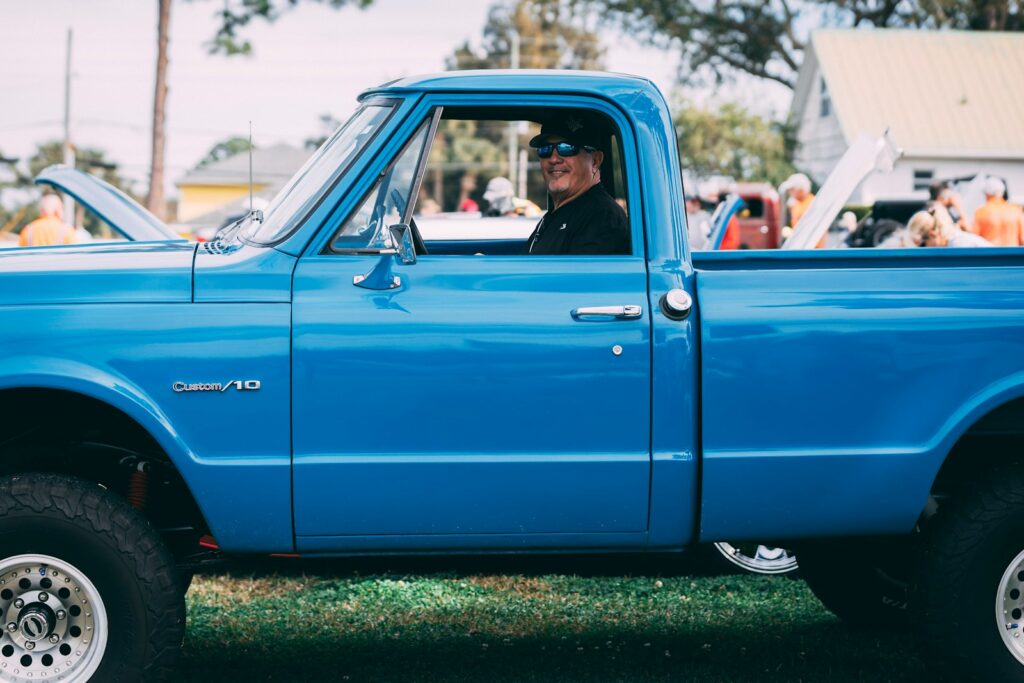
He’d had the truck for less than a week, and he was still doing that thing new owners do where they glance back at it in parking lots like it might disappear if they don’t. It was a clean-looking late-model pickup with tinted windows, chunky tires, and just enough road dust to feel “real” without looking neglected. The guy who bought it—friends later called him Nate, because of course they did—kept telling people he’d finally found a deal that wasn’t a scam.
It was the kind of purchase that comes with a backstory: a seller who “needed it gone,” a price that was low but not cartoonishly low, and a meet-up that felt half legitimate and half sketchy. Nate had done the basics, at least in his mind. He’d checked the VIN on the dash against the title, took a quick spin around the block, and watched the seller sign paperwork on the hood like they were in a hurry to catch a flight.
Then he got pulled over on a random Tuesday, two miles from his apartment, because his plate “came back weird.” He didn’t know what that meant yet. He just knew the officer’s tone had shifted from routine to careful, the way it does when someone’s deciding whether to treat you like a normal driver or like a problem.
The “too good” deal and the rushed handoff
Nate had been hunting for a truck for months, the kind of search that turns your phone into an endless scroll of listings and flaky messages. Most sellers either wanted dealership money for a truck with 200,000 miles or wouldn’t answer basic questions. Then this listing popped up: good photos, clean interior, no obvious red flags, and a price that sat right in that dangerous zone—low enough to feel lucky, high enough to feel plausible.
The seller’s story was simple and tidy. He was moving, couldn’t take the truck, and didn’t want to deal with financing or trade-ins. He said he had the title “in hand,” insisted the truck had never been in an accident, and kept nudging for a quick sale, like he’d get bored if the conversation lasted longer than a day.
They met in the parking lot of a busy grocery store, which sounds safer than it is. The seller showed up alone, talked fast, and didn’t linger on details. Nate noticed little things—the guy wouldn’t stand still long enough for a calm conversation, kept checking his phone, kept scanning the lot like he was waiting for someone else.
Still, the truck ran smooth, the engine sounded healthy, and the cabin didn’t smell like cigarettes or flooded carpet. The title looked official enough, complete with a watermark-ish sheen and a signature. The plates were already on the truck, which the seller waved off as “temporary” and said Nate could just keep until he registered it.
Getting pulled over and watching the officer’s face change
The stop started like any other. Lights, a calm pull to the shoulder, window down, license and insurance out. Nate was polite, slightly nervous in that everyday way, and ready to explain he hadn’t gotten to the DMV yet.
The officer took his documents, walked back to the patrol car, and then… didn’t come back quickly. Nate watched the rearview mirror, watching the officer’s posture stiffen as he stared at the computer screen longer than normal. Another patrol car rolled up behind, not screaming urgency but not casual either—just a second set of eyes, positioned like a quiet warning.
When the officer returned, his voice was still controlled, but the questions changed. Where’d you get the truck? When? From who? Do you have a bill of sale? Do you have the title with you? Nate tried to answer like a normal person, but his sentences started getting shorter as he realized this wasn’t a paperwork lecture.
Then the officer said the plate came back as stolen. Not “expired.” Not “registered to another vehicle.” Stolen. The word landed heavy, like someone had dropped a toolbox onto concrete.
The title that looked real—until it didn’t
Nate handed over the title and watched the officer handle it like it might be evidence, not just paper. The officer angled it in the light, checked the VIN again, and then asked Nate to step out of the truck. That’s the point where Nate’s brain fully shifted from “annoying traffic stop” to “I might be leaving this scene in the back of a car.”
The second officer kept his eyes on Nate while the first one did a deeper VIN check. The truck wasn’t just wearing stolen plates; the title didn’t match what the system said. The VIN on the paperwork might’ve been close, but “close” doesn’t count in vehicle records, and the officer kept circling back to the same thing: the title was not coming up as valid.
Nate tried to explain the sale, the grocery store meeting, the signed bill of sale, the cash withdrawal. He kept repeating that he thought he’d done everything right, like if he said it enough times it would become true retroactively. The officers listened, but they weren’t nodding sympathetically; they were sorting out whether he was a victim or a participant.
And then came the worst part: the VIN on the dash was fine, but a secondary VIN check suggested it had been tampered with. There’s a particular way a person reacts when they learn they’re sitting in a vehicle that might not even be what it claims to be. Nate’s face did that slow drain of color, like his body was trying to back away from the situation without moving.
The moment it becomes “your truck” to “the truck”
Once the officers decided Nate wasn’t acting like the thief, they shifted into a different mode: not friendly, but procedural. They told him the truck was being impounded pending investigation, which is a sterile phrase that basically means, “You’re not driving this anywhere, and you might not see it again for a while.” Nate asked if he could at least take his stuff out—phone charger, work bag, the little pack of wipes he’d bought specifically because it was a new truck and he wanted it to stay nice.
He stood on the shoulder watching a tow operator hook up the vehicle he’d been proud of days earlier. The tow guy didn’t care about his emotional arc; it was just another job. Nate kept trying to talk it through out loud, asking if the officers could “call the seller” or “check the paperwork again” like this was an accounting mistake instead of a crime.
The officers told him what he already knew by then: the seller probably wasn’t who he said he was. Fake name, burner number, probably a throwaway email. The “signed title” was likely printed or altered, and the plates could’ve been lifted off another vehicle weeks earlier.
When the tow truck pulled away, Nate was left on the side of the road with his wallet, his phone, and a growing understanding of how fast cash sales can turn into a legal mess. He hadn’t been arrested, but it didn’t feel like a win. It felt like being spared by inches.
Trying to track the seller, and realizing he’s already gone
Nate’s first move was the same one almost anyone would make: he called the seller immediately. Straight to voicemail. Then again, and again, with the same result. He texted, keeping it calm at first—“Hey man, got pulled over, need to talk”—before it devolved into the frantic kind of messaging you send when you know you’re being ignored.
The listing was gone by that evening. The account had either been deleted or scrubbed clean, like it had never existed. Nate checked his bank withdrawal, the timestamp, the ATM camera location, grasping for anything that felt like a trail instead of a dead end.
He dug through the “paperwork” he’d been so satisfied with: the bill of sale with a scribbled signature, the title that now looked more like a prop the longer he stared at it. There were details that made him sick in hindsight—the handwriting that didn’t match in two places, the way the seller had pushed him to hurry, the fact that he’d insisted on cash like it was a favor to Nate instead of protection for himself.
When Nate called the police department later to check on the truck, he got the kind of careful non-answers that make you realize you’re not a priority. They told him the plates were reported stolen in a different part of the county, the title didn’t clear, and the truck itself might be tied to another case. “Might” is a brutal word when you’ve just handed someone a stack of money and your entire purchase is now in limbo.
The worst part wasn’t even the financial hit, though that was huge—it was the helplessness. Nate had done the thing everyone tells you to do: meet in public, get paperwork, check the VIN. And it still wasn’t enough, because the whole setup was built to look normal for exactly long enough to get him to hand over cash and drive away.
Days later, the question hanging over him wasn’t “How do I register my new truck?” It was “Am I ever seeing that money again?” and “How close did I come to being treated like the criminal here?” The truck was gone, the seller had vanished into whatever next identity he’d already lined up, and Nate was left replaying that traffic stop—watching the officer’s expression change—wondering how many seconds separated him from cuffs instead of a warning and a tow receipt.
More from Steel Horse Rides: