


He woke up to the sound of diesel clatter and gravel popping under heavy tires, the kind of noise that doesn’t belong in a quiet suburban driveway at 6:12 a.m. For a half-second he thought it was a neighbor getting a delivery, until his phone lit up with a doorbell cam alert: two guys in work hoodies, one with a clipboard, circling his recently purchased truck like they owned it.
It was his truck. Or at least, it had been his truck since Saturday afternoon, when he handed over a thick envelope of cash to a guy who seemed normal enough—polite, chatty, a little eager to sell. The title looked clean, the seller had a tidy folder of paperwork, and there was even a payoff letter showing the loan was “satisfied.” He’d gone to bed feeling like he’d finally scored a decent deal in a market where every used vehicle felt like a scam waiting to happen.
Now there was a tow rig angled across his driveway, a man with a flashlight peering through the glass, and another already reaching for the door handle. And the buyer—still in socks, heart climbing into his throat—had to figure out how you stop someone from taking your truck without getting yourself arrested in your own front yard.
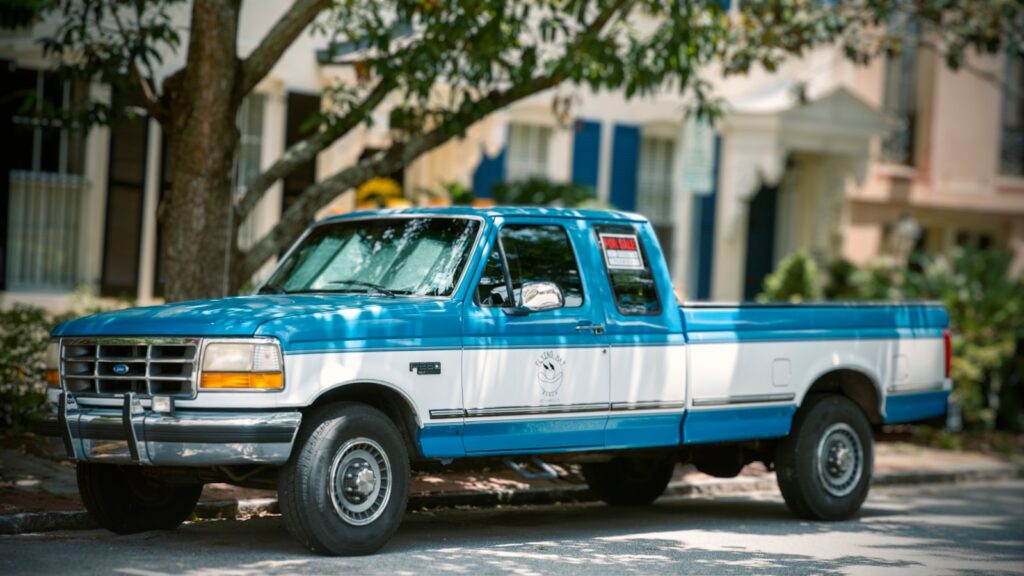
The deal that felt too normal to be dangerous
The buyer had been looking for a used truck for weeks, nothing flashy—just something reliable with decent mileage that wouldn’t crater his savings every time it needed tires. He found the listing late one night: an older model, clean exterior, some tasteful upgrades, priced just low enough to feel like a bargain without screaming “stolen.” The photos were taken in daylight, in what looked like a regular driveway, and the seller’s messages were prompt and coherent.
They met in a grocery store parking lot first, then drove to the seller’s place so the buyer could see the truck cold-start and poke around without an audience. The seller had a story ready: he was moving, needed the cash, didn’t want to deal with dealer trade-in nonsense. The truck ran well, no warning lights, and the seller didn’t flinch when the buyer asked for the VIN to run a report.
Here’s where it got sticky: the title wasn’t fully clean in the way you hope for with a private sale. The seller said there had been a lien, but it was paid off “last month,” and the bank was “slow mailing stuff.” He produced a payoff letter on letterhead, with a date, an account number, and a neat little “PAID IN FULL” stamp that looked official enough to calm nerves.
The buyer hesitated, like anyone would, and asked the obvious question: why not just wait for the lien release to arrive? The seller shrugged and played the “I can’t sit on it, I’m leaving” card, then offered to include the payoff letter, a bill of sale, and a copy of his ID. It wasn’t the cleanest transaction, but the buyer convinced himself it was common—banks move slowly, people sell cars all the time, paperwork catches up later.
Cash changes hands, and the seller turns into a ghost
The buyer went to the bank, pulled out the money, and felt that weird mix of excitement and nausea you get when you’re holding a purchase in your hands. He met the seller again, counted it out together, and watched the seller sign the title and bill of sale with a steady hand. They shook hands, the seller wished him luck, and that was that.
For the first day, everything looked fine. The buyer drove it home, parked it in the driveway like a trophy, and spent the evening cleaning out the center console and pairing his phone. He told himself he’d go to the DMV Monday morning and get everything squared away.
Sunday he did what people do when they think they got a new-to-them vehicle: he went for a drive for no reason, checked the bed for rust, listened for weird noises, texted a friend a photo like, “Finally got one.” He also sent the seller a message thanking him and asking, casually, if he had any updates on the lien release paperwork. The message showed delivered, no reply.
By Sunday night, the seller’s phone went straight to voicemail. The listing was gone. The buyer told himself it was normal—people delete listings after selling—but the quiet started to feel heavy. The payoff letter sat on his kitchen counter, looking more like a prop the longer he stared at it.
The knock at dawn and the repo crew’s paperwork
Monday morning, the repo truck arrived before he’d even had coffee. When he stepped outside, one of the guys didn’t act surprised to see him; he acted like this was an everyday inconvenience. Clipboard guy asked if the buyer was the owner, then corrected himself immediately: “Are you the person who has the vehicle right now?”
The buyer, still trying to assemble his brain, said he bought it. Cash sale. Title and bill of sale. The repo guy nodded like he’d heard that exact sentence a hundred times, then handed him a sheet with the lender’s name and a claim number. The truck was being repossessed for nonpayment, and it wasn’t even close—months behind, apparently.
That’s the moment the buyer pulled out the payoff letter like it was a shield. The repo guy glanced at it for maybe two seconds and his face did that tiny shift adults get when they recognize a fake document. He didn’t laugh, but he didn’t take it seriously either. “If it was paid off,” he said, “we wouldn’t be here.”
The buyer tried to argue logic: he had the title, he had a bill of sale, he had a payoff letter, he had a signed transfer. Repo guy didn’t get aggressive, just firm—he wasn’t there to litigate ownership. His job was to recover collateral listed on a loan, and the VIN matched the lender’s order. If the buyer wanted to stop it, he needed a court order, not a conversation in sweatpants.
Realizing the payoff letter was a forgery
Once the repo truck hooked up, the buyer scrambled like someone trying to stop a house fire with a garden hose. He called the lender listed on the paperwork and got bounced through a phone tree until a human confirmed the nightmare: the loan was active, delinquent, and absolutely not paid off. The payoff letter he emailed them “for verification” wasn’t just wrong—it didn’t match their formatting, the account number was incomplete, and the name of the department didn’t exist.
He stared at the letter again, now seeing all the stuff he’d missed. The slightly blurry logo. The generic signature. The way the “PAID IN FULL” stamp looked like something you could buy online and slap on anything. It wasn’t even a good forgery in hindsight; it was just good enough to work on a tired person who wanted to believe the deal could be real.
He went back to the title next. It was signed, yes, but it still had the lienholder listed. He’d assumed that was normal until the release came in, the way the seller framed it. Now it looked like exactly what it was: a glaring warning he’d rationalized away because the seller had an answer ready.
With the truck halfway up the flatbed, the buyer’s panic turned into this cold, embarrassed rage. He wasn’t just losing the truck—he was about to lose the entire cash payment, the registration fees he hadn’t even paid yet, the insurance he’d already added, and whatever dignity was left after begging strangers in his driveway not to take “his” vehicle.
Police reports, dead numbers, and the weird feeling of being the bad guy
He called the police while the repo crew waited, but the response was exactly as deflating as you’d expect. Yes, he could file a report for fraud. No, they couldn’t stop a repossession based on a private buyer’s claim and a suspicious payoff letter. This wasn’t a stolen vehicle situation in the clean, cinematic sense; it was a civil and financial mess with a criminal act somewhere in the middle.
The buyer tried tracking the seller down like he was hunting a vanished roommate. He called again from another number. Straight to voicemail. He drove by the address where they’d met and found the house dark, empty, or at least pretending to be. A neighbor, half-peeking from behind a curtain, eventually admitted the seller hadn’t been around in days and “there were people coming by asking questions.”
Back home, the buyer opened the seller’s ID copy and noticed details he hadn’t really looked at: the address didn’t match the house, the ID looked slightly off-color, and the last name was different from the one on the title. It wasn’t just one trick. It was layers—enough plausible paperwork to keep a buyer moving forward until the money was gone.
What made it worse was how the repo crew treated him, not cruelly, but like he was part of the problem. To them, he was just “the current possessor,” a temporary inconvenience standing between their truck and the lender’s property. And he couldn’t even blame them; they weren’t wrong in their lane. He just wasn’t supposed to be in that lane at all.
By the time the flatbed rolled away, his driveway looked naked. No truck. No new project. Just tire marks and that payoff letter still sitting on the counter like a bad joke. He filed the report, called his bank to document the cash withdrawal, dug through messages for anything that could help, and realized none of it brought the truck back.
The last thing he did that day was refresh his phone records and stare at the silent thread where the seller used to answer within minutes. There wasn’t even the satisfaction of confrontation—no shouting match, no dramatic confession, no final text explaining anything. Just the sinking understanding that the seller had planned this down to the timing, and the buyer’s money was already somewhere else, spent or hidden, while he stood in an empty driveway trying to prove he hadn’t willingly walked into a trap.
More from Steel Horse Rides: