

He’d been a first-time buyer for exactly forty-eight hours when the weird little doubts started to stack up. The used sedan was nothing flashy—ten-year-old commuter gray, a little sun fade on the roof, the kind of car you buy because you need to get to work and you can’t keep begging rides. The seller had been friendly in that brisk, practiced way, the paperwork neat, the handshake confident, the vibe very “I do this all the time.”
The best part, the seller said, was that it was “recently serviced.” He’d even handed over a receipt like it was a trophy: oil and filter change, dated just a couple weeks ago, printed from a quick-lube place with a barcode and everything. The buyer—let’s call him Evan—tucked it into the glovebox like proof he hadn’t just made a massive mistake.
Then the car started to feel… off. Not in a dramatic, smoke-pouring-from-the-hood way. More like the idle sounded a little rough when he stopped at lights, and the engine note had this dry, tired edge whenever he merged onto the highway. Evan wasn’t a car guy, but he was the kind of anxious person who starts reading forums at 2 a.m. once something doesn’t feel right.
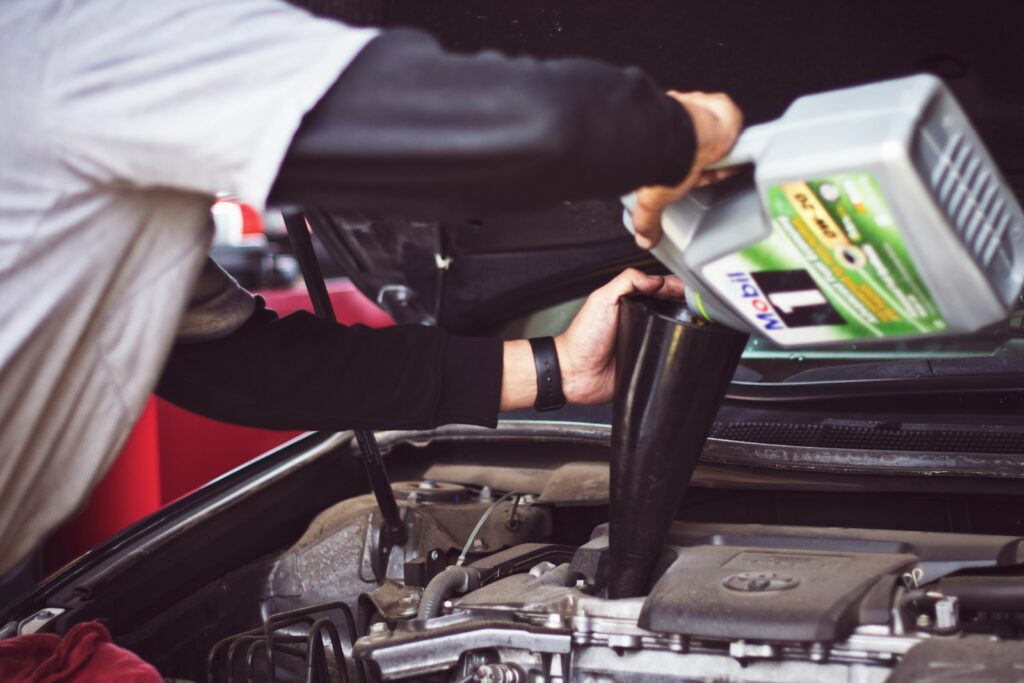
The “recent oil change” that didn’t smell recent
It began with a simple check he’d never bothered to do on any car before: pull the dipstick, wipe, dip again, look. He did it in his apartment parking lot with the hood propped up and the receipt sitting on the windshield like a reassuring talisman. He expected amber oil. Maybe dark honey, since used oil darkens fast.
What came out looked like it belonged in a chimney. The oil was black-black—thick, opaque, the kind of color that makes you wonder if it’s actually oil or something that’s been simmering since last winter. He tilted the dipstick in the light and it didn’t get clearer; it just stayed tar-dark and mean.
Evan stood there longer than he wants to admit, trying to negotiate with reality. Maybe that’s normal? Maybe modern oil looks darker? Then he did the thing that really made his stomach drop: he rubbed a little between his fingers. It felt gritty, like the faintest sandpaper texture that shouldn’t be there.
He crawled under the car and found the date stamp
Most people would’ve stopped at “oil looks bad” and driven straight to a shop. Evan did that, but first he took a flashlight and decided to look for anything obvious. Under the engine bay, he could see the oil filter housing, and he remembered reading that some filters have dates or part numbers printed on them.
He slid a piece of cardboard onto the asphalt, lay down, and wriggled under the bumper like he was starring in his own low-budget investigative documentary. The underside was dusty but not disastrous, the kind of normal grime you expect. Then his flashlight caught the filter: white canister, brand label, and a little printed stamp that looked suspiciously like a date code.
It wasn’t subtle. It wasn’t a cryptic manufacturing batch number that could be interpreted ten ways. It was a clear month/year stamp that lined up with a date three years earlier, like the filter had been installed when the world still felt different. Evan backed out from under the car, sat on the curb, and stared at the receipt in his hand like it had personally insulted him.
There’s a specific kind of anger that comes from realizing you’ve been played when you tried so hard not to be. He’d paid a little extra because the seller talked up “maintenance” and “peace of mind.” The receipt was supposed to be the safety net, and now it looked like a prop.
The call that turned into a weird negotiation
Evan called the seller first, because that’s what you do when you’re still hoping it’s a misunderstanding. He kept his voice level, even did the whole polite setup: “Hey, quick question about the oil change receipt you gave me.” The seller didn’t ask what was wrong; he went straight into a defensive tone like he’d been waiting for this call.
Evan explained what he saw: oil black like tar, filter date-stamped three years earlier. There was a pause long enough to feel like someone doing mental math. Then the seller started tossing out possibilities—maybe the shop reused the old filter by mistake, maybe Evan was reading the stamp wrong, maybe the oil “turns black fast in these engines.”
Evan asked for the name of the shop on the receipt, and the seller basically said, “It’s on the paper, man.” Evan told him he was going to call them and confirm. That’s when the seller’s tone changed again, warmer, like he’d found a different strategy.
“Look,” the seller said, “if you’re worried, I’ll knock a couple hundred off. Just take it to your guy and do another oil change. It’s not a big deal.” Evan heard the words, but what he felt was the subtext: please stop digging.
The quick-lube shop doesn’t recognize the receipt
Evan called the number printed on the receipt, half-expecting a bored employee to confirm it in thirty seconds. The person who answered was polite, but the conversation immediately got strange. They asked for the receipt number and pulled it up—or tried to.
The manager came on and said they couldn’t find that transaction in their system. Not under the receipt number, not under the date, not under the vehicle info listed. Evan read back the details slowly, because it felt unreal that a receipt could just be… not a receipt.
Then the manager pointed out something Evan hadn’t noticed: their location had changed ownership last year, and their receipts looked different now. The font, the layout, the little barcode style—those weren’t what they used anymore. The manager wasn’t accusing Evan of anything, but the careful phrasing made it clear: whatever Evan had, it didn’t match what their shop would’ve issued recently.
Evan hung up and just sat there with the phone in his hand. This wasn’t “maybe they forgot to change the filter.” This was “someone printed something that resembles a receipt and hoped a first-time buyer wouldn’t know the difference.”
The mechanic confirms the bad news, and it gets personal
He took the car to an independent mechanic the next morning, the kind of place with a gravel lot and a waiting room that smells like coffee and rubber. Evan didn’t lead with the receipt drama; he just asked for an oil change and a general look-over, like he was trying not to tip his own anxiety into the conversation. The mechanic popped the hood, pulled the dipstick, and his eyebrows did that little lift that says, “Oh.”
When they got it on the lift, the mechanic called Evan over. The filter was old, the stamp clear, and the canister looked like it had been heat-cycled a thousand times—faded print, grime baked in, not something installed “two weeks ago.” The mechanic didn’t do theatrics, just pointed and said, “This isn’t recent.”
They drained the oil into a pan, and even Evan could see it: thick, dark, and coming out slower than it should. The mechanic mentioned sludge risk and asked if Evan knew the service history. Evan handed him the receipt, and the mechanic gave it a quick glance before making a face like he’d seen this exact trick before.
The estimate wasn’t catastrophic, but it wasn’t nothing either. Fresh oil and filter, sure, but also a recommendation for an engine flush only if they could confirm it wouldn’t loosen gunk and make things worse, plus a warning to watch for consumption and weird noises. Evan wasn’t just paying for an oil change; he was paying to find out how much damage might already be done.
He called the seller again, and this time he didn’t do polite. He said the shop couldn’t verify the receipt and the mechanic confirmed the filter was years old. The seller snapped back with anger of his own—accusing Evan of trying to scam him, claiming the car was sold as-is, saying Evan must’ve swapped the filter to start a fight.
That last accusation landed like a slap. Evan had never touched a filter in his life and now he was being told he was running some kind of con. The seller offered the same “couple hundred” again, but now it sounded less like help and more like hush money with a temper attached.
Where it leaves him: a car that runs, and a trust that doesn’t
Evan ended up doing the oil change immediately because he had to—he still needed to get to work, and driving around on mystery tar wasn’t an option. The engine sounded a little better afterward, but not magically healthy. Every small vibration at idle, every slightly delayed acceleration, started feeling like a countdown he’d bought with his own savings.
He started pulling together screenshots, timestamps, the mechanic’s notes, photos of the filter stamp, copies of the receipt, the call log with the quick-lube shop. Not because he suddenly wanted to become a legal warrior, but because he couldn’t stand the idea of letting the seller rewrite the story into “crazy buyer regrets purchase.” He was still deciding whether to push for small claims, report it, or just eat the cost and move on.
And that’s the part that stuck with people who read about it: the sedan wasn’t dead in the driveway, and the seller wasn’t caught on camera swapping filters in the night. It was messier than that—one person holding a fake-looking receipt and another insisting it’s all a misunderstanding, while the evidence sits there in plain ink on a three-year-old filter. Evan could drive the car, technically, but every time he popped the hood he was staring at the same unresolved question: how far does someone have to go before “as-is” stops being a disclaimer and starts being a cover story?
More from Steel Horse Rides: