
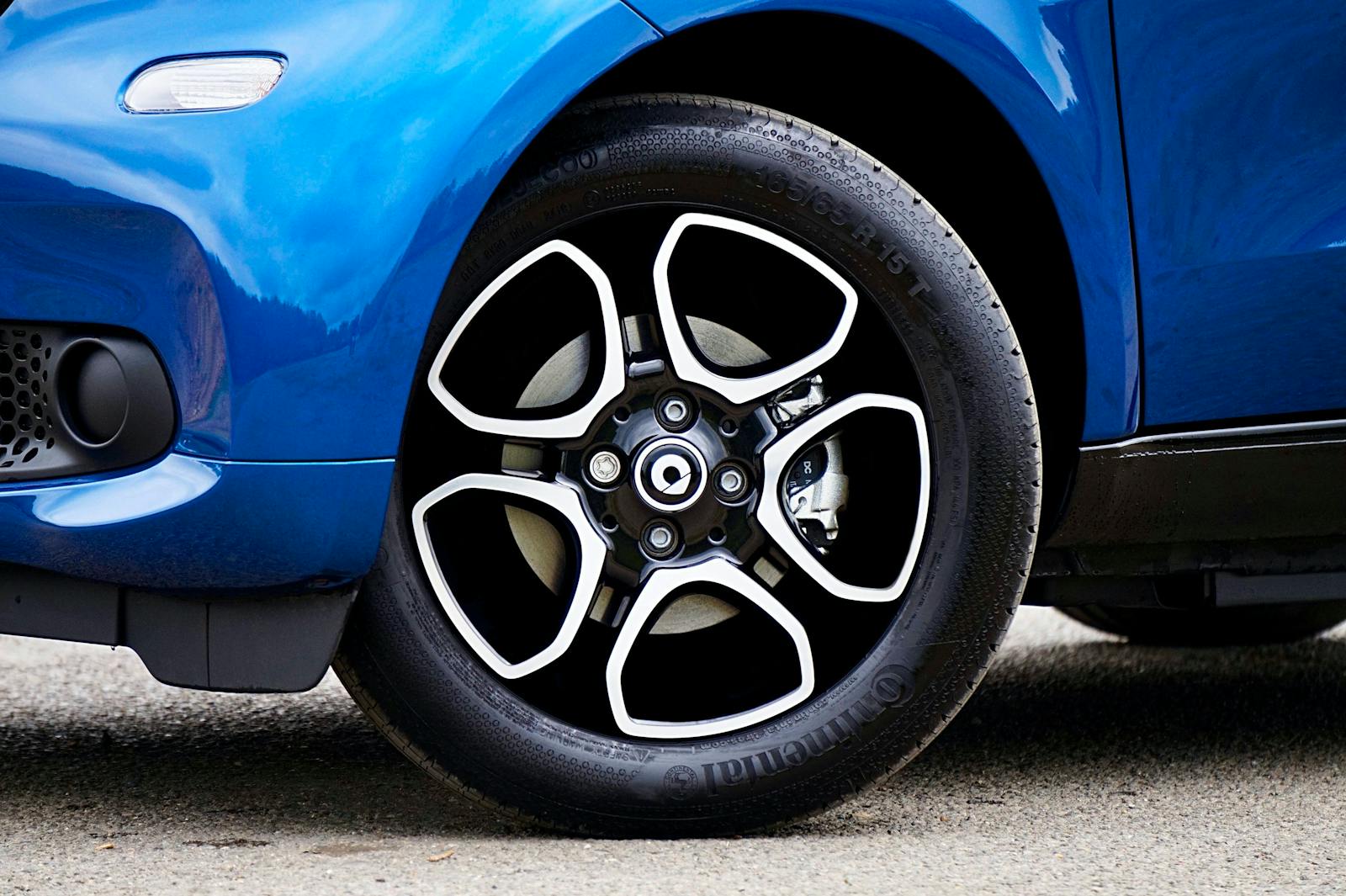

He thought he was doing the responsible, boring adult thing: buy a set of decent used wheels and tires off Facebook Marketplace, save a few hundred bucks, and stop driving around on rubber that looked like it had survived a minor war. The listing was clean—four matching wheels, tires with “plenty of tread,” and enough photos from enough angles to make it feel legit. The seller seemed normal in messages too, the kind of guy who replies fast and throws in little details like bolt pattern and offset without being asked.
The buyer—let’s call him Matt—had been burned before on Marketplace, so he did his homework. He zoomed in on the photos, counted the tread grooves, checked for curb rash, even asked for a picture of the DOT date on the tire sidewall. The seller sent it, no problem, and confirmed the set was “exactly what’s pictured.” They agreed on a price, agreed on a pickup time, and Matt drove out with cash and the kind of cautious optimism you only feel when a deal seems too smooth.
The weirdness didn’t start until he pulled up. The wheels were already sitting by the seller’s garage, lined up like a showroom display, and the seller was standing nearby with his hands in his hoodie pocket, watching Matt’s car roll in. Not waving, not smiling, just looking like he wanted this transaction done fast. Matt climbed out, did the quick friendly “Hey man,” and walked straight toward the tires—because that’s the whole point of being there.

The listing looked solid… until he stood in front of it
From the driveway, the wheels still looked like the photos: same style, same finish, same general condition. But as Matt got closer, something felt off in a way he couldn’t immediately name. The tread didn’t look as crisp as he remembered, and the sidewalls had that faint grayish dryness you see on tires that have been sitting for too long in the sun.
He crouched down and ran a finger across the tread on the closest tire. It wasn’t “used,” it was worn—almost smooth in spots, with the wear bars flirting dangerously close to flush. He moved to the next one, thinking maybe it was a mismatch, but it was the same story: bald-ish shoulders, uneven wear, the kind of rubber you’d expect to see on a car someone was trying to get through one more season.
Matt pulled out his phone and opened the listing photos right there, right in the seller’s driveway. In the pictures, the grooves were deep enough to catch shadows, and the siping looked sharp. In front of him, the tires looked like they’d been through a few desperate road trips and a lot of “I’ll replace them next paycheck” promises.
He did that quiet math people do when they’re trying to stay calm: either he misremembered the listing, the photos were old, or the seller swapped something after the fact. None of those options were great, but only one of them was a straight-up scam.
The seller’s vibe changed the moment questions started
Matt asked, casually at first, “Hey, are these the same tires from the photos?” He kept his voice even, like he was giving the guy an easy off-ramp to say, “Oh man, I grabbed the wrong set” or “I mixed them up.” The seller didn’t take the off-ramp.
According to Matt, the seller immediately got defensive in that specific Marketplace way—short answers, no eye contact, and a sudden obsession with the fact that Matt had driven all the way out. He said something like, “Those are the tires. That’s what you’re buying,” and gestured toward the wheels like the conversation was over.
Matt pointed at the listing photo and then at the tire in front of him, like a teacher showing a kid the difference between two worksheets. He mentioned the tread depth, the uneven wear, the fact that the shoulders were basically cooked. The seller shrugged and said, “They’re used, man. Don’t expect brand new.”
That’s when Matt said the line that seemed to hang in the air: “These aren’t the ones from the pictures.” Not yelled, not dramatic—just stated. The seller’s face apparently tightened like he’d been caught in a lie and was deciding whether it was worth trying to muscle through it anyway.
The swap theory clicked into place
The thing that pushed Matt from “maybe this is a misunderstanding” to “this was planned” wasn’t just the tread. It was the timing. In their messages, the seller had been unusually eager to confirm pickup that same day, and he’d kept repeating that the wheels were “ready to go” and “already off the car.”
Matt walked around the set again and started checking sidewalls for the DOT codes the seller had sent earlier. The numbers didn’t match. Not even close—different weeks, different years. If you’ve ever bought tires used, you know the DOT code isn’t something you casually forget; it’s literally the identity tag, the one thing that makes it easy to prove what you’re looking at.
When Matt mentioned the mismatch, the seller tried a new angle: maybe Matt was mixing it up, maybe he didn’t know what he was looking for, maybe those numbers didn’t matter. He leaned on vague statements like “they’re all the same size” and “they’re fine,” which is exactly what someone says when they’re hoping you’ll stop asking questions because you don’t want to feel awkward.
Matt didn’t stop. He asked where the tires from the photos were. And the seller, instead of answering, said, “Look, I’ve got other people interested.” That little threat—there are other buyers, don’t waste my time—landed like a confession. If other people were so interested, why was the seller still standing there pressuring Matt to hand over cash for tires that didn’t match the listing?
The driveway standoff: cash, pressure, and a fast exit
There’s a specific tension when you’re in someone else’s driveway and you realize the deal in front of you is crooked. You’re not at a store where you can just walk away into bright lights and security cameras. You’re on their turf, and you have to decide how much you want to argue with a stranger who already seems comfortable bending the truth.
Matt told him he wasn’t buying them. Not at that price, not with those tires, not after the listing clearly showed something else. The seller immediately pivoted to bargaining, tossing out a smaller discount like he was doing Matt a favor, like the problem was just a little disappointment and not an attempted switch.
Matt countered with something closer to “wheel-only” money, basically valuing the set as rims with throwaway rubber. The seller’s posture changed—less bargaining, more anger—because that offer acknowledged the quiet part out loud: the tires were junk. He accused Matt of trying to lowball him and said Matt was wasting his time, and the friendliness of the messages evaporated completely.
Matt didn’t escalate. He didn’t lecture. He just stood up, brushed the grit off his hands, and said he was leaving. The seller followed him a few steps toward his car, still talking, still trying to salvage the sale through pressure—because pressure is what works on people who don’t want confrontation as much as they want the deal.
Aftermath: the kind of frustration that sticks
In the car, with the doors locked, Matt sat for a second and stared at the listing again. The photos were still there, still showing tires with real tread, still promising something the driveway set clearly wasn’t. He considered messaging the seller one more time, but at that point, the whole interaction had the sour feeling of something that could get messy if he kept poking it.
Later, he saved screenshots: the photos, the “exactly what’s pictured” message, the pickup details, the DOT code picture the seller had sent. It wasn’t about revenge as much as it was about proof—proof for reporting the listing, proof in case the seller tried to flip the story, proof that he wasn’t crazy for trusting his own eyes.
The part that bothered him most wasn’t even the attempted swap. It was how normal the seller had seemed right up until the moment Matt showed he knew what to look for. The guy hadn’t acted like a cartoon villain; he acted like someone who’d done this before and was counting on the buyer being tired, rushed, or too polite to crouch down and actually inspect anything.
And that’s where the tension hangs: Matt drove away with nothing but wasted time and that heavy, irritated feeling of being tested. Somewhere out there, the seller still had a set of wheels staged in his driveway and a listing full of “good” photos, waiting for the next person to pull up, glance once, hand over cash, and only realize later—maybe in the rain, maybe on the highway—that the tires they bought weren’t the tires they came for.
More from Steel Horse Rides: