

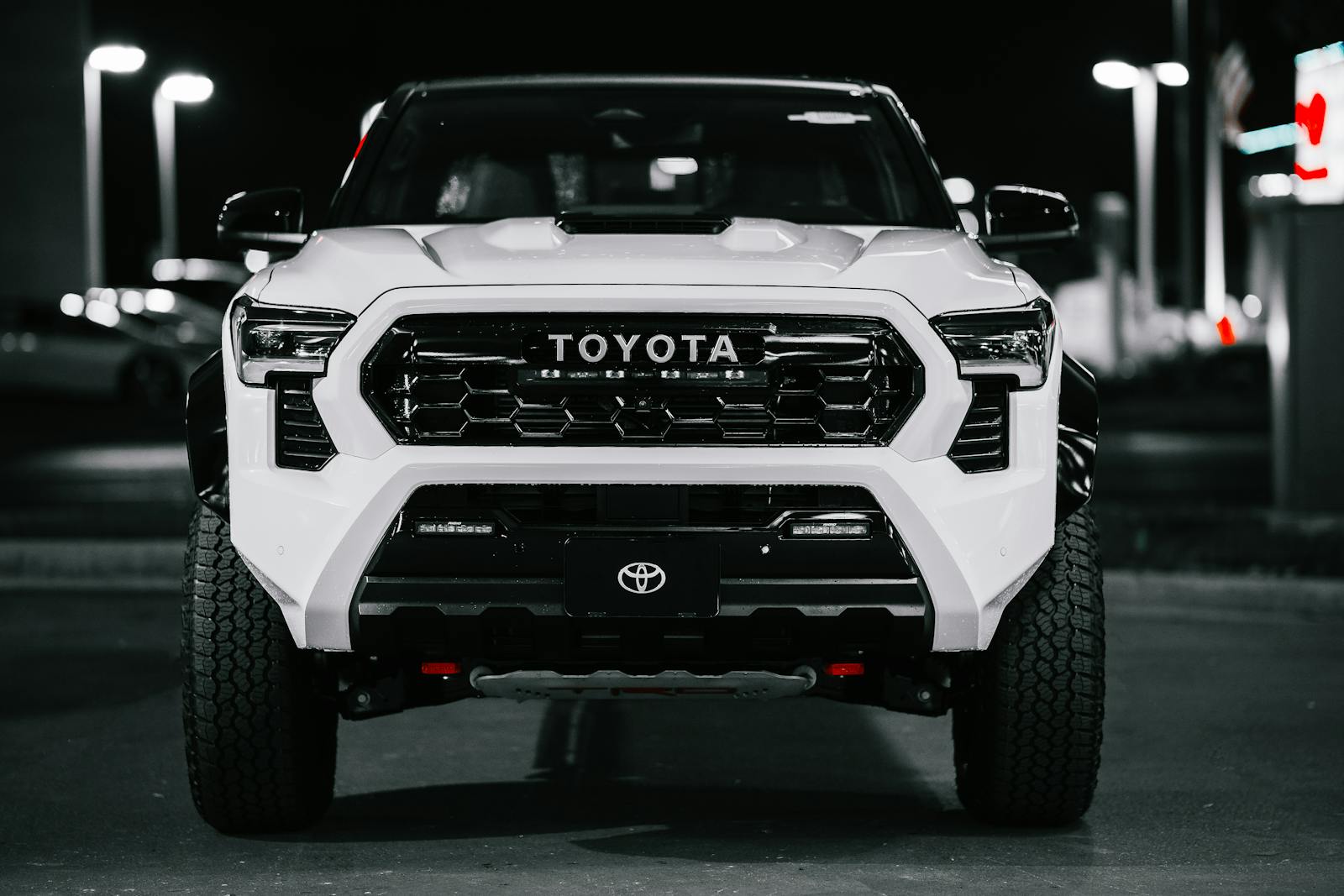
She wasn’t doing anything exotic. Just walking the lot on a random weekday, coffee in hand, scanning for a mid-size truck that didn’t look like it had lived a hard life. The dealer had a 2022 Tacoma sitting front-and-center, clean enough to make you think someone actually used a microfiber cloth on purpose.
The window sticker was right there, laminated and sun-faded like they all are, with a big, friendly number printed near the bottom: $42,000. Not “starting at,” not “after rebates,” not “if you qualify for seventeen programs.” Just $42,000, which—given how weird truck pricing had been—already felt like a small miracle.
She took a photo of it out of habit, the way people do now when they’ve been burned once and learned the language of receipts. Then she did the normal next step: found a salesperson and said, basically, “Hey, I want to talk numbers on that Tacoma.” That’s when the day started turning.
The sticker price that apparently didn’t count
The salesman was friendly in that practiced way—smiling, moving fast, talking while walking—guiding her toward the truck like it was going to be a guided tour and not a negotiation. She pointed at the sticker and said she’d like to see the out-the-door numbers for that one. He nodded like that was completely reasonable and said he’d “get a quote put together.”
She waited at one of those small desks that always feels like it’s designed for signing away your will. The salesman disappeared into the back, and she could hear the low hum of other deals happening: printers, laughter that sounded slightly forced, someone saying “Congratulations” a little too loud. When he came back, he didn’t bring just a printout—he brought a whole little folder, like he was presenting a proposal for a kitchen remodel.
The quote landed on the desk with a thud that felt intentional. He slid it toward her, still smiling, and started explaining it before she could read it. Her eyes went straight to the bottom line: $51,800.
“Market adjustment” shows up like an uninvited guest
She didn’t react theatrically, which might’ve been the most intimidating part. She just looked from the paper to the truck through the window, then back to the paper, like she was checking whether she’d wandered into some alternate version of the day. “How is it fifty-one eight,” she asked, “when the sticker says forty-two?”
The salesman tapped the page with a pen and said the words that have ruined more car-buying moods than anything else: “market adjustment.” It sat on its own line like it was a legitimate factory option. Several thousand dollars—enough to make the whole deal feel like a prank—just because the dealer could.
He said it like a weather forecast. “Tacomas are really in demand,” he told her, and the implication was: this is just what it costs now, don’t take it personally. She asked why it wasn’t disclosed on the sticker if it was “just what it costs,” and he gave her that sideways shrug that means, not my decision, but also not negotiable.
She pulled up the photo of the sticker on her phone and set it on the desk so it was facing him. The truck’s $42,000 number glowed between them like a witness. He didn’t even look at it for long.
The add-ons she didn’t ask for start stacking up
Then she noticed the other stuff. Not taxes, not registration—those were expected. These were dealer add-ons, three separate lines, each with a price tag that looked like it had been chosen specifically to make the total feel inevitable.
One was some kind of paint protection package, the sort of “ceramic” treatment that usually amounts to a guy wiping something on the hood while the car’s still wet from a wash. Another was an anti-theft device she’d never heard of, with a name that sounded like an app you delete after a week. The third was a protection plan that read like it covered “key replacement” and “interior wear” and other things that felt like solutions looking for problems.
She told him, clearly, she didn’t want any of it. She wasn’t rude about it—just firm, the way you have to be when you can feel someone trying to glide you past the point of saying no. The salesman’s smile tightened a notch and he said, “Those are already on the vehicle.”
That line did something to the whole conversation. “Already on the vehicle” didn’t mean physically installed; it meant emotionally installed, like the fees had become part of the truck’s identity. She asked if they could remove them anyway, since she hadn’t agreed to them, and he said they “can’t take those off because every Tacoma gets them.”
The polite dance turns into a standoff
At this point, she stopped talking and started reading. She ran her finger down the quote, rereading each add-on like she might find a hidden note that explained why she was being charged for someone else’s decision. The salesman filled the silence with more soft persuasion, saying things like how it “helps resale value” and “most customers like having it.”
She asked a simple question: if she bought the truck today, would she be forced to pay for those add-ons and the market adjustment. He said yes, but in a way that tried to sound flexible—like he was saying yes while holding a door open for her to feel like she still had a choice.
She pushed the paper back toward him and said she wasn’t paying $51,800 for a truck that was advertised at $42,000. The salesman didn’t argue the math; he argued the premise. “That’s the market,” he repeated, and she could tell he’d said that sentence a hundred times and it had worked enough times to keep saying it.
What made it worse wasn’t just the number—it was the feeling of being treated like she was naïve for expecting the sticker to mean something. She asked why they didn’t just put the real price on the window, and he said something about how “MSRP is just the manufacturer’s suggested price.” The tone was casual, but the message landed sharp: you should’ve known better.
She asked for a manager, not in a “let me speak to your manager” way, but in the practical sense that she didn’t believe this guy could change anything even if he wanted to. The salesman disappeared again, and for a minute she sat there looking at the quote like it was a dare. The truck was still outside, still shiny, still pretending it was the same truck from ten minutes ago.
The manager arrives with the same script, just smoother
The manager showed up with a confident posture and the kind of calm that comes from knowing the building is on his side. He didn’t introduce himself like a person; he introduced himself like a process. He asked what brought her in, even though the quote was sitting right there like evidence.
She explained: the sticker said $42,000, the quote said $51,800, and she didn’t want the add-ons. The manager nodded slowly and said they were “being transparent” by itemizing everything. He said the market adjustment reflected “current supply conditions,” and the add-ons were “dealer-installed products that protect your investment.”
She asked him, flat out, if they could sell it at the sticker price. He didn’t say no immediately. Instead, he said something like, “If we did that, it’d be gone in an hour,” which was basically no with a shrug.
She said she’d buy it right now at $42,000 plus legitimate taxes and fees. The manager’s face stayed neutral, but his eyes did that quick calculation thing. Then he said he couldn’t do it, and added that other buyers “understand the market.” It wasn’t hostile, but it was dismissive in that corporate way that makes you feel like you’re arguing with a laminated sign.
She stood up, gathered her phone and keys, and didn’t raise her voice. She just said, “Then you’re not selling me a truck today.” The salesman and manager both went into the “wait, let’s not lose the deal” mode, offering to “see what they could do” and asking what number would make her comfortable. But she wasn’t negotiating down from a fake number; she was refusing the whole premise.
On the way out, she walked past the Tacoma again and looked at the sticker one more time. The $42,000 was still there, still pretending, still doing its job as bait. And that was the part that stuck—this idea that the dealership could display one price in broad daylight, then act mildly offended when someone expected to pay it.
She left without slamming a door or making a scene, which somehow made it feel even more pointed. The unresolved tension wasn’t whether she’d find another Tacoma; it was the fact that the truck would still be sitting there tomorrow with the same sticker, waiting for the next person to wander up and believe it for just long enough to sit down at that desk.