

The C7 Corvette has a great reputation. Most people call it a robust, reliable sports car. But Lyall, the host at C&S Corvettes in Sarasota, Florida, says it has “several well documented, widespread failure points, especially after 100,000 miles.”
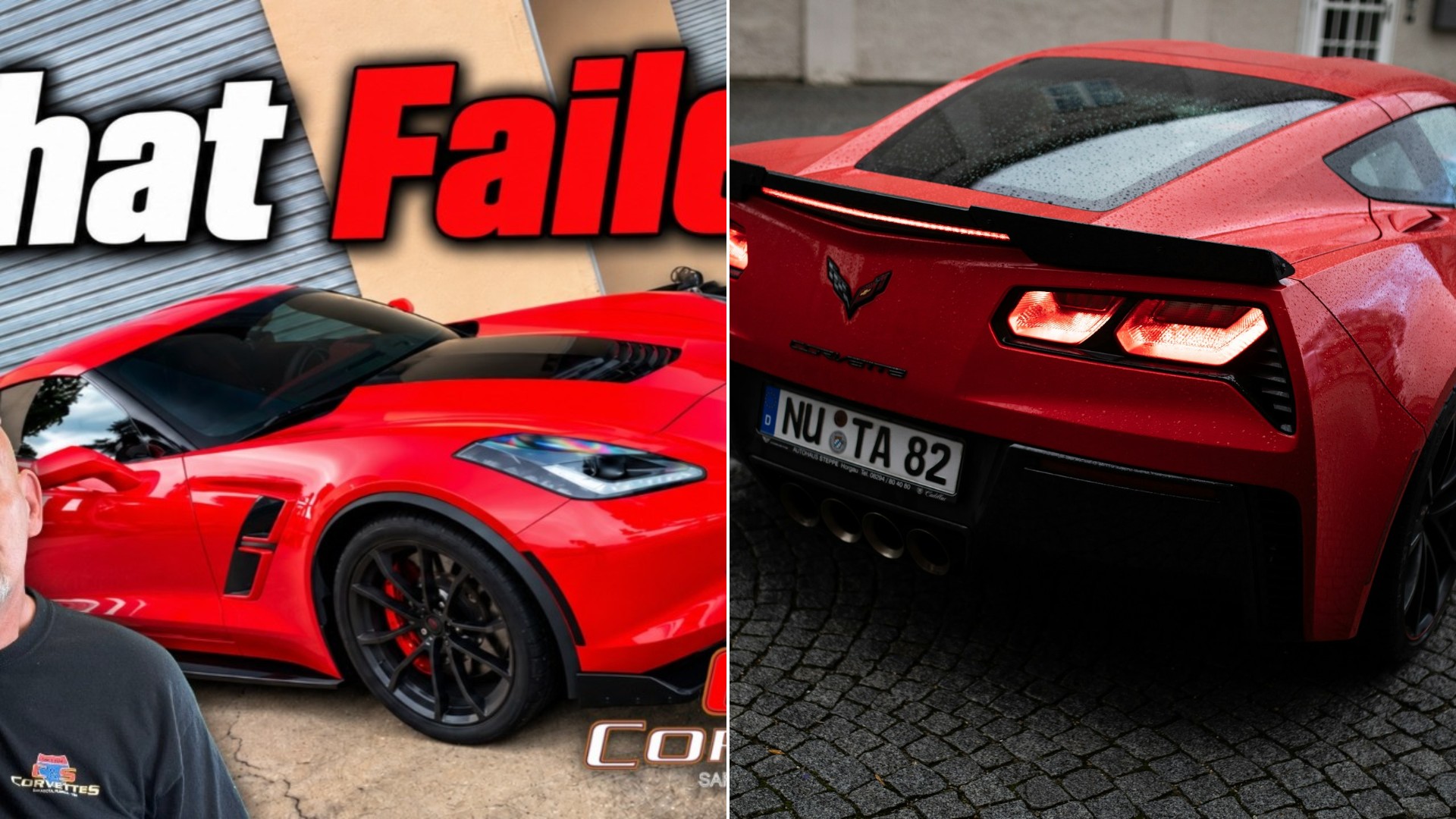
He has a plain message for anyone shopping for one: none of these problems make it a bad car, but every one of them is a reason to negotiate.
Cracked Wheels On Grand Sports And Z06s Cost About $500 Each To Fix Right
The most frequent complaint from C7 owners involves the cast aluminum wheels on the widebody models, the Grand Sport and the Z06. The factory wheels are highly prone to bending or cracking, even from minor road imperfections or potholes.
Many owners skip factory replacements and switch to stronger forged aftermarket wheels. Lyall says that runs about $500 a wheel, so if you think one is cracked on a car you are looking at, work that into your offer.
The V4 Mode That Can Wreck A V8
The C7 has active fuel management, which drops the engine from V8 to V4 mode to save fuel on the highway. The trouble is the special lifters, which can collapse or seize over time, score the camshaft and cause serious valve train and engine damage.
The warning signs are misfiring, a distinct ticking from the valve train, or high oil consumption. Lyall says it usually appears only around 100,000 miles, so a car has plenty of life left to have the system deleted.
A cheaper first step is a plug-in OBD2 module that keeps the car permanently in V8 mode. It does not fix the problem, but it stops the cycle of flooding and starving the lifters of oil, which wears them early. Manual cars are less of a concern, he says, because AFM never comes on in a stick shift unless you use eco mode. The automatics are where you want the module.
The permanent fix is a delete kit with a new camshaft, oil pump and lifters, and the cylinder heads come off. “It’s a whole thing,” he says, and his shop plans to offer it soon.
A Shudder Like Driving Over Rumble Strips
Automatic C7s built between 2015 and 2019 are prone to a severe vibration from the 8-speed. The corporate explanation is that the original fluid absorbs moisture, which makes the torque converter clutch slip and grab unevenly.
The symptom is a severe shaking while cruising at light throttle, often described as driving over rumble strips. Lyall adds his own professional opinion: he thinks the AFM system and the 8-speed never worked well together when switching between V8 and V4.
GM released technical service bulletin 18NA 355 calling for a triple flush with a revised Mobil 1 synthetic fluid. Caught early, it usually cures the shudder. Ignored, the torque converter has to be replaced.
He thinks the flush is a good idea but a band-aid, because eventually the converter will need changing. He also says the valve bodies were never quite up to snuff, and the engineers who developed it started a company called NextGen that makes an improved valve body. It is expensive, but “it works.”
A Leaking Belt Tensioner Is The Number One Failure On Base Stingrays
Mechanics widely recognize the main serpentine belt tensioner as the most frequent failure on base Stingrays. It has a small fluid-filled shock absorber inside, and when the seals fail, the fluid leaks out and the tensioner gets sloppy.
You will hear squeaking or rattling from the front passenger side of the engine, or see an oily, dirty residue on the tensioner body. You can check it yourself by opening the hood and looking down with a flashlight. The fix is simple: replace it with a new unit.
A Growl From The Tunnel Means The Torque Tube Couplers Are Going
The torque tube holds the driveshaft that links the front engine to the rear transaxle. Rubber couplers inside, often called guibos, break down over time. Lyall says it is age related and has nothing to do with high load.
The symptom is a rattle, growl or roar from the center tunnel that gets louder over time. The fix means rebuilding the torque tube with fresh bearings and upgraded couplers, and it is very labor intensive because the rear subframe, suspension and transmission must be dropped out. “This is a job you only ever want to do once,” he says. A car with it already done is a major plus.
Early Z06s Overheat And Go Into Limp Mode On The Track
The 2015 through 2018 Z06 models had heat management issues in aggressive track driving. The tight engine bay and smaller supercharger design could not cool the car under prolonged track stress, so it pulls power or enters limp home mode.
GM addressed this for 2019 with an updated supercharger lid and larger auxiliary radiators. Owners of older cars often install aftermarket cooling packages, and companies like Lingenfelter offer time tested fixes. If you only drive on the road, he says, you probably will never make enough heat to worry.
“99% Solvable” And How To Use It At The Price Table
Lyall’s point is that these problems are leverage, not deal breakers. “All of this is solvable,” he says. He contrasts it with early C5s, where the electronic brake control module cannot be rebuilt, and says C7 problems are 99% solvable, which matters if you plan to keep the car long term.
So before you buy a C7, check the wheels for cracks, listen for ticking and look at the belt tensioner with a flashlight. Ask whether the transmission flush was done and whether the torque tube has been rebuilt. Each missing answer is a line on your offer.
More Stories You May Like
- Worn Wiper Blades Left On Until The Streaks Show Up In A Downpour Are A Cheap Fix You Should Not Put Off, Because Sun And Age Harden The Rubber
- Truck Owner Finally Gets Wheels And Tires Onto His Fifth Gen Cummins After A Very Long Wait And Bolts On Spiked Studs For A Wild Tow Rig Look
- Consumer Reports Ranks Subaru Number One Again, But Jeep Landed Dead Last For The Third Year In A Row Alongside Dodge, GMC, Land Rover And Rivian At The Bottom