

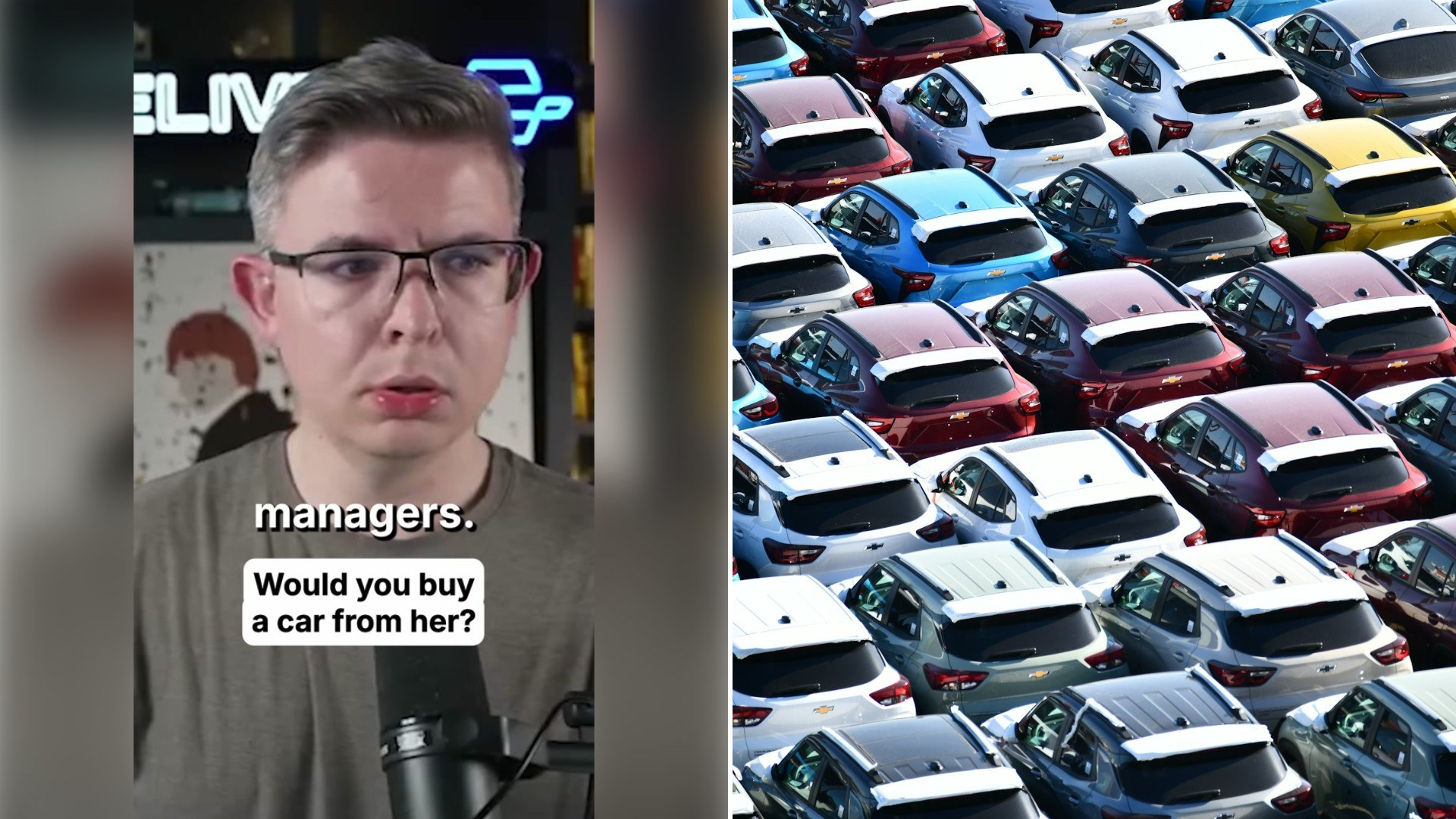
The video from @tomislavmikula is almost entirely one phone call. He sits at a microphone with a voice-recording graphic on screen while the audio plays, and the call opens with a woman introducing herself as one of the dealership’s sales managers. “I just wanted to confirm, are you looking to lease this car?” she asks. He tells her no. “I’m looking to either pay cash or finance with a 3,000 dollar rebate.”
Her next question sets the tone for the rest of the three minutes. “Why aren’t you doing it in Massachusetts?” He answers that he heard good things about her dealership, and adds that he drives to New York several times a week and figured he could pick the car up on the way after handling everything else from home. His caption tells viewers how he thinks it went: “This sales person did not like me…. Would you buy a car from her?”
@tomislavmikula
The manager’s position is clear from the start and does not change. “If you’re gonna finance, you have to physically come here to sign the paperwork,” she says. If he is paying cash or financing and is willing to collect the car, “we’re fine. You just have to physically be here.”
He tries to confirm that they agree. He says they can go through all the numbers by phone and he will come in only to pick the car up, “as long as I agree to the numbers.” She points him to the dealership’s online “express store,” where she says he can do everything and get an answer on the vehicle. He says he already tried it. “The express store wasn’t working for me. Literally, it’s just saying that I’ll have somebody call me.” What he wants, he explains, is someone who can talk numbers over the phone, do everything remotely and email him the paperwork.
“Well, it’s not remotely if you’re coming to pick it up,” she replies.
From there the call becomes an argument about the dealership’s own website. He says it tells customers they can speed up the paperwork by doing it ahead of time, and that it advertises free delivery. He allows that his distance may be too far for that, but he wants to know how a local customer manages it. “How does somebody that lives in your local area buy the car remotely when you guys advertise free shipping right to people’s houses?”
“We’re not doing shipping,” she says. “As long as you want to do business with us, you have to physically come and pick up the car.” He pushes harder and says that if so, the promises on the website are “just a lie.” She does not move. “Once again, we do not offer delivery. You’re in Massachusetts, sir.” Asked whether a nearby customer would get it, she says yes, someone “down the block,” about “five to 20 miles away.”
The sharpest exchange comes next. He says he is trying to buy a car from her on a recommendation. “And I am telling you our process,” she answers. “So you either agree to the process or you don’t. You keep talking about the same thing.” When he says he is confused about why it is on the website, she says, “It doesn’t matter. I’m telling you we don’t deliver. So you either move forward or you move backwards.”
“I’m not moving backwards,” he says. “What is the pricing on your car?”
While she checks, he reads from the dealership’s list of promises: “Call ahead to get your paperwork done.” Another covers pickup for sales and service customers. “Seventh is free delivery to your home or office.”
When she returns she asks how much he is putting down. He says 10 or 20 thousand dollars, with the financing there only for the rebate, and settles on 20. “Your total purchase price is 36,” she tells him. He asks, “Could you break it down for me?” She asks for his email, and when he asks for a text instead she says she has to email it. He has one last question, whether the dealership will price match a better offer as he says it advertises. “No,” she says. “So that part on the website is also not true,” he replies, and the video ends.
It is worth remembering that this is one call, chosen and posted by the shopper. The dealership is not named in the caption or in the audio captions, and its side is limited to what the manager says on the line. On the substance, she is consistent. He can buy the car, he has to sign and collect in person, and delivery is for customers close by.
For buyers, the useful parts are the things he does well and the things the call exposes. He goes in knowing exactly what the website promises and can quote it. Before calling any dealership about an advertised perk, take screenshots of the page and ask one direct question early: does this apply to me, at my address, on this car? Delivery offers, price matching and online checkout often come with limits on distance or eligibility that are not on the banner, and it is better to hear them in the first minute than the third.
He also asks for the breakdown. A single figure like “36” says nothing about taxes, fees or add-ons, and the only version worth comparing with another dealer’s offer is an itemized one in writing. Her insistence on email works in a buyer’s favor here, since it leaves a record.
Buying across state lines adds its own questions. Ask how sales tax and registration for your home state will be handled, whether financing has to be signed in person, and whether a rebate tied to financing carries conditions. He planned to put a large amount down and finance only to collect the 3,000 dollar rebate, which is a reasonable move as long as the terms of that rebate are read first.
Finally, when a call starts going in circles, do what he eventually did and bring it back to the price. The number is what decides whether the drive is worth making.