
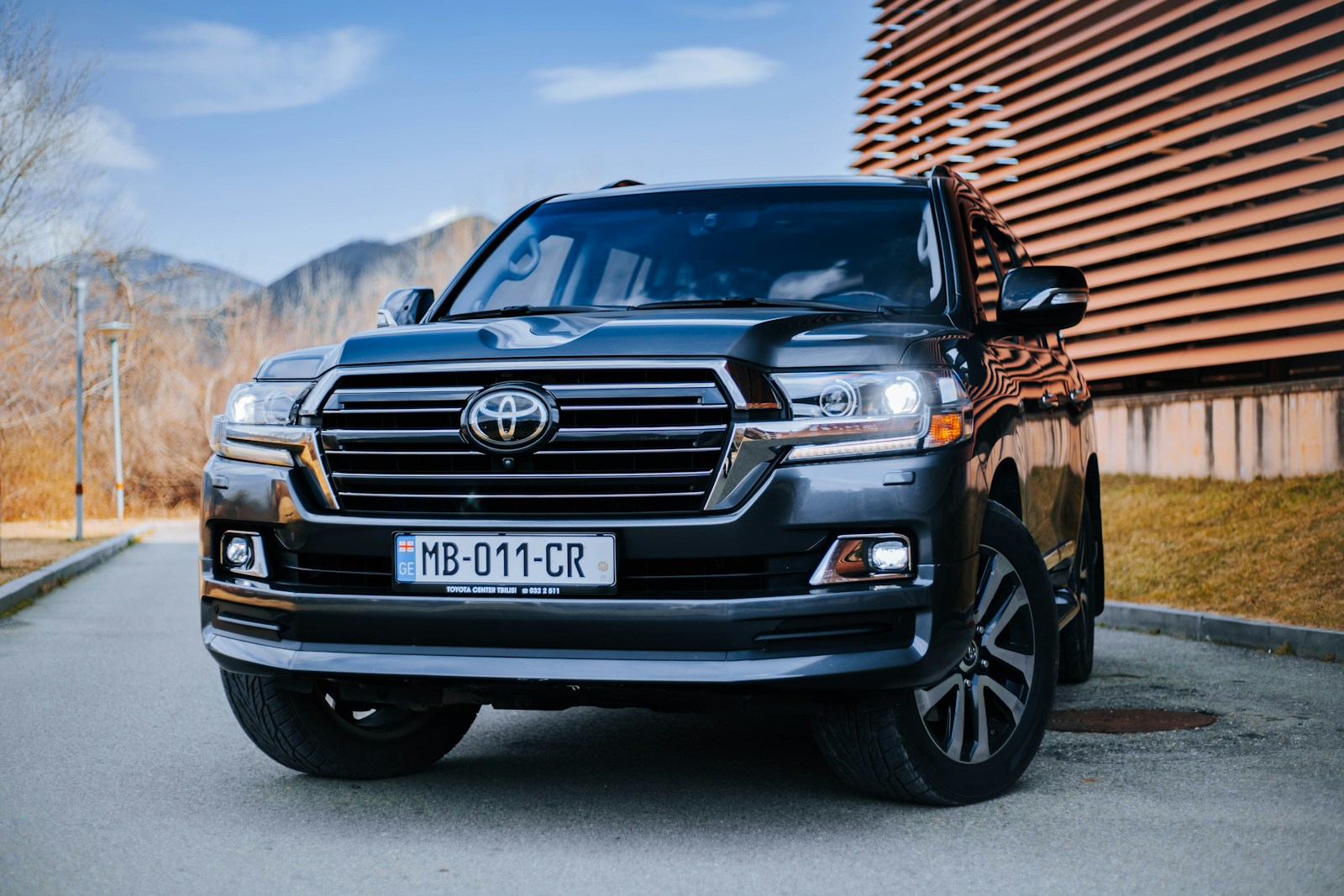

Toyota advertises 160 inspection points. Honda advertises 182. BMW doesn’t publish a single headline number at all — it organizes its checklist into eight functional sections instead. Line up all three brands’ own published certified pre-owned checklists side by side, though, and the same three gaps show up in every one of them: nobody is explicitly checking ADAS sensor calibration, nobody is measuring paint thickness with a gauge, and nobody is running a real state-of-health test on a hybrid or EV battery.
Toyota’s 160-Point Checklist: Heavy on Cosmetics
Toyota’s own published inspection document, a copy of which is posted by Toyota-certified dealers, breaks its 160 points into clear categories: a 33-point road test, a 21-point frame and underbody check, a 14-point under-hood inspection, a 61-point “functional and walkaround” pass covering lighting, controls and interior features, and then a full 29 points spent purely on exterior and interior cosmetics — paint condition, wheel appearance, cleanliness, and dent or ding assessment. That’s a meaningful share of the total 160 points going toward how the car looks rather than how it performs. The checklist adds up to 15 optional items for features like sunroofs and back-up cameras, and 14 additional checks specifically for hybrid components on applicable models — but nowhere does it call for a scan-tool ADAS recalibration check or a documented paint-depth reading, both of which matter enormously to a buyer trying to spot prior collision repair.

Honda’s 182-Point Checklist: More Points, Less Public Detail
Honda’s own inspection document, a copy of which circulates through Honda-certified dealer sites, breaks down into 11 sections: a 6-item VIN and history verification, a combined 71 points across front and rear interior, 37 points across front and rear exterior, 26 points under the hood, 6 points underneath the vehicle, 22 points on brakes, wheels, and tires with actual pad and rotor depth measurements, and a 13-point road test. On paper, 182 beats Toyota’s 160 — but Honda’s own history shows the number is partly a marketing artifact. When American Honda announced its “industry-first” digital certification checklist, the press release touted the tool’s transparency features — letting customers download a completed checklist — without ever detailing what the 182 points actually cover categorically, meaning most shoppers encounter the number itself long before they ever see the substance behind it. And once you do see the substance, the same blind spots as Toyota’s list show up: general “paint finish and quality” language rather than a measured reading, and a high-voltage battery check limited to pulling diagnostic trouble codes rather than a graded state-of-health test.
BMW’s Checklist: Numeric Thresholds, Same Blind Spots
BMW takes a different approach entirely. Rather than a single headline point count, its own published checklist organizes around eight functional sections — vehicle background and maintenance history, wheel assembly, body condition, mechanical systems, a stationary electronics review, a dedicated plug-in-hybrid and EV section, a rolling road test, and final sign-off — and actually publishes hard numeric thresholds where Toyota and Honda mostly don’t: tires must clear 3mm of remaining tread, brake pads must have at least 5mm left, and battery voltage must read a minimum of 12.5 volts at rest. BMW’s road test is also the most rigorous on paper, requiring a minimum of 20 uninterrupted minutes and five continuous miles rather than a quick lap around the block.
Yet BMW’s plug-in and EV section is narrower than the numeric precision elsewhere in the document would suggest: it verifies the high-voltage battery charges and confirms 100% capacity is reachable, but stops short of the kind of degradation or cell-balance testing that would actually tell a buyer how much range the pack has lost over its life. And like Toyota and Honda, BMW’s document doesn’t call out ADAS calibration verification as its own line item, despite BMW selling driver-assistance-equipped vehicles across nearly its entire current lineup.
Key Points
- Toyota’s 160-point checklist devotes roughly 29 points purely to cosmetic condition, more than to under-hood mechanicals.
- Honda’s 182-point checklist is the largest by count but its own public materials disclose less category-level detail than Toyota’s.
- BMW is the only one of the three to publish hard numeric thresholds (3mm tread, 5mm pad depth, 12.5V battery minimum).
- All three brands’ published checklists lack an explicit ADAS sensor recalibration check.
- None of the three runs a true degradation or state-of-health test on hybrid/EV battery packs — only charge status and fault codes.
What the Gap Actually Means for Buyers
The point-count arms race between manufacturers obscures a more useful comparison: what’s actually being measured versus what’s being eyeballed. A tire tread depth or a brake pad thickness is objective and verifiable by the buyer at pickup. A “paint finish and quality” pass or a battery check that stops at reading diagnostic codes is far more subjective and much harder for a buyer to verify independently after the fact. Anyone paying a CPO premium — often $1,000 to $2,000 over a comparable non-certified used vehicle — should ask the selling dealer directly whether ADAS calibration was verified after any prior repair and request the actual state-of-health percentage on a hybrid or EV battery rather than accepting “passed inspection” as sufficient, since none of the three checklists reviewed here make that data available by default.