
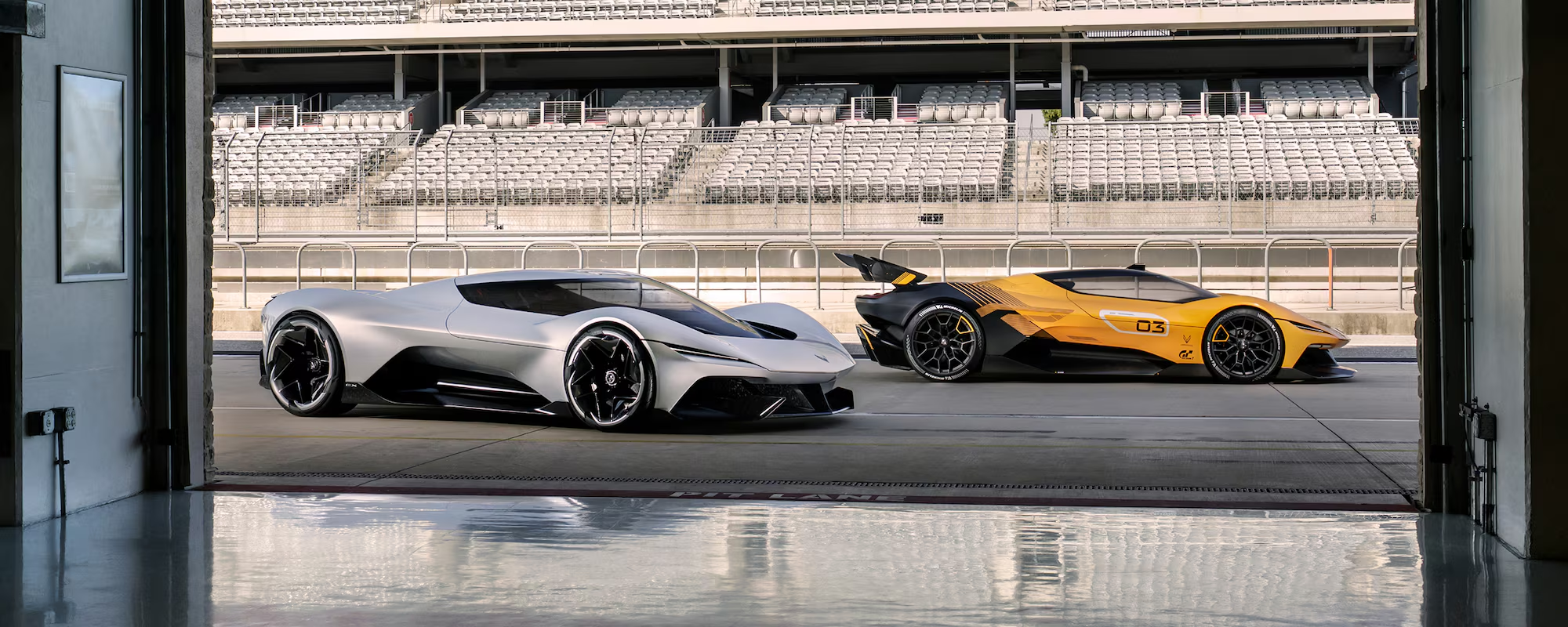

You’ll notice F1-style tricks aren’t just for racetracks anymore; Chevrolet has filed technology that automates adjustable aero and drive controls so your next street car could actively change downforce and torque distribution to match cornering and drifting needs. That means more grip when you want it, less drag when you don’t, and smarter handling delivered by onboard computers rather than guesswork.
Picture a system that links your steering, pedals, and preset drive modes to movable splitters and spoilers so the car adjusts itself in real time for efficiency or performance. Expect a look at how the tech works, what it borrows from Formula 1, and what it could mean for everyday fuel use, acceleration, and driving confidence.
Chevrolet’s Formula 1-Inspired Technology for Everyday Cars
Chevrolet brings high-efficiency hybrid hardware, regenerative energy capture, and aerodynamic control into models you can actually drive daily. Expect electric torque fill, on-demand power boosts, and systems that reduce drag or manage airflow when you need them.
Hybrid Power Units and Energy Recovery Systems
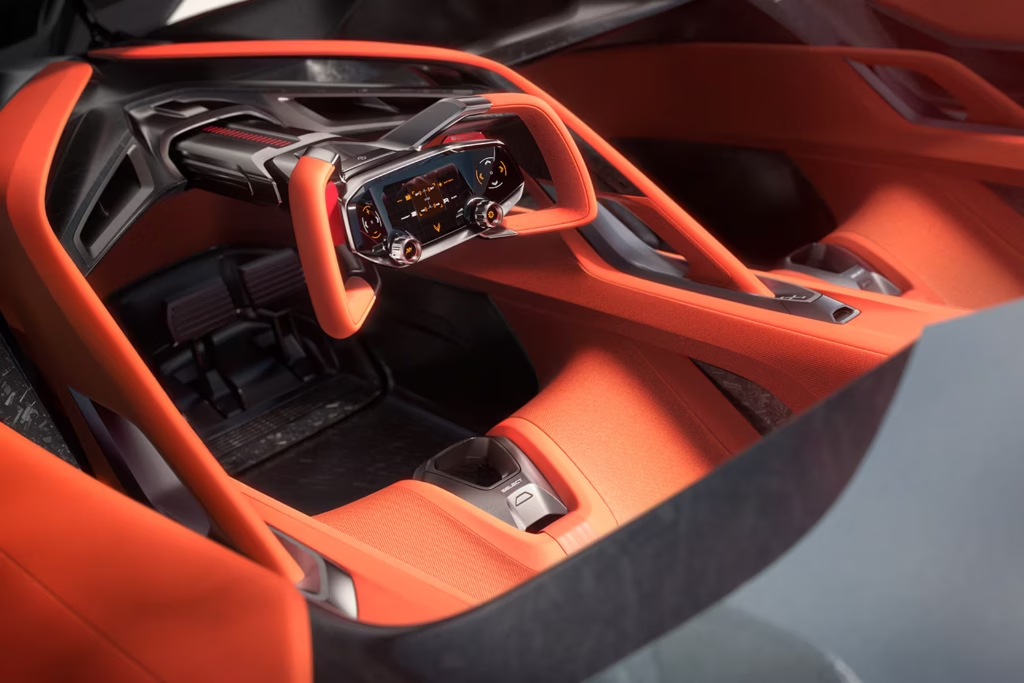
Chevrolet adapts F1-style hybrid power units by combining a high-output gasoline engine with electric motors and a compact battery pack. In street cars this means the engine handles sustained power while one or more electric motors provide instant torque at low speeds, cut emissions in city driving, and smooth power delivery during gear changes.
The energy recovery systems capture braking and exhaust energy and store it in the battery for later use. That stored energy supports acceleration, powers accessories, or extends electric-only range in short bursts. You get improved fuel economy without dramatic compromises in packaging because Chevrolet tunes the hybrid control unit to prioritize real-world driving patterns.
Expect software that decides when to harvest energy, when to deploy it, and how to balance battery state-of-charge with performance goals. That makes the system feel seamless rather than interruptive when you drive.
KERS: Boosting Performance in Road Cars
Chevrolet reworks the Formula 1 KERS idea into a usable “boost” function for daily driving. On demand, the electrified system adds rapid electric torque to fill turbo lag, shorten 0–60 times, or assist overtakes on highways. You control boost through normal inputs—throttle position, drive mode, or a dash-mounted button—so it feels intuitive.
KERS-style systems also improve responsiveness in stop-and-go traffic by using recovered energy for immediate acceleration from standstill. The implementation focuses on durability and repeatability: the electric motor and power electronics are sized for thousands of cycles rather than a few race stints. That keeps the performance benefits consistent over the vehicle’s life.
ERS and Drag Reduction System Integration
Chevrolet integrates ERS principles—regenerative and deployment strategies—with adaptive aerodynamics to balance performance and efficiency. The ERS manages when to harvest energy, when to deploy electric power for acceleration, and how to prioritize battery charge for repeated use during daily driving.
Where relevant, Chevrolet uses a simplified drag reduction system (DRS) concept: active aerodynamic surfaces adjust to lower drag at speed or increase downforce when you need grip. The vehicle’s control system links ERS and adaptive aero so a high-speed pass can open aero louvres and deploy stored electric power simultaneously, maximizing top-speed efficiency and acceleration.
This integration emphasizes reliability and street-legal behavior. Actuators, sensors, and control logic meet production durability standards, and the aero changes occur within regulatory noise and safety limits you’d expect on public roads.
Impact on Efficiency, Performance, and Sustainability
This technology changes how cars manage airflow, grip, and fuel strategy. Expect tangible gains in highway efficiency, cornering stability, and options for lower-carbon fuels.
Aerodynamics and Downforce in Consumer Vehicles
You get aerodynamic components tuned for real roads, not racetracks. Active splitters, adjustable rear wings, and underbody diffusers work together to increase downforce at speed while minimizing drag when you need efficiency. The system uses sensors and vehicle speed inputs to change wing angle and ride height in milliseconds, so you keep stability through tight curves and preserve MPG on the highway.
Benefits include improved cornering grip under emergency maneuvers and shorter braking distances because downforce pushes tires harder onto the road. Engineers balance added downforce against increased fuel use by retracting aero elements at steady cruising speeds. Expect manufacturers to pair these systems with tire and suspension calibrations so your daily drive feels predictable and controlled.
Transition to Sustainable Fuel in New Models
You’ll see models designed to accept lower-carbon fuels alongside electrified powertrains. Chevrolet’s roadmap emphasizes compatibility with renewable gasoline blends, e-fuels, and high-octane sustainable fuels that let turbocharged engines run more efficiently and with fewer CO2 lifecycle emissions. Fuel-system materials and engine calibration adapt to different energy densities and combustion characteristics to maintain power and protect components.
When you choose a vehicle with this tech, the ECU maps switch automatically to optimize ignition timing, boost pressure, and fuel injection for the specific fuel in the tank. That means you can use sustainable blends at public pumps without sacrificing throttle response or long-term reliability. Broader adoption reduces lifecycle emissions while keeping internal-combustion performance accessible during the EV transition.
More from Steel Horse Rides: