
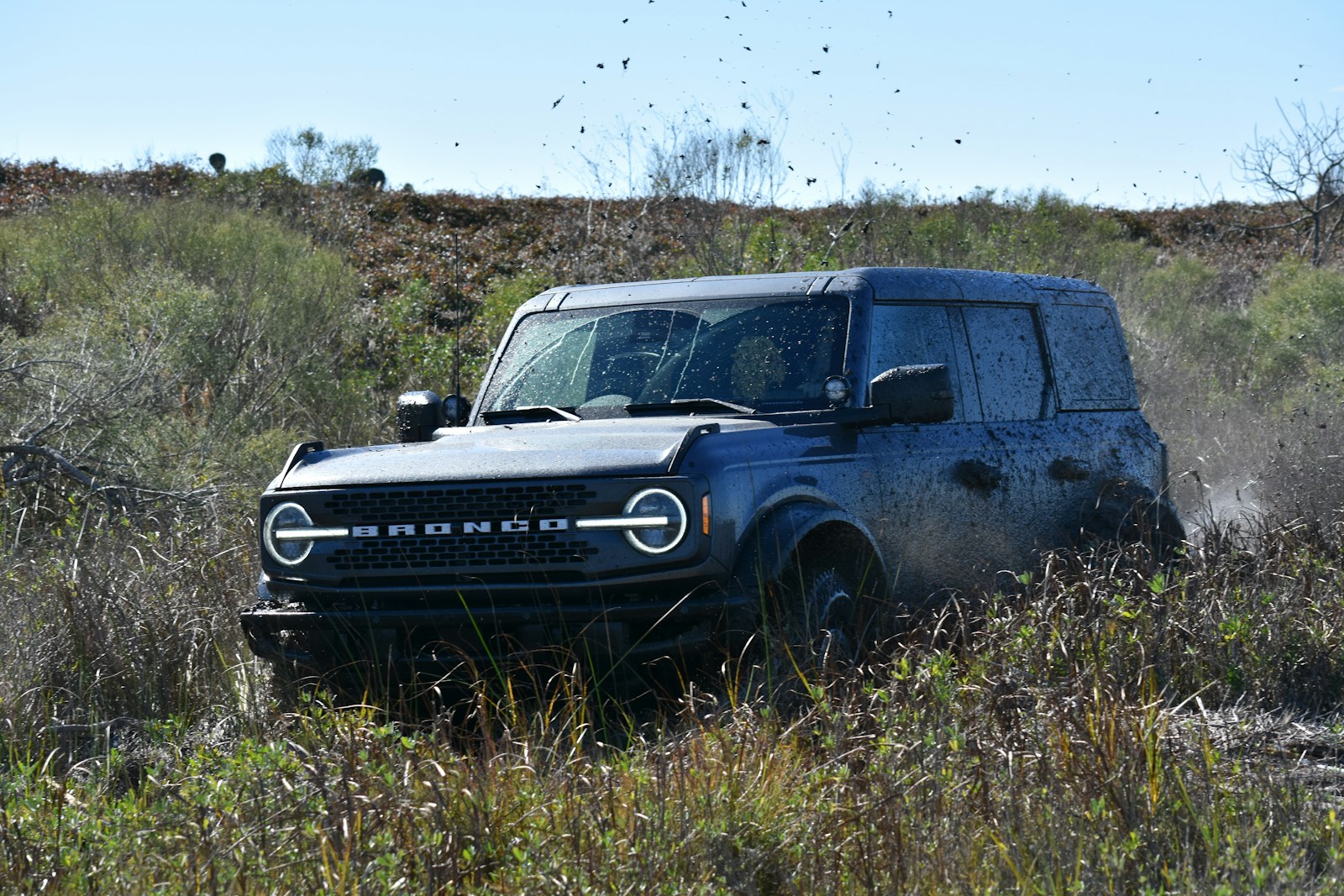

Ford sold 33.7 percent more Broncos in 2025 than it did the year before, while the entire U.S. new-vehicle market grew by roughly 2 percent over the same stretch. Jeep’s Wrangler, already the volume leader in the segment, still managed an 11 percent gain on top of an already large base. Put those two numbers next to the industry’s overall growth rate and the gap is hard to miss: dedicated off-road-focused SUVs are expanding at somewhere between five and fifteen times the pace of the broader new-car market, according to sales figures both automakers report every quarter.
The Full-Year Numbers, Straight From the Sales Reports
Jeep sold 167,322 Wranglers in the United States in 2025, an 11 percent increase over 2024, while Ford’s Bronco climbed to 146,007 units, a 33.7 percent jump, according to a tally of both automakers’ full-year U.S. sales reports. Wrangler still outsells Bronco in absolute terms, but Bronco’s growth rate is the more striking figure: a truck that was still ramping up production a few years ago is now closing the gap with a nameplate that’s been the benchmark for off-road SUVs since 1986. Back those percentages out and Bronco’s 2024 total lands at roughly 109,000 units, which matches the 109,172-unit figure Ford itself reported for the 2024 calendar year, a 3.32 percent increase over 2023 in its own right.

Compare That to the Market as a Whole
Cox Automotive’s own year-end forecasting puts the broader picture in perspective. The firm’s December 2025 release projected total U.S. new-vehicle sales would land near 16.3 million units for the year, up nearly 2 percent from 2024 and the best result since 2019. That 2 percent industry-wide gain is the baseline every automaker was working against in 2025. Bronco’s 33.7 percent climb isn’t just outpacing that baseline, it’s beating it by a factor of roughly 17. Even Wrangler, a nameplate that already commands a mature and loyal buyer base with less room to grow, posted a gain more than five times the market average. Segments that are already large rarely grow this fast; segments that are just now hitting mainstream demand do.
Not Every ‘Rugged-Looking’ Compact SUV Shares in This Growth
The distinction matters between genuine off-road hardware and off-road styling. Ford’s own smaller Bronco Sport, built on a car-based unibody platform it shares with the Escape rather than the body-on-frame architecture underneath the full-size Bronco, actually saw sales slip 2.18 percent to 124,701 units in the 2024 calendar year, according to Ford’s own reporting, even as its body-on-frame sibling posted a gain. That split suggests the growth documented here is concentrated specifically in vehicles built around real off-road mechanicals, two-speed transfer cases, locking differentials, and true four-wheel-drive systems, rather than in every compact SUV wearing rugged-sounding trim names and black plastic cladding. Buyers appear to be sorting themselves toward the hardware, not just the aesthetic.
What’s Actually Driving the Climb
Some of Bronco’s surge is simple math: a nameplate revived in 2021 was still working through production constraints and dealer allocation in its first few years, so year-over-year comparisons early on were always going to look dramatic. But 2025’s growth came after the model was already established and widely available, which is a different signal than a launch-year bump. Ford’s own reporting for 2024 also noted that electrified vehicle sales company-wide jumped 38 percent that year, which shows the automaker’s broader lineup was already trending toward higher growth categories, but Bronco’s gas-powered, body-on-frame off-road package still outpaced even that. Buyers aren’t just replacing sedans with crossovers anymore; a meaningful slice of them are skipping the softer crossover entirely and going straight to a vehicle built around a two-speed transfer case and locking differentials.
Why This Is a Segment Story, Not Just a Bronco Story
The fact that two direct rivals, Wrangler and Bronco, both grew well ahead of the market in the same year rules out the simplest explanation, which would be that one automaker just had a hot product cycle. When competitors selling into the same niche both post growth multiples above the industry average in the same twelve months, that’s a demand signal for the category itself, not a single nameplate’s marketing push. Compact and midsize off-road-focused SUVs spent years as a relatively small slice of the SUV market, overshadowed by crossovers built primarily for pavement. The sales reports both companies file every quarter suggest that gap is closing faster than the rest of the industry is growing, and the trend has held for more than one model year running.