
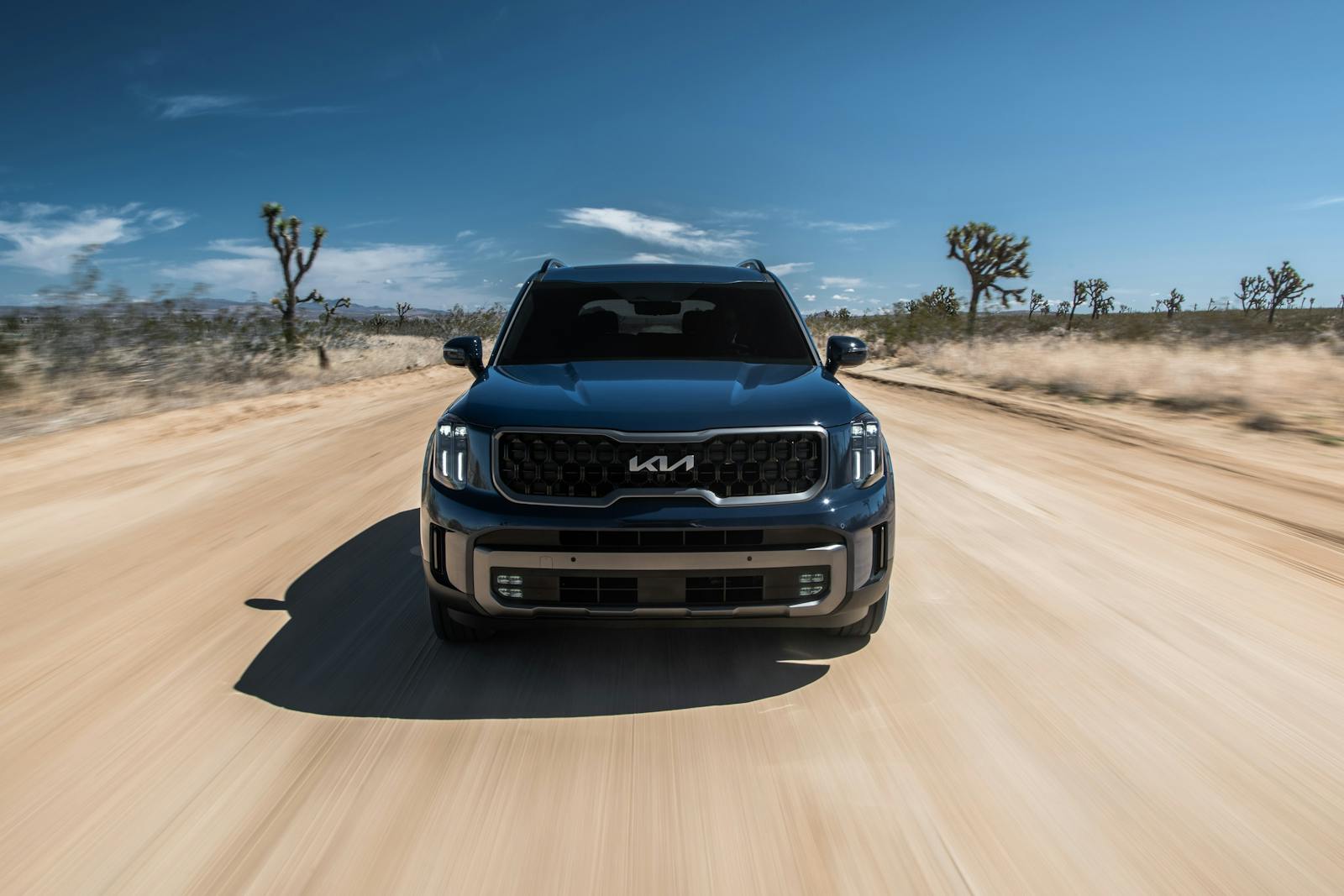

They walked into the dealership already half-braced for a fight. The couple had been shopping for a loaded Kia Telluride for weeks, the kind with every package, every camera angle, every little stitched detail that makes you feel like you’re driving a rolling living room. The inventory was thin, the prices were thick, and they’d finally found one in the color they wanted sitting under the harsh fluorescent lights like it was waiting for them specifically.
The salesman clocked them fast: excited but trying not to look excited, cautious but not cynical. He did the usual warm-laugh routine, complimented their trade, asked where they were taking their “new adventure vehicle.” Somewhere in the middle of the test drive, he casually mentioned he’d “take care of them” with a couple extras—just because. All-weather floor mats, and a cargo liner in the back, the stuff that always ends up in your online cart and then you talk yourself out of because it’s “just rubber.”
It landed exactly how it’s designed to land. The couple loosened up, smiling like, okay, cool, at least they’re not nickel-and-diming us on the small stuff. The salesman even did a little flourish when they got back to the showroom, pointing at the parts counter like it was a magician’s assistant. “We’ll throw those in for free,” he said, and the couple nodded, mentally checking off one more box in a process that’s basically death by paperwork.
The “freebie” moment that made them feel safe
By the time they sat down at the salesman’s desk, the vibe had shifted into that weird dealership calm where everyone pretends the hard part is over. The Telluride’s window sticker was high, but not surprising. They’d already steeled themselves for it, and the salesman kept reinforcing this idea that they were getting a “fair deal in this market,” like that phrase is supposed to work like a sedative.
The couple asked about dealer add-ons early, because they weren’t new to this. No paint protection? No nitrogen tires? No random “security etch” fee? The salesman smiled and did the reassuring palm-down gesture, the one that means, relax. He told them the car was “pretty clean,” and then, like a cherry on top, repeated that the mats and cargo liner were on him.
It’s not just the cost of floor mats. It’s what it signals—someone is doing a small kindness, and that makes the big numbers feel less predatory. The couple even joked about how those mats were the only thing keeping their future road trips from turning into a crumb-and-mud disaster. The salesman laughed right along, tapping his keyboard, acting like everything was already settled.
Paperwork land: where vibes go to die
Then came the handoff into finance, the little office where every surface is designed to make you feel slightly trapped. The finance manager had the same upbeat tone but with a sharper edge, like someone who’s been asked to smile through a thousand arguments about APR. He slid papers across the desk in neat stacks, each one more official-looking than the last.
The couple had their numbers written down. They knew the sticker, the taxes, the fees they could predict, and the rough monthly payment they’d tolerate. The finance manager started walking them through totals, and at first nothing looked wildly off—until the final contract page came out with the big number, the one that matters.
It wasn’t a “this is a little higher than we expected” moment. It was a “why is the total $1,400 more than the math we did in the parking lot” moment. The husband leaned in, scanning the line items like he was trying to spot a typo, while the wife did that quiet recalculation thing people do when they’re trying not to look panicked or embarrassed.
That’s when they saw it. Not at the top, not in an obvious box, but buried below the total: “Accessory Charges — $1,400.” It sat there with the bland confidence of a label that expects you to be too tired to question it.
The awkward realization: the “free” mats weren’t free
The wife pointed at the accessory line and asked, “What’s that?” in the exact tone that sounds polite but is actually the start of a conflict. The finance manager didn’t flinch. He said it was for “the accessories installed on the vehicle,” like that was a normal, neutral sentence and not a trapdoor opening under their chairs.
The husband asked which accessories, specifically. The finance manager listed them: all-weather mats and a cargo liner. Maybe a couple other small things depending on the package, he said, but the mats and liner were the big ones. It was delivered like a simple clarification, like he’d just explained what a cupholder was.
The couple just stared for a second, trying to sync reality. The salesman had literally said “free.” The salesman had done the little showy gesture. The salesman had built that into the emotional rhythm of the deal, a tiny gift to make the whole experience feel less transactional. And here it was, not only not free, but marked up to a price that sounded like it came with a personal insult attached.
The wife asked the finance manager to break down the $1,400. The finance manager’s tone shifted into that practiced patience that isn’t patience at all. He said those were “genuine accessories” and “dealer-installed,” and the price reflected that. He didn’t say it like he was defending a scam; he said it like he was explaining gravity.
“Let me grab him” and the slow-motion confrontation
The couple asked to see the salesman. The finance manager stood up with this tight little nod, like he’d done this exact walk a hundred times, and went to “grab him.” They sat in the office in that thick silence that happens when you’ve been friendly with someone and now you’re about to accuse them of something.
When the salesman came in, he still had his showroom smile on, but it looked slightly taped-on at the edges. The husband didn’t yell, but he didn’t sugarcoat it either. “You told us these were free,” he said, tapping the paper where the accessory charge lived like a hidden landmine.
The salesman did the classic dodge: misunderstanding, miscommunication, language choices. He said he meant “free” as in “included,” which is the kind of word game that makes your skin hot because it’s technically phrased like an explanation while being emotionally the opposite. The wife asked why something “included” wasn’t listed in the price they’d agreed on before finance, and why it was appearing as a separate $1,400 charge under the total like a secret.
Now the room had that brittle dealership energy where everyone is smiling but nobody is friendly. The finance manager jumped in to say accessories are “standard on this unit” and they “can’t remove them.” The husband asked, “Can you remove the charge?” and the salesman’s smile got even tighter, the one that signals you’ve asked the forbidden question.
The salesman offered a workaround that wasn’t really a workaround: he could “discount something else” or “work the numbers,” the fuzzy language that means he wants to move money around until it looks less like a lie. The wife kept coming back to the same point, like a lawyer with one clean fact: “You said free.” The salesman kept answering like a politician: “We’re trying to take care of you.”
The part where walking away becomes real
At a certain point the couple stopped talking and just started reading. They went line by line through the contract, fingers tracking the numbers, finding more little seams where the deal could be tightened or loosened depending on who was tired. The finance manager watched them with that look people get when their schedule is slipping and they’d rather you just sign so they can move on.
The husband asked for a revised contract with the accessory charge removed or itemized at actual cost. The finance manager said he’d need to talk to his manager. The salesman said something about “that’s just how the system prints it,” as if the printer was committing fraud on its own and everyone was helpless.
They stood up. Not dramatically, not slamming chairs, just standing—because staying seated was starting to feel like consenting. The wife said they were willing to buy the car, right now, if the numbers matched what they’d been told. The husband asked for their keys back for the trade appraisal, making it clear they weren’t going to be held hostage by the classic “we can’t find them” stall.
That’s when the dealership shifted gears into damage control. Someone else appeared—another manager, different tie, same calm voice—saying they “understood the confusion.” He offered to “meet them in the middle,” which translated into knocking off a few hundred and acting like that was generosity. The couple looked at each other, doing that silent couple math: is it worth blowing up the whole day over this, and is it worse to stay now that we know what they’re willing to hide?
They didn’t sign right then. They took their papers, got their keys, and walked back through the showroom past the Telluride that had already started feeling less like a prize and more like a lesson. In the parking lot, the husband said something like, “It’s not even the mats,” and the wife nodded because of course it wasn’t. It was the moment they realized “free” was just another word the dealership could stretch until it meant whatever helped them win.
More from Steel Horse Rides: