

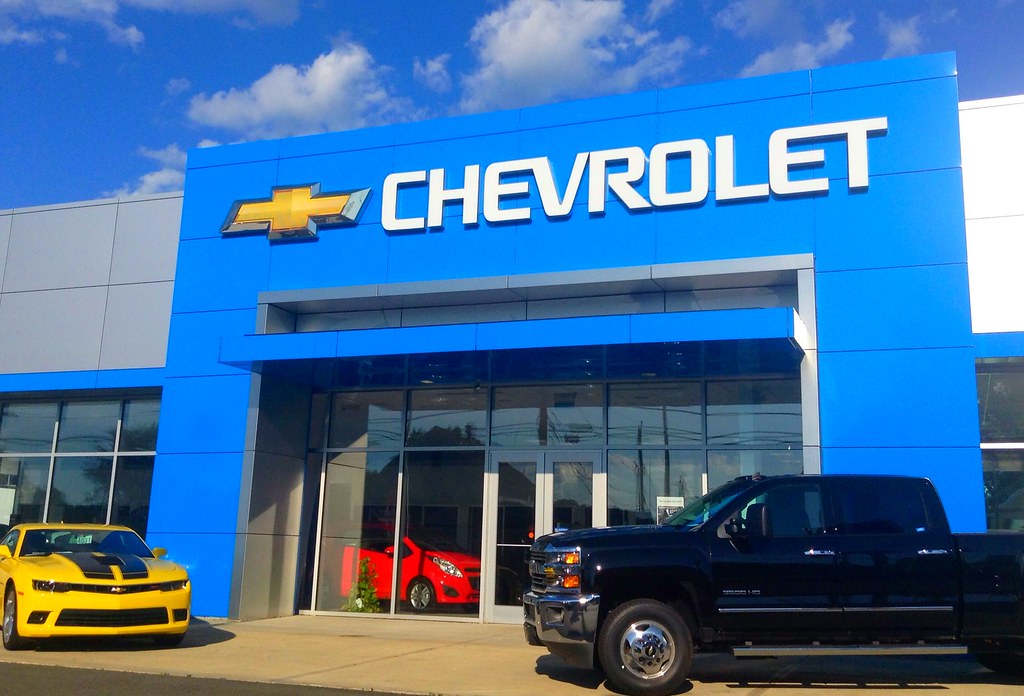
They thought they were done-done. Like, keys in hand, kids already arguing over who got the back row, and that weird post-deal daze where you can finally stop doing mental math on monthly payments. The couple had just signed a contract for a brand-new Suburban—one of those big, glossy, suburban-family statements on wheels—at a total price that landed around $72,000.
It had been a whole day at the dealership, the kind where time stops existing because you’re trapped under fluorescent lights with stale coffee and the finance guy’s printer. They’d negotiated, they’d said no to some extras, they’d said yes to a couple others, and eventually the paperwork stack got slid across the desk with that practiced “just sign here, here, and here.” By the time they drove home, they were exhausted but relieved, telling themselves the painful part was over.
Then the call came. Not a friendly “hope you’re loving the new ride” check-in, but that slightly too-bright tone: hey, can you come back in and re-sign something? The bank caught a math error. Nothing huge, just needs a quick fix. And the “quick fix,” it turned out, was $4,300 higher than what they’d agreed to.
The Deal Day: Exhaustion, Excitement, and a Lot of Paper
From the start, the couple wasn’t casual about this purchase. They’d picked the trim, compared packages, and done that modern ritual where you build the exact vehicle online and then go in hoping reality matches the website. The Suburban they wanted wasn’t cheap, but they’d convinced themselves it made sense: space, safety, long-term family car, something they could keep for years.
The salesperson did the whole routine—walkaround, features, “this one won’t last,” gentle nudges toward urgency. It worked just enough to keep them moving, but the couple still fought for numbers. They talked trade-in value, they asked for itemized breakdowns, and they kept circling back to the total out-the-door price like it was the only number that mattered.
When they finally landed on the deal, it felt like a win. They got the contract printed, looked at the totals, and signed. Somewhere in there was the normal blur: taxes, title, dealer fees, a couple add-ons they thought were already baked in, and financing terms that looked clean enough in the moment. The takeaway was simple: $72,000 total, everyone shakes hands, you’re done.
The “Just Come Back In” Phone Call
A day or two later, the dealership called and asked them to come back. It was framed like a minor administrative thing, the kind that happens when a line item is missing a signature or a date got typed wrong. The couple didn’t love it, but it didn’t sound like a crisis—more like a nuisance.
When they asked what it was about, the answer stayed vague: the bank reviewed the contract and found a math error. They needed them to re-sign with the corrected numbers. The way it was said made it feel routine, like the dealership had done this a thousand times and this was just another file to tidy up.
But the couple pushed a little. “What kind of error?” they asked, because if it was truly minor, you’d think someone could say what changed. That’s when the tone shifted slightly. The number was higher. Not by a rounding issue or a few dollars—by $4,300.
Sitting Back Down in the Finance Office
Back at the dealership, they were led right to the finance office, same desk, same atmosphere, same “let’s keep this moving” energy. The finance manager had the corrected contract ready like it was a formality. He explained the bank caught an error in the math—some figure didn’t add up correctly on the original documents.
The couple looked at the new paperwork and immediately saw the problem: the total wasn’t what they’d signed for. The manager pointed at a few lines, doing that rapid explanation where the words are familiar—principal, fees, add-ons—but the point is basically “this is how it has to be.” He emphasized it wasn’t the dealership’s choice, that the bank required the corrected amount for the loan to fund.
They didn’t care whose “choice” it was. The whole reason they’d signed was because the numbers worked at $72,000. They asked why the math error wasn’t caught before they left. The manager gave the kind of answer that sounds like it’s supposed to soothe you: it happens, systems, paperwork, busy day, underwriting review. None of it made the new number feel any less like a bait-and-switch.
Then came the pressure. Not screaming, not overt threats, but that tight, uncomfortable push dealerships do so well. If they didn’t re-sign, it could unwind the deal. The bank might not finance it. The contract as written couldn’t stand. The implication hung there: you’re already driving the vehicle, so let’s not make this hard.
The $4,300 Question: Error, Add-On, or “Too Bad”?
Once the couple slowed down enough to actually parse the revised contract, the fight became less about feelings and more about specifics. Where exactly did the $4,300 come from? Was it a miscalculated tax? A fee applied twice? An add-on that had been “included” verbally but not actually accounted for? The finance manager kept describing it as a math correction, but the couple wanted a clean before-and-after explanation.
It didn’t help that dealerships have a way of making line items feel like fog. A small shift in interest rate, an extended warranty rolled in, a gap coverage figure, a service package—any one of those can hide inside the monthly payment if you’re not staring at the totals. The couple’s frustration wasn’t just the extra money; it was the sense that the story kept changing depending on what they asked.
The wife (in the retelling) was the one who kept returning to the same point: “We signed a contract.” She wasn’t interested in “the bank won’t fund it” as a magic phrase that erased the agreement. The husband kept flipping between anger and trying to stay practical—asking what happens if they refuse, what happens to the car, what happens to the down payment, what happens to their trade-in if it’s already been processed.
And that’s where the dealership had leverage. If their trade-in was already moved, if the down payment was processed, if the registration paperwork was already in motion, unwinding a deal stops being a simple “hand the keys back” scenario. The couple could feel it: the longer they sat there, the more trapped the situation became.
Stalemate: Re-Sign, Walk Away, or Lawyer Up?
The couple asked to take the revised contract home to review it. The finance manager didn’t love that idea. He didn’t outright forbid it, but he kept steering them toward signing on the spot, saying the bank needed it quickly, that delaying could create more problems.
They asked if the dealership would eat the $4,300. That was met with the kind of laugh that isn’t cruel, just dismissive—like they’d suggested the dealership give them free tires for fun. The manager pivoted back to “it’s the bank,” as if the bank was a storm system rolling in, not a set of terms someone could renegotiate.
At some point, the couple stopped trying to win the debate and started trying to understand their options. Could they return the car? Could they unwind the trade? Could they force the original contract to stand? The finance manager’s answers stayed slippery—possible, complicated, depends, we’d have to see—while keeping the preferred outcome clear: sign the new paperwork and make this go away.
They didn’t sign that day. They left with the same Suburban they’d driven in, but now it felt less like their new family car and more like a hostage with leather seats. On the drive home, the excitement was gone. Every feature they’d loved—screens, cargo space, smooth ride—felt like a reminder that they might be paying for a mistake they didn’t make.
What stuck with them wasn’t just the $4,300. It was the eerie way the deal could shift after the ink dried, and how quickly “congratulations” turned into “come back in and fix this.” They were left in that miserable in-between space: still driving the vehicle, still technically in limbo, and still staring at a question nobody at the dealership seemed eager to answer plainly—if the original total was wrong, why did it feel like the correction only ever moved in one direction?