
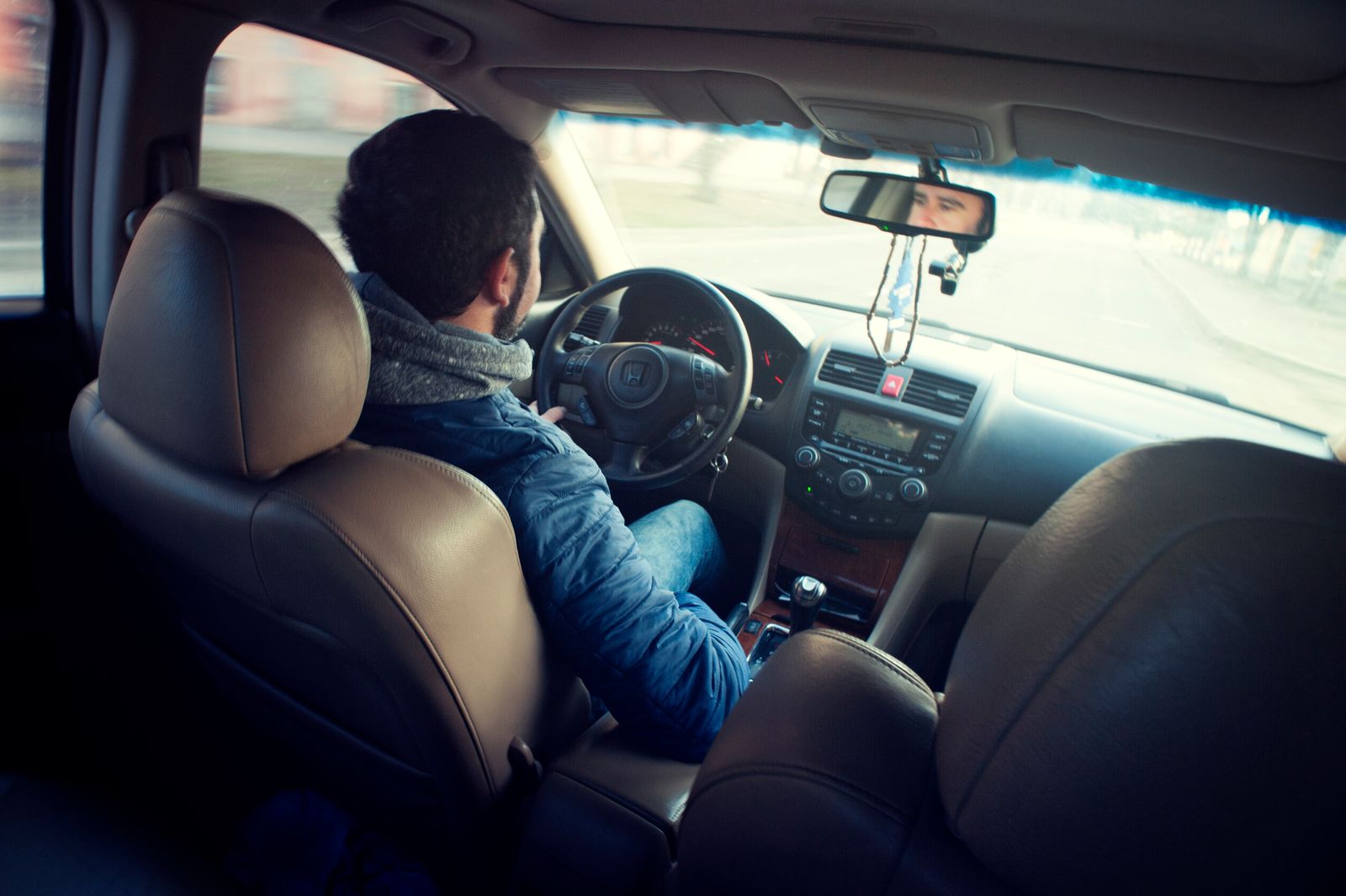

It started the way a lot of workplace favors start: casual, rushed, and just believable enough to make someone say yes without thinking. The guy with the car—let’s call him Mark—was finishing up a late morning meeting when his coworker, Kyle, popped by his desk holding his phone like it was burning his palm.
Kyle said he’d forgotten his wallet at home, his girlfriend was waiting on lunch, and he just needed to make a “quick run” to grab food and come straight back. Mark hesitated because he actually liked his car and didn’t hand his keys out to people, but Kyle had that practiced, friendly urgency that makes you feel like the weird one for saying no. Mark figured, fine—fifteen minutes, maybe twenty, and Kyle was a grown adult who drove to work every day.
Kyle walked out jangling Mark’s keys, waved like it was nothing, and disappeared into the parking lot. Mark went back to answering emails and half-listening to coworkers complain about deadlines, thinking the whole thing would be forgettable by the end of the afternoon. Then fifteen minutes turned into forty-five, and the “quick lunch run” started to feel less like a favor and more like a mistake.
The missing hour that didn’t make sense
By the time an hour had passed, Mark was checking the lot every so often like he’d misplaced a kid at the mall. Kyle wasn’t answering texts. When Mark called, it rang until voicemail, then he got a short message back: “Almost back, traffic.”
Traffic didn’t track. It was a weekday, not rush hour, and the lunch spots near their office were all within a ten-minute radius. Mark tried to act normal, but you can’t really focus when someone has your car and you’re doing mental math about what happens if they get in a wreck, or if a cop pulls them over, or if they decide to “just run one more errand.”
At around the two-hour mark, Kyle finally rolled in like he’d taken a leisurely Sunday drive. He parked, walked in holding a crumpled fast-food bag, and tossed out a breezy apology about “how insane the roads were.” He didn’t look rattled, didn’t seem embarrassed, and didn’t have that guilty energy people usually have when they know they pushed it too far.
He just handed Mark the keys, said, “Appreciate you, man,” and started chatting about work like nothing unusual had happened. That was the part that stuck with Mark: the absolute confidence of someone who either didn’t do anything wrong or truly believed he could talk his way out of it.
The dashcam detail Kyle forgot
Mark didn’t confront him right away. He smiled, said no problem, and waited until Kyle drifted away, because the last thing he wanted was a public scene in the office. But as soon as Mark had a moment alone, he went straight to his car with that uneasy feeling that he couldn’t name yet.
Mark had a dashcam. Not the fancy kind that streams to an app with a live feed, but a reliable one that recorded front and cabin audio when the car was on. He’d installed it after a minor fender-bender a year earlier, the kind of “just in case” purchase you forget about until you suddenly don’t.
He pulled the memory card and started skimming footage on his laptop during a break, expecting maybe to see Kyle stopping at an extra store, getting lost, or taking a phone call. The first few minutes looked normal: pulling out, merging, ordinary driving. Then the speed readout climbed like it was being dared.
The car hit 70, then 85, then triple digits. There was a stretch where it hovered around 100 MPH, and the road wasn’t some empty highway out in the middle of nowhere—it was a regular multi-lane route with traffic, turns, and the kind of intersections that make you automatically ease off the gas.
“Quick lunch” turns into a full-on stunt reel
Once Mark realized what he was watching, he stopped skimming and just let it run. Kyle wasn’t simply speeding; he was driving like he was trying to impress someone, even though he was alone. The cabin audio picked up him laughing to himself, the kind of chuckle that says he felt clever and untouchable.
At one point, he whipped into an empty lot and did burnouts. Not a single “oops, tires squealed” moment—actual deliberate tire-spinning, with the engine roaring and the camera shaking as the car jerked in tight circles. You could hear the tires protesting, that high-pitched squeal that makes any car owner’s stomach drop because it’s money getting shredded in real time.
Then came the near collision. Kyle blew through a turn too hot, drifted wide, and for a couple of seconds the dashcam caught the nose of a yellow school bus crossing ahead. The bus driver hit the brakes, Kyle yanked the wheel, and the car missed the bus by what looked like a few feet.
The footage didn’t have dramatic music or a cinematic angle, just the raw, mundane horror of real-world almost-disaster. The bus wasn’t empty, either—Mark couldn’t see kids clearly through the windshield glare, but the timing and the route made it hard to imagine it was a dead run. It was the kind of moment that turns a bad decision into something that could ruin multiple families’ lives in one breath.
The confrontation that didn’t go the way Kyle expected
Mark didn’t storm back inside yelling. He sat there for a minute with his hands on the steering wheel, trying to get his pulse back down, because it’s one thing to be mad and another thing to realize you accidentally gave someone the tool to do something catastrophic. When he went back to his desk, he kept it controlled and asked Kyle to step into an empty conference room.
Kyle walked in still wearing that relaxed expression, probably expecting a mild complaint about taking too long. Mark didn’t start with the bus or the speed; he started with something simple. “Why were you gone two hours?” he asked, and Kyle immediately went back to the traffic story, adding an extra stop for fries like that explained everything.
That’s when Mark told him there was a dashcam. The change in Kyle’s face was instant and unmistakable, like someone had yanked a curtain open and he’d forgotten he was standing there. Kyle tried to recover fast—he shrugged, laughed, said dashcams “make everything look faster,” and insisted he’d “never put anyone in danger.”
Mark pulled up a clip on his phone and showed him the speed readout hitting 100. Kyle’s laugh didn’t land this time. He shifted tactics, saying he “might’ve opened it up for a second,” like that was the whole story, like the burnouts and the two-hour disappearance were just harmless detours.
When Mark mentioned the school bus, Kyle got defensive in that specific way people do when they can’t deny something but also can’t admit it. He said the bus “came out of nowhere,” that it was “fine,” that Mark was “overreacting,” and then—almost unbelievably—he pivoted to how stressful his day had been and how he “needed to clear his head.”
Fallout in the office and the problem of consequences
Mark took his keys back and told Kyle he was done—no more borrowing, ever. Kyle’s tone flipped from defensive to offended, like Mark had broken some unspoken coworker code by not letting it slide. He left the conference room with that tight, wounded look and immediately started acting like Mark was the one making things weird.
In the hours that followed, the story leaked in fragments, because offices are basically rumor machines with better lighting. A couple coworkers approached Mark with cautious questions, and Kyle, for his part, kept it vague—he’d say Mark “freaked out” about the car, that Mark “didn’t trust anyone,” that it was “just a quick drive.” He never said, out loud, what the dashcam actually captured.
Mark was stuck with a decision that didn’t feel clean no matter which way he held it. If he went to HR, it wasn’t just about “workplace drama” anymore; it was about documented reckless behavior that could have killed someone, and the fact that it happened in Mark’s vehicle. If he didn’t go to HR, Kyle was still the type of person who might ask someone else for their keys next week and do it again, only this time without a camera recording it.
And then there was the practical mess: tires worn down, a faint burnt-rubber smell that didn’t fully go away, and the nagging fear that something got pushed too hard under the hood. Kyle hadn’t offered money, hadn’t apologized in a real way, hadn’t even shown the tiniest hint of shame—he’d just tried to argue the footage into meaning something else.
By the end of the day, Mark hadn’t made a dramatic announcement or some satisfying public reckoning happen in the break room. He just had the files saved, the keys in his pocket, and a coworker walking around acting like the victim of “someone being uptight.” The most unsettling part was how normal Kyle seemed afterward, like he could almost convince himself it was all no big deal—except now Mark had proof that normal, in Kyle’s hands, included a 100-MPH joyride and a school bus he barely missed.
More from Steel Horse Rides: