
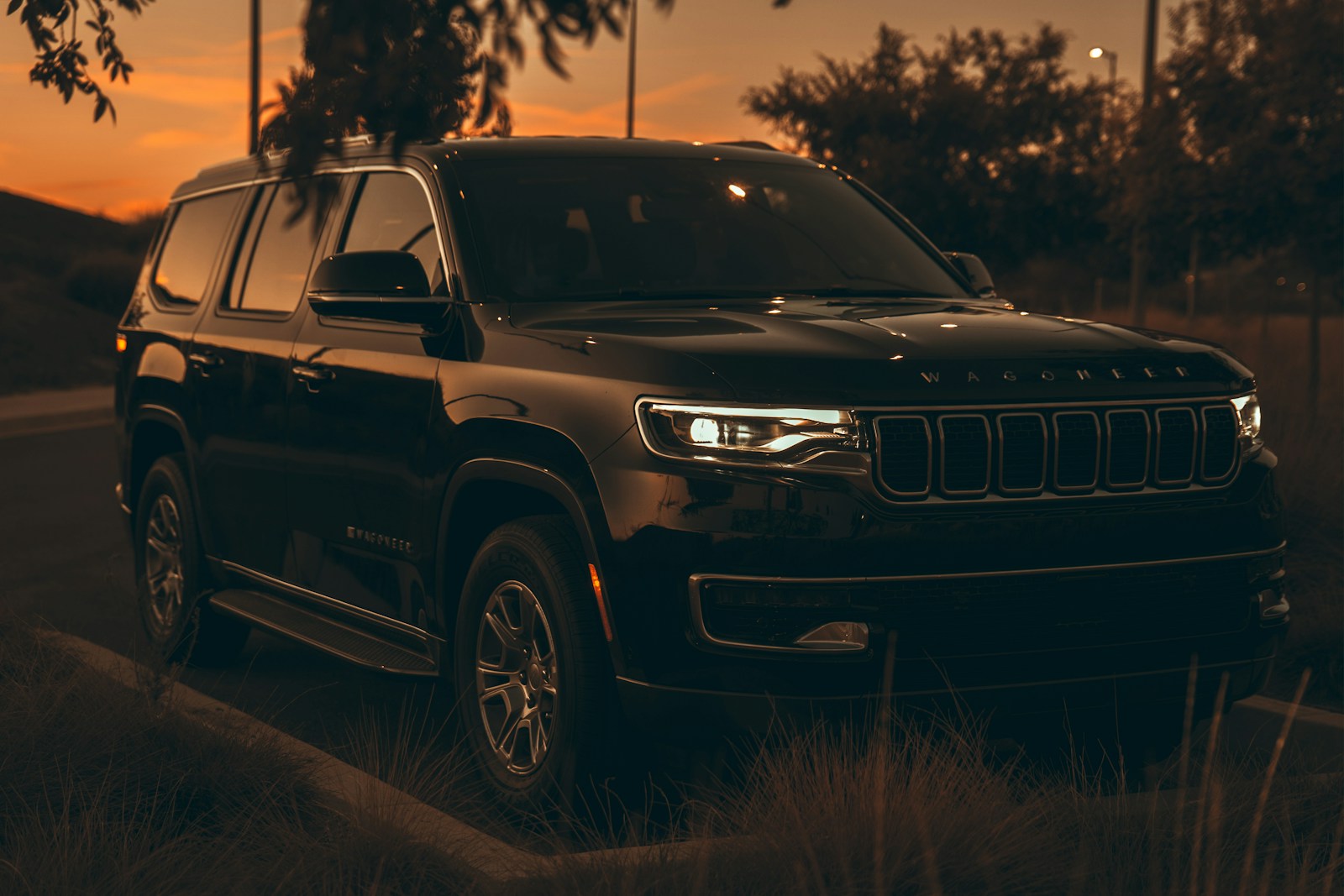

Three of the best-selling three-row family SUVs in America, the Jeep Wagoneer, Chevrolet Tahoe, and Ford Expedition, all struggled to protect a second-row passenger in Insurance Institute for Highway Safety testing that used a crash-test dummy few drivers know exists. In results IIHS published in June 2024, all three SUVs scored a Marginal or Poor rating specifically on the portion of the test that measures injury risk to a passenger sitting behind the driver, even though the same vehicles posted stronger scores on that crash test’s older, driver-focused metrics. The dummy responsible for exposing that gap was not part of the test a few years ago.
A Second Dummy Joined the Test, and the Results Changed
For decades, IIHS’s moderate overlap front crash test, in which 40 percent of a vehicle’s front end strikes a barrier at 40 mph, measured injury risk to a driver-sized dummy alone. Starting in December 2022, the organization added a second Hybrid III dummy, sized to represent a small woman or a 12-year-old child, seated directly behind the driver, along with new sensors including a shoulder belt position sensor to help gauge chest injury risk that had not been tracked before. IIHS’s stated reason for the change was blunt: internal crash data had shown that in newer vehicles, a belted occupant in the second row now faces a higher risk of dying in a frontal crash than someone belted in the front seat, a reversal of the assumption that second-row seating was automatically the safer place to sit.
Large Three-Row SUVs Put the New Dummy to the Test
Family-hauling SUVs with a third row are exactly the vehicles where a second-row dummy score matters most, since that is typically where a booster-seat-age child or an older adult rides. When IIHS ran its updated moderate overlap test on large SUVs in June 2024, it evaluated 2023-24 model year versions of the Jeep Wagoneer, Chevrolet Tahoe, and Ford Expedition, three of the most common three-row family vehicles on American roads. Only the Wagoneer earned an overall Top Safety Pick award, and even it came away with a Marginal rating on the specific updated moderate overlap test measuring second-row protection.

Three Different Ways to Fail the Same Test
The specific injury risks IIHS documented varied by vehicle, which suggests each automaker’s second-row restraint system has its own weak point rather than a single industrywide flaw. In the Wagoneer, the second-row dummy showed a high risk of chest injury from seat belt forces even though the airbags and seat belts otherwise functioned as designed. In the Tahoe, which scored Poor overall on the updated test, the dummy showed high risk of head, neck, and chest injuries, and the lap belt migrated up onto the dummy’s abdomen during the crash, a pattern known as submarining that increases the risk of internal injury. The Expedition posted a high chest injury risk despite being the only one of the three vehicles equipped with second-row seat belt pretensioners, and its rear curtain airbag failed to deploy during the test.
Luxury SUVs Faced the Same Dummy, With Similarly Mixed Results
The large SUV results were not an isolated finding. When IIHS ran the identical updated test on eight 2023-24 midsize luxury SUVs in December 2023, only the Lincoln Aviator, Mercedes-Benz GLE-Class, and Volvo XC60 earned a Good rating, while the Acura MDX and BMW X3 came in Acceptable, the Audi Q5 and Lexus RX scored Marginal, and the Cadillac XT6 scored Poor, with IIHS documenting a high risk of chest injury for its second-row occupant. Even the Good-rated Aviator was not flawless, its second-row dummy’s head moved closer to the front seatback than IIHS engineers consider ideal. The pattern across both vehicle classes is the same: sticker price and brand reputation for safety do not reliably predict how a vehicle’s second row performs once the dummy sitting there is actually measured.
Why a Second-Row Score Can Diverge So Sharply From the Driver’s Score
The gap exists because automakers have spent decades optimizing the driver and front passenger positions, which sit directly ahead of the most heavily engineered crash sensors, airbags, and structural crush zones. Second-row seating, especially in a three-row SUV where the second row also has to fold or slide to allow third-row access, has historically received less structural and restraint engineering attention. IIHS President David Harkey noted in the organization’s own release that while large SUVs’ mass helps protect their own occupants in crashes with smaller vehicles, that same mass also means they present more danger to other road users, a reminder that a vehicle’s overall size does not automatically translate into better protection for every seating position inside it.
What This Means for Families Buying These SUVs Today
A three-row SUV that carries a Top Safety Pick badge or a strong reputation for driver-seat crash performance is not automatically the safest choice for the child or grandparent riding in the second row. Families cross-shopping large SUVs specifically for that second-row seat, where a car seat or booster is most likely to live, now have a specific IIHS rating to check beyond the vehicle’s overall award, and the Tahoe and Expedition results show that even top-selling, well-reviewed SUVs can post a Poor or Marginal score on exactly the metric that matters most for the people riding behind the driver.