

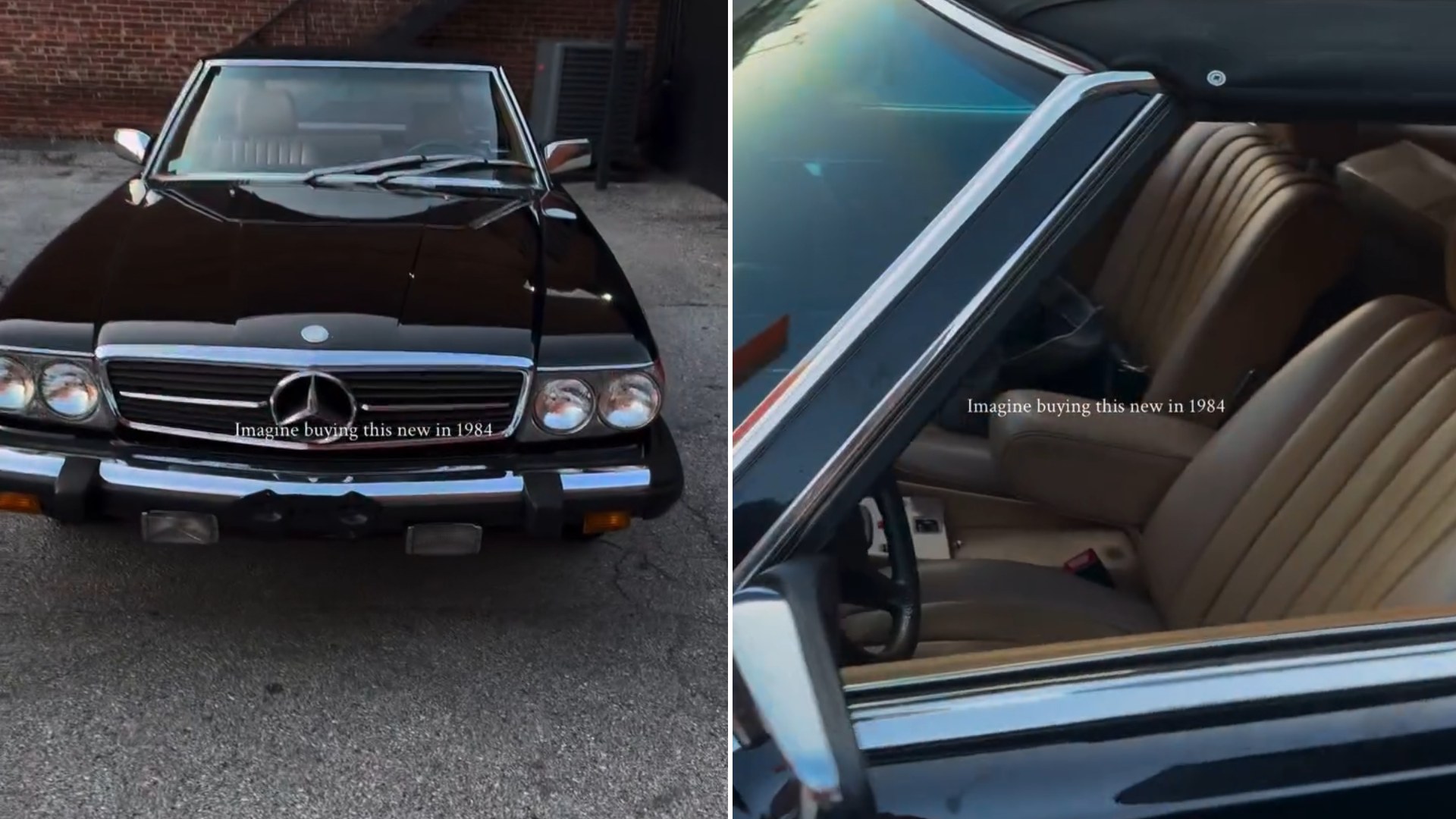
Some cars age. Others, apparently, refuse to. That’s the premise behind a recent Instagram video from the creator behind @againstthegrain_creative, who filmed a vintage 1984 Mercedes convertible and delivered a verdict that stopped plenty of scrollers mid-scroll: the car still looks almost brand new, more than four decades after it first rolled off the production line.
“And she still looks almost brand new 42 years later,” the nostalgic text overlay reads, accompanying footage of the creator walking up to and filming the convertible. There’s no elaborate backstory here, no restoration montage or dramatic reveal — just a person encountering a well-preserved classic car and taking a moment to appreciate it on camera, letting the vehicle’s condition speak for itself.
Mercedes-Benz convertibles from the early-to-mid 1980s occupy a particular sweet spot in classic car appreciation. They represent an era when the brand was refining a design language that leaned toward clean lines and understated elegance rather than aggressive styling, built with the kind of over-engineered mechanical durability the marque was known for at the time. A 1984 model would have originally rolled off the line during a period widely regarded by enthusiasts as something of a high point for the brand’s build quality — solid, substantial cars constructed to standards that, by most accounts, held up better over decades than many of their contemporaries from other manufacturers.
Keeping a convertible looking close to factory-new across 42 years is no small feat, whatever combination of careful ownership, garage storage, and periodic maintenance made it possible. Convertibles in particular face preservation challenges that hardtop vehicles don’t have to contend with in the same way — soft tops degrade from UV exposure and weather far more readily than steel or fiberglass, interior materials take more direct sun damage with the top down, and the additional mechanical complexity of a folding roof system introduces more components that can wear out or fail over decades of use. A convertible surviving four decades in the condition this one is described as being in suggests an ownership history defined by real care rather than neglect followed by a rushed restoration.
There’s a particular appeal to content like this that differs from the more dramatic barn-find or restoration genres that dominate a lot of classic car social media. Rather than the satisfaction of watching something ruined get rescued, videos like this one offer the quieter, arguably rarer pleasure of watching something that was simply never allowed to deteriorate in the first place — a testament to an owner, or string of owners, who understood from the beginning what they had and treated it accordingly.
The nostalgic framing of the caption, paired with simple, unadorned footage of the car itself, taps into something that resonates broadly regardless of whether a viewer knows the specific model or era: the sense of encountering a genuine time capsule, a physical object that has managed to outrun the usual effects of four decades of wear in a way that feels almost improbable to witness in person.
Takeaway: Preserving a Classic Car’s Condition Long-Term
Keeping a classic vehicle looking close to new for decades comes down mostly to consistency rather than any single dramatic intervention: garage or covered storage away from direct sun and moisture, regular fluid changes even during periods of low use, and prompt attention to small issues before they become larger ones. For convertibles specifically, treating and conditioning the soft top regularly and keeping the interior out of prolonged direct sunlight go a long way toward preventing the kind of wear that’s hardest to reverse. More broadly, a car this well preserved is a reminder that the most valuable kind of car care often isn’t a dramatic restoration at all — it’s the patient, unglamorous maintenance applied consistently, year after year, long before any damage has a chance to set in.