

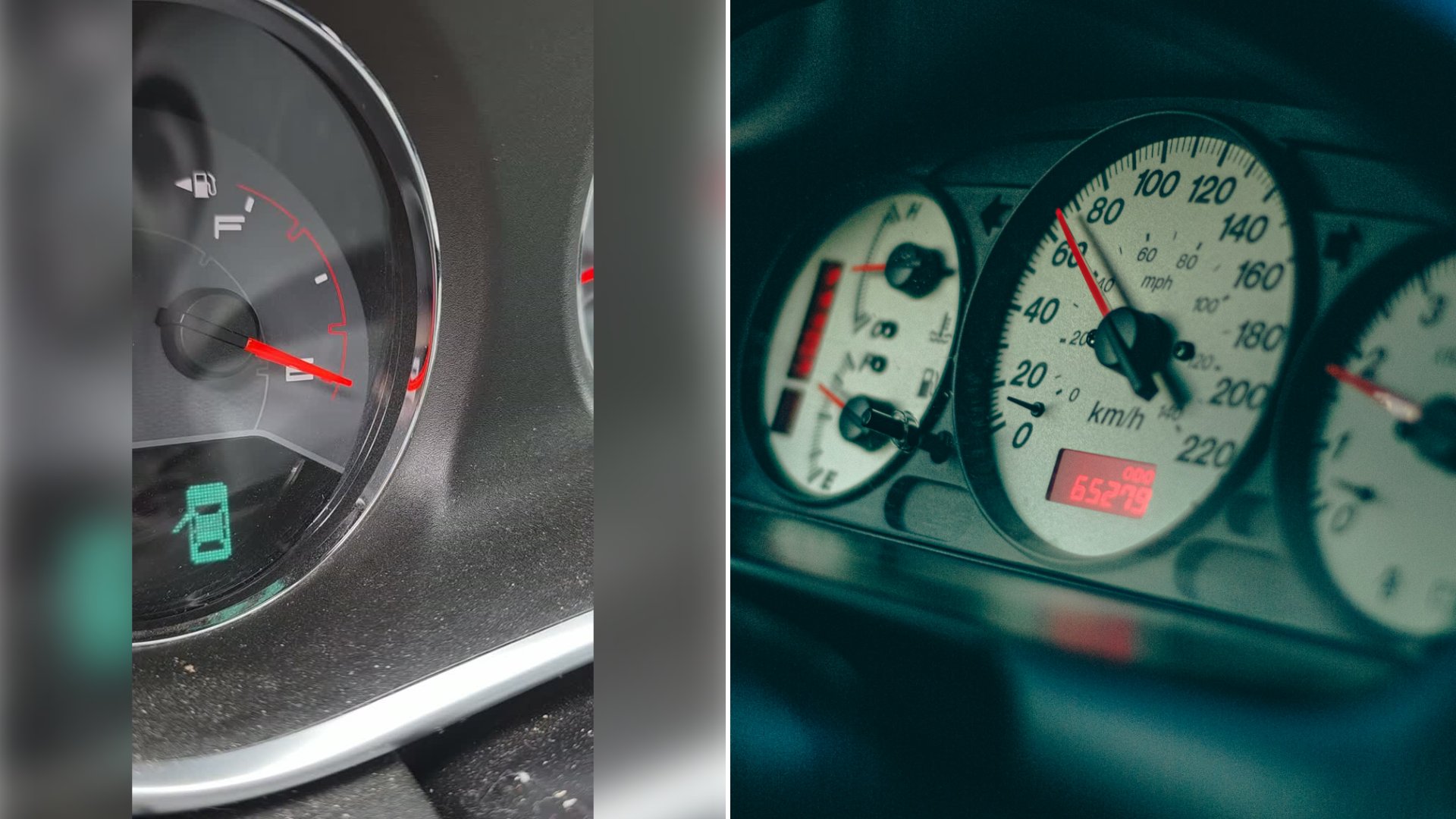
The camera starts tight on a fuel gauge. The F sits at the top of the dial beside a pump symbol, and the needle points the other way, pinned at the bottom of its sweep. A few shaky seconds later the shot drops to a printed repair order on a counter, where the customer’s complaint is typed in capital letters: “DIED WHILE DRIVING // DIES AFTER STARTING.”
That is the whole reel from @bisbeemancris777, 11 seconds long, posted with only the tags #mechanic and #automotive. It has no voiceover and no text added on screen, and it is a gag clip rather than a customer’s story: the gauge comes first, then the complaint.
The first frames swing across the instrument cluster: the fuel gauge on the left, then the speedometer with its red needle resting at zero and an amber tire pressure symbol lit below it. The camera passes over the turn signal stalk on the way down.
The paperwork fills the rest of the clip. Above the complaint, the form has a box that reads “Save Old Parts?” with “No” filled in, and a billing field that reads “Bill To: Same.” The camera holds on the complaint line for about five seconds and the reel ends there. It never shows a fuel can, a receipt or a total.
Before You Have a Car That Died Towed to a Shop
Look at the gauge yourself first. With the key turned to on, the needle and any warning lights will show on the cluster, exactly as they do in the first second of this reel. If the needle sits at the bottom, add a few gallons before calling for a tow and before booking a diagnosis.
Ask about the diagnostic charge up front. The Federal Trade Commission’s guide to auto repair says many repair shops charge for diagnostic time, and advises asking whether there will be a diagnostic charge if you decide to have the work done elsewhere. A car that turns out to need only fuel can still carry that bill.
Get the estimate in writing. The same FTC guide says a written estimate should identify the condition to be repaired, the parts needed and the anticipated labor charge, and that you should get a signed copy. The complaint line on this repair order is that condition, written in the customer’s words.
Decide on old parts before you sign. This form has “Save Old Parts?” answered “No.” The FTC guide tells consumers to ask for all replaced parts and notes that state law may require shops to return them. If you want them, change that box at drop off.
Describe what happened in plain order. “Died while driving” and “dies after starting” are two separate symptoms, and the shop can only test what is written down. Note whether warning lights came on before it quit, how much fuel the gauge showed, and whether it restarts at all.
More from Steel Horse Rides
- Honda Dealership Mechanic Says He Would Not Pay to Fix a Tire Pressure Sensor Light, a Minor Oil Leak or an Old Car Repair That Costs More Than the Car Is Worth
- 10 Things People Do to Their Cars That Mechanics Wish They Would Stop
- Mobile Mechanic Walks Up to a Blue Dodge Pickup That Dies the Second It Starts, Cleans One Valve, Watches the Idle Shoot to 2000 RPM and Comes Back With a New Part to Fix It