

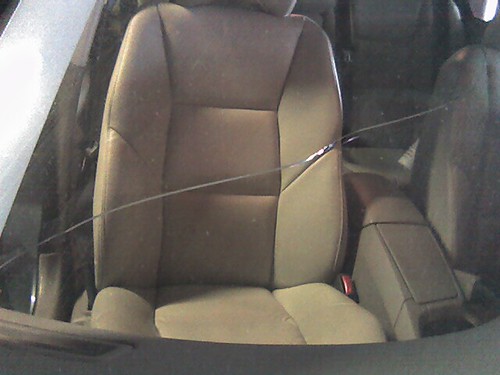
It started like the kind of service visit people barely remember: a compact sedan with an annoying squeak, a customer who just wanted it quiet, and a shop that promised they’d “take a look.” The car wasn’t a beater, but it wasn’t precious either—clean enough, daily-driver enough, the kind of car that shows every little new defect because it’s otherwise totally fine.
The squeak was coming from the windshield wipers, or at least that’s what the owner told the service advisor at the counter. It happened at low speeds and in light rain, that dry rubber-on-glass chirp that makes your shoulders tense up. The advisor wrote it up as a “wiper noise/possible linkage squeak,” handed over the keys, and the customer went back to work expecting the usual: a quick adjustment, maybe new inserts, maybe a “could not duplicate” if they were unlucky.
Instead, by the time the sedan came back around to the pickup lane, it had a brand-new problem the customer couldn’t ignore even if they tried. A long crack ran across the windshield like someone had dragged a knife through ice, starting near the lower edge and creeping upward. And the explanation, when it finally surfaced, was somehow worse than the damage itself: the technician had stood on the cowl to reach the wiper pivot.
The drop-off: “It’s just a squeak”
The customer’s description was simple and specific, which usually helps. The wipers squealed on the downstroke, and the squeak seemed to come from the driver’s side base, not the blade. They’d tried cleaning the glass, they’d tried a different wiper, and it kept coming back like a bad habit.
The service advisor didn’t make it sound complicated either. He asked the usual questions—when does it happen, is it worse in the cold, has the windshield been replaced—and tapped away at his screen. The customer signed, declined a loaner, and left with that little burst of relief people get when they’ve “handled” an annoying problem.
In the back, the work order landed in the “quick diag” pile, which is where tiny problems go to become either quick wins or long, stupid sagas. A squeak can be a 10-minute fix, but it can also be one of those sounds that disappears the second you try to show it to someone. The tech assigned to it wasn’t a new kid, but he was the kind of guy who moved fast and didn’t like asking for help.
The diagnosis: chasing a noise under the plastic
He did the basic stuff first—sprayed the windshield, cycled the wipers, watched the linkage under the hood. The noise wasn’t from the blade chattering; it was lower, more mechanical, like something dry and binding. That pushed him toward the wiper transmission and pivot points, which on a lot of compact sedans live under the cowl cover, tucked in a way that’s just annoying enough to tempt shortcuts.
To get to the pivots properly, you usually pop the wiper arms off, remove the cowl panel, and then you can see what’s actually happening. It’s not hard, but it can be finicky—plastic clips, brittle weatherstripping, the kind of trim that loves to crack if you rush. The tech, apparently trying to save time, chose a different route: he wanted to access the driver-side pivot without fully removing everything.
That’s where the first bad decision happened. Instead of pulling more parts to get a clean angle, he climbed up and put his weight on the cowl area to lean over the windshield base. It’s the black plastic between the hood and glass—the “don’t step here” zone on every car, because it’s not a platform. The windshield below it is strong in some ways, fragile in others, and it doesn’t take much uneven pressure to start a crack at the edge.
The moment it happened: the crack you feel in your stomach
No one got a dramatic “snap” the way movies pretend glass breaks. It was more like a dull pop you can almost convince yourself you imagined, followed by that awful realization when you look down and see a thin white line spreading. Windshields like to crack from the bottom edge where the stress concentrates, and once a crack starts, it doesn’t care that nobody “meant to.”
The tech froze, then did the thing people do when they know they’ve messed up: he tried to make the situation smaller. He climbed down, wiped the area, and checked if maybe it was just a surface mark. But the line was inside the glass laminate, and when he flexed the wiper arm back into place, it crept another half-inch like it was alive.
From there, the day went sideways in a quiet, procedural way. He told the foreman, who told the service advisor, who stared at the windshield through the shop door like he could will it back to normal. The car still had a squeak, and now it also had a safety issue that couldn’t be un-seen.
The most awkward part was that the damage didn’t match any nice, convenient excuse. It wasn’t a rock chip. It wasn’t a pre-existing crack hidden under dirt. It started right where someone’s weight would’ve loaded the glass near the cowl. Everyone involved knew exactly what it looked like.
The pickup lane: the customer sees it before anyone speaks
When the customer came back, they weren’t in a fighting mood. They were expecting to pay for labor, maybe argue lightly about whether the noise was “normal,” and then leave. They got to the counter, heard something vague about the car “still being finished up,” and waited with that faint irritation that comes from delays you didn’t plan for.
Then the sedan rolled around, and the customer saw the windshield before the advisor could get through his practiced smile. It’s one thing to notice a scratch; it’s another to see a crack that runs like a fault line across your field of view. The customer’s face changed immediately—eyes locked on the glass, then straight to the advisor with that silent question: “What did you do to my car?”
The advisor started with soft language, the way people do when they’re trying to ease you into bad news. He said something about “an unexpected issue” and “we want to make it right.” The customer didn’t bite; they walked right up to the car and traced the crack with a finger, like touching it could make it less real.
That’s when the story about the cowl came out, and it didn’t come out cleanly. The advisor didn’t say “the tech stood on it” right away; he said “there was pressure near the wiper area,” then “the windshield cracked during diagnosis,” then finally, after the customer asked three times how that even happens, admitted the tech had been leaning over the base and “may have put weight” on the wrong spot.
The shop’s scramble: blame, paperwork, and a windshield they don’t have
The customer’s frustration wasn’t just about the glass. It was the feeling of being managed—of hearing language designed to blur responsibility. They kept circling back to one point: they brought the car in for a squeak, not for a cracked windshield and a vague promise that it’ll be handled “soon.”
Inside the shop, the tech was suddenly defensive in that specific way people get when they know they caused a problem but don’t want it pinned on them. He insisted he didn’t “stand on the windshield,” like that was the only scenario that counted. He said the crack could’ve been there already, microscopic, waiting for the right temperature change.
The foreman wasn’t buying it, but he also wasn’t eager to throw his guy under the bus in front of a customer. What the customer heard, unfortunately, sounded like hedging: a lot of “we’re investigating” and “windshields can be unpredictable.” The more the shop danced around it, the more the customer’s patience evaporated.
And then came the practical problem that turned irritation into real anger: they didn’t have a replacement windshield on hand. The shop could “order one,” but it might not arrive for days, and even then they might need to schedule glass installation. So the customer was being asked to leave their car—or drive away with a compromised windshield—because a tech decided the cowl was a step stool.
The customer asked about a loaner. The advisor said they were “all out,” which is a sentence that lands like a door slamming. They offered to keep the car and cover a rental “up to a point,” but couldn’t give a clear number without manager approval. Every answer came with an asterisk, and the customer could feel the clock ticking on their own responsibilities—commute, kids, errands—none of which cared about shop policies.
By the end of the conversation, the shop was offering the standard damage-control package: they’d pay for the windshield, they’d re-check the wiper pivot properly, and they’d “make sure” the squeak was resolved. The customer wasn’t soothed by any of it, because the trust part was already broken. If the tech cut corners on something as basic as safe access, what else did they cut corners on that the customer wouldn’t notice until later?
The last image that stuck with everyone wasn’t the crack itself, but the way the customer hesitated before handing the keys back over. They wanted the car fixed, but they didn’t want these people touching it again, and those two needs collided in the most frustrating way. The windshield could be replaced, the squeak could be chased down, but the uncomfortable question hanging in the air was harder: when a shop’s mistake is this obvious, how many of the other ones are just better hidden?