
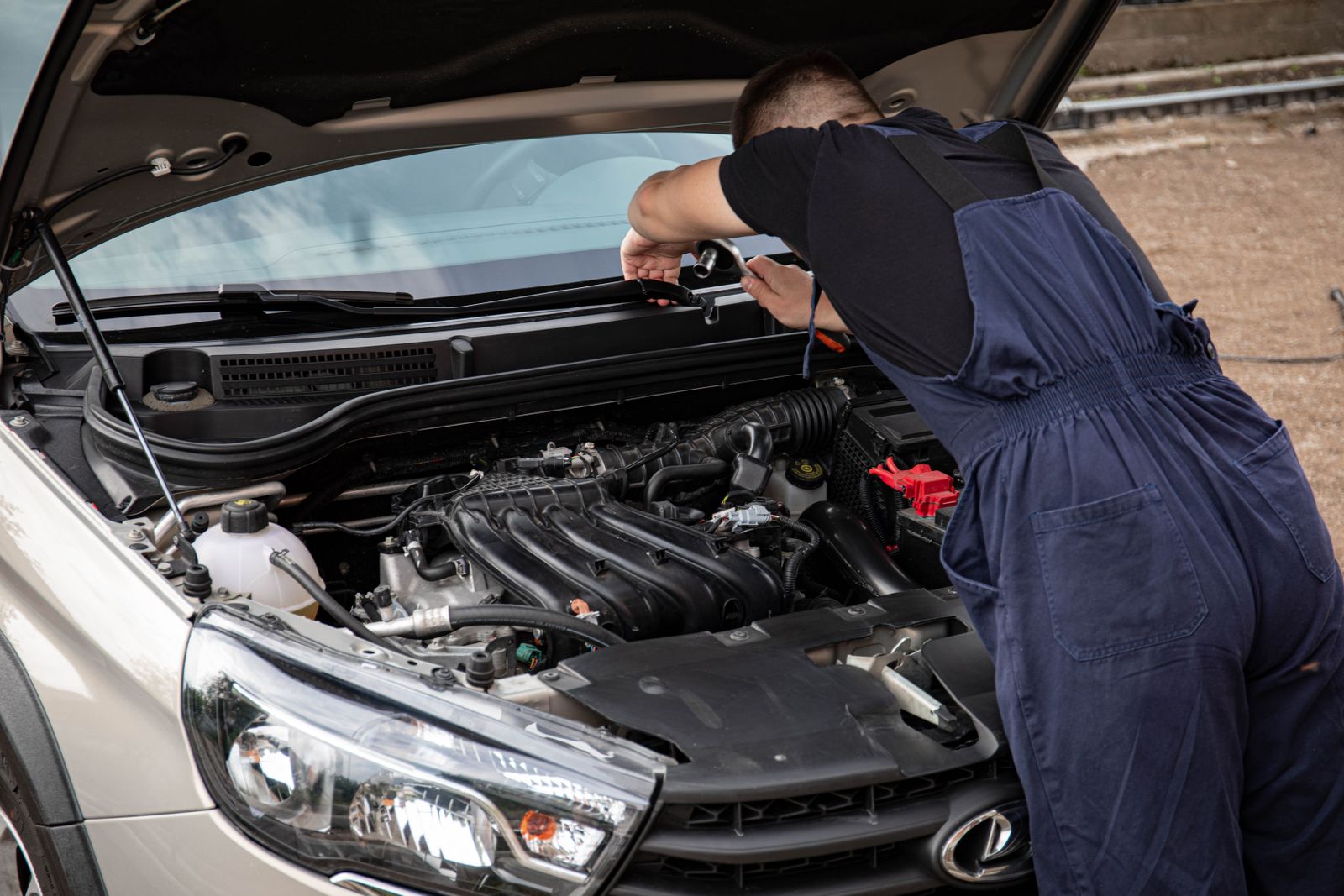

The car rolled into the bay like it was trying not to make eye contact. It was an early-2000s sedan in that tired shade of beige that only exists on vehicles that have survived three owners and at least one “my cousin can do it cheaper” repair. The mechanic on duty—one of those calm, unflappable types who can tell what’s wrong just by the sound of a starter—watched it shudder into a parking spot and already knew this wasn’t going to be a quick “slap on wipers and send it” situation.
The customer hopped out before the engine was even fully off, phone in hand, talking fast. He didn’t ask for a diagnostic, didn’t ask for an estimate, didn’t ask what was wrong. He led with the sentence mechanics dread like a check-engine light: “I just need it to pass inspection.”
And not in a hopeful way, either. In a way that suggested he’d already decided the shop’s job was to find whatever loophole existed between “illegal death trap” and “sticker on the windshield,” and that any explanation would be an obstacle. The mechanic nodded like he’d heard it a thousand times—because he had—and told him they’d take a look, but he should be prepared for the answer to be “it needs work.” The guy laughed like that was cute.

The inspection talk that wasn’t really a conversation
While the car cooled, the customer hovered near the counter and kept repeating the same line with different flavors of impatience. “I don’t need it perfect,” he said, leaning in like he was sharing a secret. “Just make it pass.”
The mechanic asked the boring, normal questions: any recent repairs, any warning lights, any weird noises. The customer shrugged and did that thing people do when they want to minimize a problem they absolutely know is a problem. “It’s fine,” he insisted, like the car hadn’t just wheezed its way into the lot.
Then he got more specific, which somehow made it worse. He didn’t want a list. He didn’t want “extra.” He definitely didn’t want the mechanic “digging.” He wanted a sticker, and the vibe he was putting out was that the shop was supposed to be the kind of place that made inconvenient issues disappear for cash.
The mechanic didn’t bite. He kept it neutral, told him they’d inspect it by the book, and if it passed, great. If it didn’t, he’d get a clear explanation of what failed and what it would take to fix it. The customer’s eyes narrowed at “by the book” like the book was a personal insult.
When “by the book” turns into a horror show
The tech pulled the car onto the lift and started with the usual stuff. Within minutes, the “usual stuff” turned into that slow, sinking feeling mechanics get when every check reveals a new layer of bad decisions. Rust wasn’t just present; it had opinions.
The underside looked like it had spent a decade bathing in road salt, then another decade pretending that didn’t matter. Brake lines were crusty enough to make anyone with a functioning survival instinct step back. One of the suspension components had enough play that it didn’t feel like a “worn bushing” situation so much as a “this could detach during a turn” situation.
Then came the leaks. Not a little seep, not a “keep an eye on it.” A messy, wet, grimy set of stains that said multiple fluids were making their escape and nobody had been willing to pay for the privilege of containing them. The mechanic’s flashlight beam kept landing on things that made him exhale through his nose in that tight way that means, how is this still on the road.
And the dash was lit up like it was auditioning for a Christmas display. Check engine, ABS, airbag—each one a separate conversation, each one expensive, and all of them relevant to inspection depending on where you live. The mechanic didn’t even have to go hunting for the dealbreaker; the dealbreakers were lining up and taking numbers.
“So what will it take?” “Honestly? A different car.”
When the mechanic called the customer back into the bay, he didn’t start with the worst item. He started with the kindest version of reality: the car wasn’t safe, and it wasn’t going to pass inspection without real repairs. The customer walked around it with the expression of someone inspecting a restaurant bill they already decided was wrong.
The mechanic pointed out the brake lines and explained what happens when they let go. He pointed out the suspension play and how it affects handling, tire wear, and, yes, basic safety. He mentioned the rust in structural areas and the fact that there wasn’t a magical product called “inspection spray” that turns compromised metal into sound metal.
The customer kept interrupting, trying to steer the conversation back to his script. “Yeah, but what’s the minimum?” he demanded, like the mechanic was hiding a secret checklist labeled barely legal. “I’m not trying to rebuild it. Just make it pass.”
At some point, the mechanic stopped listing individual repairs because the list wasn’t helping. He gave the only honest summary left. If the customer wanted an answer that matched reality and not wishful thinking, the answer was: “Sell it. Or scrap it. Putting money into this to chase a sticker doesn’t make sense.”
That’s when the customer’s face changed. Not disappointment—offense. Like the mechanic had insulted his parenting, his taste, and his entire financial plan in one sentence.
The moment the customer decides honesty is “attitude”
“You’re telling me to sell my car?” the customer snapped, voice rising in that way designed to pull other people into the conflict. The mechanic didn’t raise his voice back, which somehow made the customer angrier, like calmness was a smug flex.
The customer tried to reframe it as a customer service issue. He accused the shop of not wanting to work. He hinted that they were trying to upsell him. He kept repeating, “I’m just asking you to make it pass,” like the mechanic was refusing to tighten a bolt out of spite.
The mechanic explained—again, patiently—that it wasn’t about wanting to work. The shop would happily do the work if the car was worth saving and the customer understood what he was paying for. But “make it pass” in this case meant replacing a pile of safety-critical parts, addressing rust that may not even be repairable without major fabrication, and dealing with multiple warning systems.
That didn’t land. The customer’s anger took the familiar route: insinuations and implications. “So you won’t do it?” he said, with that tone that implies there are other shops that aren’t so “difficult.” He even tossed out a casual, “My buddy knows a guy,” like that was supposed to intimidate the mechanic into compromising.
The mechanic didn’t bite on that either. He told the customer he could take the car anywhere he wanted, but this shop wasn’t going to put a sticker on something that shouldn’t be on the road. He offered to print out the fail list and an estimate so the customer could make a decision with real numbers instead of vibes.
The escalation: bargaining, then accusations, then the quiet threat
Once the customer realized he wasn’t going to bully his way into the answer he wanted, he shifted tactics. He started bargaining, offering to “just do the brakes,” then “just the one line,” then “whatever’s cheapest,” as if the mechanic had been holding back the one affordable fix that made everything else irrelevant.
The mechanic kept circling back to the same issue: inspection isn’t a menu where you pick the items you feel like paying for. Certain failures are automatic, and some of what he was seeing wasn’t a “maybe,” it was a “no.” Even if they replaced a couple of components, the rust and warning lights would still sink it.
The customer started implying the mechanic was lying. He asked if the shop was “one of those places” that fails cars just to drum up business. He made a show of looking around the bay, like he was gathering evidence for a case he was building in his head.
Then came the small, ugly threat that’s common in these situations: “So what, you’re not going to help me?” It wasn’t really a question. It was that loaded statement that means, remember this when I talk about you later.
The mechanic stayed firm and annoyingly reasonable. He said he’d help by being honest, and he wasn’t going to risk his license, the shop’s reputation, or someone’s life to make a bad car temporarily appear less bad. He told the customer the car wasn’t an inspection problem—it was a car problem.
The customer grabbed his keys like the whole thing had been a scam, muttering about “crooks” and “shops that actually want to work.” He didn’t take the printed estimate. He didn’t want documentation; he wanted plausible deniability.
He peeled out of the lot a little too fast, the kind of dramatic exit that’s meant to feel victorious but mostly just proves the mechanic’s point. And the mechanic stood there watching the car wobble away, knowing the customer wasn’t leaving with a solution—just with a grudge and a plan to find someone willing to say yes.
Because that’s the part that sticks: the mechanic’s answer wasn’t cruel, it was reality. “Sell it” wasn’t a punchline, it was the only option that didn’t involve pretending physics and rust don’t exist. The customer didn’t get furious because the car failed inspection; he got furious because someone refused to play along with the fiction that a sticker can fix a vehicle that’s already past the point of bargaining.
More from Steel Horse Rides: