
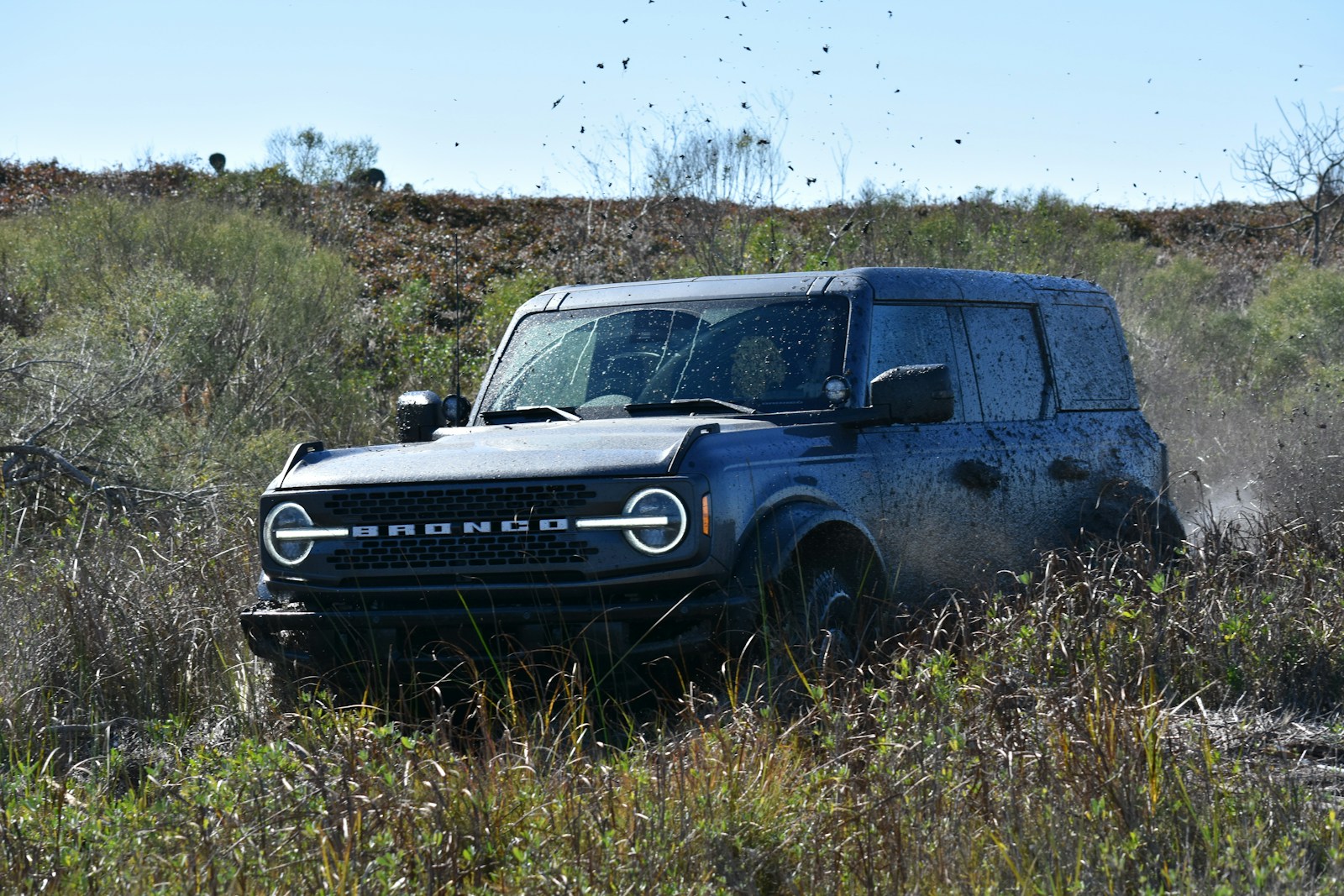

He’d been waiting on the new Bronco long enough that the excitement had started to feel like a superstition. Don’t talk about it too much, don’t jinx it, just get the keys and get out. The dealership had called that morning with the “it’s here” tone, and by lunchtime he was sitting in one of those glass offices with the too-bright lighting, signing papers while a finance guy kept sliding forms across the desk like he was dealing cards.
The delivery itself was the fun part. They walked him around the truck, pointed at the features he’d already watched a dozen videos about, and did the obligatory photo handoff outside. He remember thinking the whole vibe was oddly rushed for a new-car delivery, like everyone wanted the moment documented but nobody wanted it to last. Still, he drove home grinning, the new-car smell doing half the work.
It wasn’t until later—after the adrenaline wore off and the paperwork pile started looking like a to-do list—that he noticed the first hairline crack in the story. He’d gotten the title paperwork and some temporary registration stuff, and one number on one document didn’t match what his eyes had already memorized from the window sticker and the VIN plate. At first he assumed he was tired and misread it.

The moment the numbers didn’t line up
He went back out to the driveway with the title in one hand and his phone flashlight in the other, doing that cautious, slightly embarrassed thing people do when they’re checking something they hope is nothing. VIN on the dash: one set of characters. VIN on the door jamb: same set, clean and consistent. VIN on the paperwork: close, but not the same—like a single character swap that changes everything.
That’s when the “maybe I’m being paranoid” feeling flips into “oh, this is real.” A VIN mismatch isn’t a smudge or a typo in an address line. It’s the identity of the vehicle, the thing that ties the truck to ownership, to registration, to insurance, to any future sale. He sat there staring at the title like it might magically correct itself if he blinked hard enough.
He did what most people would do first: checked his purchase agreement and whatever else the dealer had sent him home with. Some documents referenced the VIN he physically had in the driveway, and others had the VIN that appeared on the title paperwork. It was messy in that specific way that makes your stomach drop—like someone copied and pasted the wrong number halfway through and nobody caught it because everyone assumed someone else did.
The “clerical issue” phone call
He called the dealership expecting mild panic on their end, or at least an “oh wow, bring it in and we’ll fix it.” What he got was a calm voice that sounded almost bored, like he was calling about a missing floor mat. The first response was basically, “Yeah, sometimes that happens. It’s a clerical issue.”
He asked the obvious question: how do you issue title paperwork for a vehicle with a VIN that doesn’t match the actual vehicle delivered? The person on the phone didn’t really answer that. They said it could be corrected and that it “wouldn’t be a big deal,” and they kept circling back to the idea that it was just a paperwork glitch, as if the entire concept of a VIN is optional.
Then he asked if they could cancel the sale until it was sorted. Not “can you do me a favor,” but “can we unwind this if the car’s identity is literally wrong on the title.” That’s when the tone shifted. The answer was no, flatly, like he’d requested something ridiculous.
The more he pushed, the more the dealership’s responses sounded like someone trying to keep a lid on a pot that’s starting to rattle. They told him the deal was done, the vehicle was delivered, and canceling wasn’t on the table. They offered to “re-file” paperwork, maybe have him sign new forms, but they didn’t want the Bronco back and they didn’t want to act like it might not be his.
Back to the dealership, where everything got weird
He went in person, because phone calls are easy to dismiss and harder to document. He walked in with copies of the paperwork and photos of the VIN plates, ready to be the annoying adult in the room. The showroom had that usual dealership energy—people pretending they’re not stressed, smiling a little too hard.
The staff response was strangely split. One employee did the “oh yeah, I see what you mean” face and nodded like it was legitimate. Another took one look and went into defensive mode, leaning hard on the idea that it was “just processing” and “the state system” and “sometimes the DMV does this,” which isn’t a thing in the way they were implying.
They asked him to sit while they “checked with the title clerk,” which turned into a long stretch of waiting while he could hear muffled voices behind a door. Every few minutes someone would walk by and toss him a quick smile that didn’t reach their eyes. He said it felt like sitting in a doctor’s office after you’ve been told the results are “a little unusual.”
When someone finally came back, they had a new angle: it might’ve been a VIN that belonged to a different unit in their inventory, or a transcription error when they submitted paperwork. They said they could fix it by submitting a correction, but they still wouldn’t entertain canceling the sale. The underlying message was clear: they wanted him to sit tight, keep driving the Bronco, and stop treating it like a crisis.
The practical panic: insurance, registration, and “what am I driving?”
This is the part that makes the whole situation feel less like a customer-service problem and more like a trap door. If his insurance policy is written for the VIN on the title paperwork, but he’s actually driving a Bronco with a different VIN, what exactly is insured? If he gets pulled over, or worse, gets into a crash, he’s suddenly the guy trying to explain why his documents describe a different vehicle.
He started calling around—not just the dealership, but his insurance agent and anyone who knew anything about titles. The reactions were consistent: you don’t ignore a VIN mismatch, you fix it immediately, and you don’t keep pretending it’s “no big deal.” A clerk can typo an address. A VIN mismatch can snowball into a registration refusal, a loan issue, or a future sale that falls apart at the worst possible moment.
Meanwhile, the dealership’s posture stayed stubborn. They’d “work on it,” they said. They’d “submit the correction.” But they weren’t acting like a business that just discovered a serious error on a legal document; they were acting like a business trying to keep a deal from unraveling. And the refusal to cancel made his suspicion sharpen into something harder—because if it truly was harmless, why lock the door on the one option that would reduce everyone’s risk?
He asked again, in more formal language, what the exact plan was and what timeline they could commit to. He wanted it in writing, because “don’t worry about it” doesn’t help if the DMV rejects his registration. The dealership gave him vague assurances and pushed him to be patient, which is the kind of thing that sounds reasonable until you remember patience doesn’t update a VIN.
That nagging question nobody wanted to answer
Once you’ve stared at two different VINs long enough, you start thinking about the possibilities you don’t want to think about. Was there a second Bronco with paperwork that belonged to this one? Did the dealer accidentally title the wrong unit to the wrong buyer? Was there a vehicle swap somewhere in the pipeline, or a transaction that got “fixed” with a shortcut?
He wasn’t accusing anyone of outright fraud, but the facts were already louder than the reassurances. A new vehicle isn’t a pair of shoes you can exchange after a mix-up. That VIN is the vehicle, and if the paperwork says something else, then on paper he’s not driving what he bought—or he’s driving something that’s tied to someone else’s records.
The dealership’s insistence that it was “clerical” started to sound less like an explanation and more like a pressure tactic. Just keep the truck. Just wait. Just let the back office handle it. And every day he drove it, the problem became more entangled with his life—miles accumulating, plates pending, insurance ticking along under the wrong identifier.
By the time he left the dealership that second time, he had the same Bronco in his driveway and a stronger sense that the fight was only beginning. He didn’t have a clean title that matched his actual vehicle, and he didn’t have a dealer willing to unwind the deal if the fix got complicated. The most unsettling part wasn’t even the mismatch—it was how quickly “this is weird” turned into “this is your problem now,” and how hard it was to shake the feeling that someone, somewhere, was hoping he’d just stop asking.
More from Steel Horse Rides: