
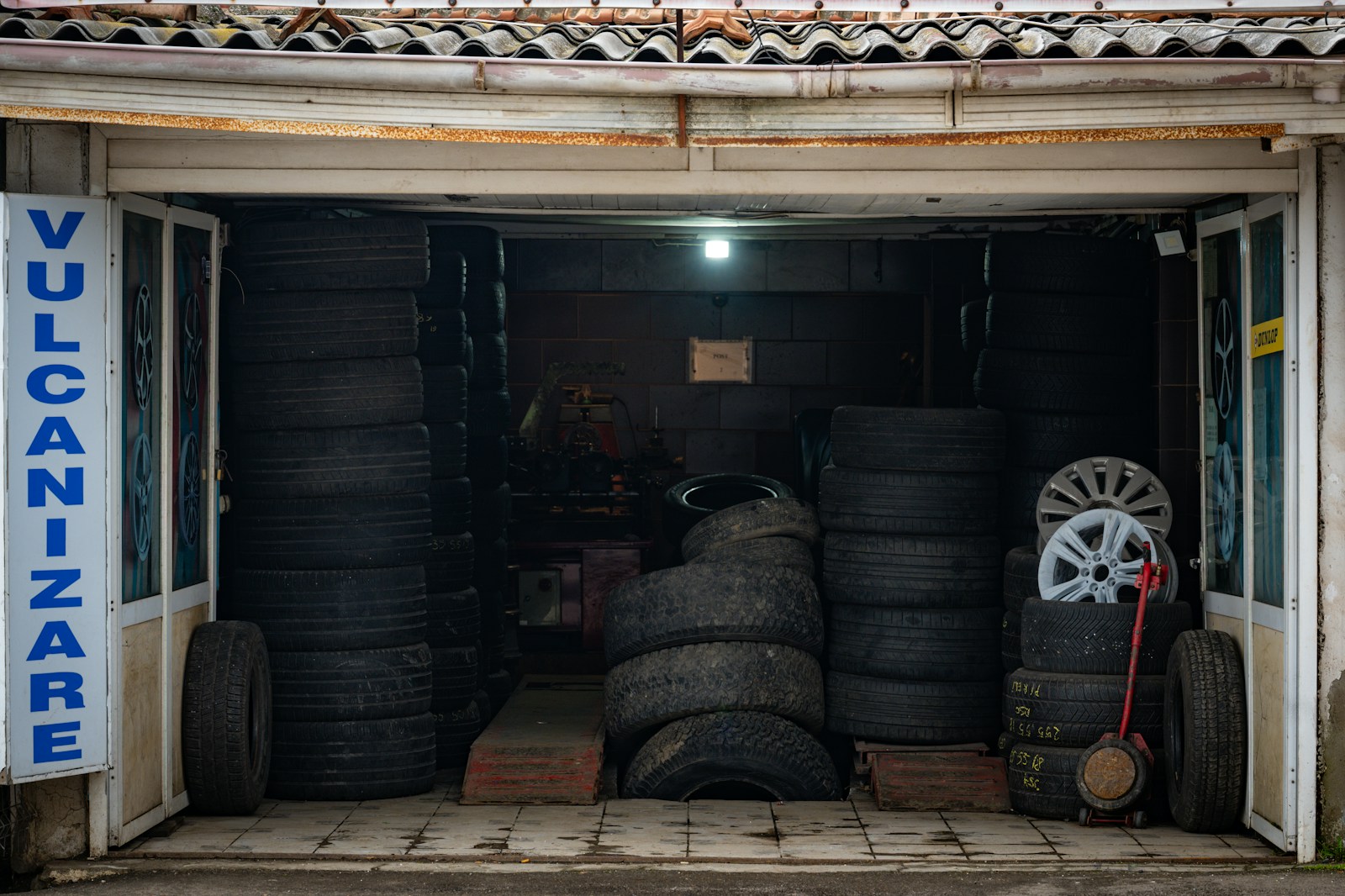

The tire shop was having one of those slow, damp mornings where everything smells faintly of rubber and wet asphalt. A couple of techs were leaning on the counter pretending not to watch the weather radar on a phone, because the sky had that heavy gray look that always turns into a surprise downpour right when people decide to run errands. That’s when the guy in the silver sedan rolled in like he owned the place—parking crooked, wipers squeaking even though they were barely moving any water.
He didn’t stroll up to the counter so much as march, keys still in his hand like he was ready to throw them. “I just need a rotation,” he said, loud enough to announce it to the waiting area. The service writer asked the usual questions, smiled the usual customer-service smile, and took the keys.
Ten minutes later, the tech came back with the kind of face mechanics get when they’ve found something they really wish they didn’t have to explain. Bald tires. Not “kinda worn.” Not “you’ll want to start budgeting.” Bald in a way that makes the tread blocks look like a memory.

The Inspection Nobody Wants
The service writer did what people in that job are trained to do: kept it calm, kept it factual, and brought out the tire tread gauge like a prop in a courtroom. “Your fronts are basically at the wear bars, and the rears aren’t far behind,” he told the guy. “We can rotate, but it won’t help. You need tires.”
The customer stared at the gauge like it was an insult. He wanted the rotation, not the lecture, and definitely not the upsell. “They’re fine,” he said, tapping the counter with his knuckles, the way people do when they’re trying to hurry a conversation they don’t like.
The writer offered to walk him out to the car and show him. Outside, the tech pointed at the tire shoulders—smooth, shiny, and worn more on the inside, like the alignment had been off for a while. The guy squinted at it, shrugged, and did the classic move: “I’ve driven on worse.”
That’s when the shop shifted from “customer service” to “cover-your-ass.” The writer explained they could rotate them, but it wouldn’t fix the problem, and if it started raining he’d be risking hydroplaning. He also said the word “liability” carefully, like he’d learned the hard way not to toss it around too casually.
“Just Do What I Asked”
The customer didn’t want options. He wanted obedience. “I’m not paying for tires today,” he snapped, like the shop was personally trying to wreck his budget. “Just rotate them and stop trying to sell me stuff.”
The writer tried again, softer this time. Four new tires, or at least two up front. They even had a mid-range set in stock that wouldn’t cost a fortune, and the shop could do an alignment package so he wouldn’t chew them up again. It wasn’t a hard pitch—more like watching someone walk toward a hole and asking if they’d like a flashlight.
The guy’s face got that tight, pinched look people get when they think they’re being taken for a ride. “Every time I come in here you people find something,” he said. Then he did the thing where he points at his own car like it’s a legal document. “It passed inspection last year. It’s fine.”
The writer told him they’d rotate them if he insisted, but he’d have to sign a decline-of-service waiver for tire replacement. The customer rolled his eyes so hard it almost looked painful, scribbled his name without reading it, and stood there with his arms crossed while they did the rotation. He left with the tires still bald, just bald in different positions, like rearranging deck chairs.
The Weather Shows Up on Time
By early afternoon, the sky finally delivered on what it had been threatening all day. The rain came down hard enough to drown the parking lot lines and turn the road sheen into that slick, oily mirror. People drove with their hazards on, which always means half of them are panicking and the other half are pretending it’s normal.
The guy had a commute ahead of him—some mix of surface roads and highway, the kind where you’re either doing 60 or you’re getting shoved by traffic. Not long after he left the shop, the rain got worse, and the water started pooling in the grooves of the road. A tire with decent tread clears that water; a bald tire just skates over it like a cheap sneaker on ice.
He didn’t hit a dramatic, movie-style spinout. It was uglier than that—more ordinary and more terrifying. One moment he was cruising, the next the steering got light, the car didn’t respond the way it should, and there was that brief, sickening feeling of being a passenger in your own vehicle.
Somewhere between “I’ve got it” and “oh no,” he met the guardrail. Not a full-on head-on collision that would make the news, but enough to bend metal, shred a bumper corner, and leave the right side of the car scraped like it had been dragged along sandpaper. Enough to make the airbag light flicker on and the pride leak out through the window seals.
Round Two at the Counter
He came back the next morning when the rain had turned into a steady drizzle, driving a car that looked like it had lost an argument with a cheese grater. The silver sedan pulled into the lot and stopped in a spot so close to the entrance it might as well have been a threat. He stormed inside without wiping his feet, leaving little wet prints like punctuation.
“You rotated my tires yesterday,” he said, and it wasn’t a statement—it was an accusation. The waiting area got quiet in the way it does when everyone senses free entertainment might be coming. The service writer recognized him immediately and also recognized the tone: blame shopping.
The customer held up his phone with a picture of the guardrail scrape like it was evidence in a trial. “My car hydroplaned on the highway. Now look at it. This happened because you messed with my tires.”
The writer didn’t even flinch, which is honestly the most impressive part. He asked if the customer was okay, if anyone was hurt, and whether the car was drivable. The guy waved that off like injuries weren’t the point. He wanted the shop to admit guilt, and more than that, he wanted someone else to pay.
The Waiver Comes Out
The writer kept his voice even and asked the simplest question: “Do you remember us recommending tire replacement yesterday?” The guy scoffed, because of course he did, and of course he thought it was irrelevant. He launched into a rant about how rotations are routine and how a professional shop shouldn’t let a car leave “unsafe.”
That’s when the writer turned the monitor around and pulled up the invoice from the day before. Clear as day: tread depth measurements, notes about hydroplaning risk, recommendation for replacement, and the declined-service waiver with the customer’s signature. It wasn’t dramatic. It was clinical, like a receipt that happened to contain someone’s bad decisions.
The customer’s face went through a couple of quick changes—anger, confusion, then a flash of embarrassment that immediately tried to disguise itself as more anger. “I didn’t read that,” he snapped, as if that was a legal defense and not just a confession. He jabbed a finger at the screen. “You’re supposed to tell people what they’re signing.”
The writer said they did. He reminded him of the walk-out, the tread gauge, the warnings about rain, and the offer to replace at least the front two. He didn’t say “I told you so,” but the air in the room said it for him, thick and unavoidable.
The customer tried a different angle. He wanted free tires. He wanted the shop to “make it right.” He hinted at calling corporate, calling a lawyer, leaving reviews, the whole greatest hits album of someone who’s run out of actual leverage.
The writer didn’t raise his voice. He told him they could still sell him tires today, they could inspect the suspension for damage from the impact, and they could write up what they found for insurance if needed. But they weren’t paying for his guardrail appointment, and the waiver made that painfully clear.
He stood there for a moment, trapped between the fact that he needed tires and the fact that buying them now would mean admitting the shop had been right. The waiting room stayed quiet, because everyone could feel the tension: not just about money, but about ego. Then he did the only thing left—he grabbed his keys, muttered something about “never coming back,” and walked out into the drizzle with the same bald tires, still convinced he’d been wronged.
What stuck with the employees wasn’t the scrape on the car or even the guardrail story; it was how quickly he tried to turn a warning into a weapon. He’d been given a clear choice, signed off on it, and still came back looking for someone to absorb the consequences for him. And the weird part is you could tell he really believed it should work that way—like reality was negotiable, right up until the road got wet.
More from Steel Horse Rides: