

He’d been hearing it for weeks: that faint, gritty squeal every time he eased up to a red light, the way the brake pedal suddenly felt a little longer than it used to. It wasn’t dramatic, not the kind of thing that makes you pull over on the shoulder, but it was there—like the car was quietly asking for attention and getting ignored.
So when he finally took the sedan in for an oil change, he casually asked the mechanic to “just check the brakes while you’re at it.” He wasn’t expecting fireworks. He figured he’d get the usual: “You’ve got some life left, keep an eye on it,” and a grease-smudged thumbs-up toward the waiting room.
Instead, the mechanic came out with the kind of face you don’t want to see from someone holding a clipboard. He didn’t do the playful upsell routine, didn’t joke, didn’t even lead with a price. He just said the brakes were unsafe, and that if it were his car, he wouldn’t be driving it home without getting them done.
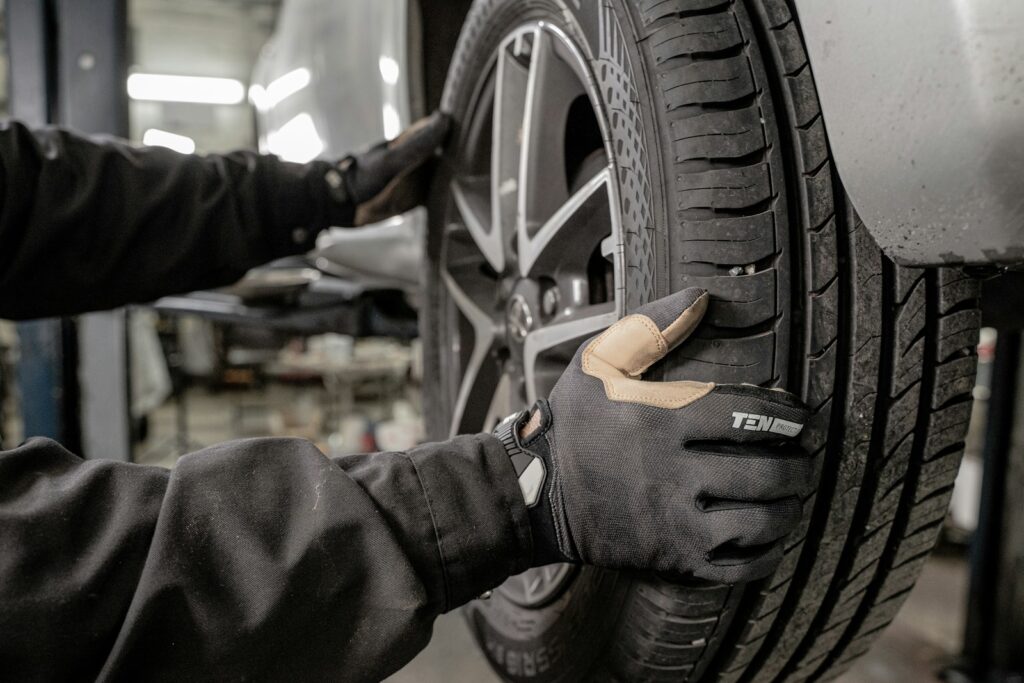
The warning didn’t sound like a pitch
The mechanic laid it out in plain terms: pads were worn down to almost nothing, rotors looked chewed up, and there were signs the calipers weren’t moving the way they should. He wasn’t trying to scare them with car-part vocabulary, either. He pointed at the pad thickness on a little diagram and said, “You’re basically on borrowed time.”
The husband’s stomach did that slow drop. He’d been raised to take car noises seriously, and the words “unsafe” and “brakes” don’t exactly leave room for compromise. He asked what it would take to fix it, already mentally rearranging bills and weekend plans.
His wife, though, immediately bristled. She was sitting there with her purse on her lap and her “here we go” expression loaded and ready, the one she saved for phone plans, extended warranties, and anyone who sounded too confident about spending their money. She’d had bad experiences before—quick-lube places inventing problems, a tire shop insisting she needed four new tires when two were basically new, that kind of thing.
So when the mechanic quoted the cost, her whole posture stiffened. To her, it sounded like the classic maneuver: get them in for something cheap, find something “dangerous,” and pressure them into a big repair while the car’s already on the lift. She told her husband they could “shop around,” maybe have her cousin look at it, maybe it could wait until next paycheck.
The car became a relationship argument
They walked out of the shop with an oil change receipt and a recommendation they didn’t take. In the parking lot, the husband tried to keep his voice calm, but he couldn’t hide the frustration. He asked why she always assumed people were lying, especially when the guy didn’t even seem like he wanted to debate it.
She fired back that he was too trusting, that mechanics knew exactly what to say to make people panic. She reminded him how expensive everything had gotten, how “unsafe” could mean anything, and how they’d be idiots to say yes on the spot. She even pointed out that the brakes “felt fine” to her, because she hadn’t had any moment where the car didn’t stop.
That’s how it turned into one of those fights that isn’t really about brakes. It was about who gets to be the “practical” one, who gets to be the “careful” one, and whose instincts are treated like wisdom versus paranoia. By the time they got home, they were barely talking, doing that cold, polite silence where every small action feels pointed.
The husband still wanted to get it fixed. He mentioned making another appointment somewhere else, just for a second opinion. She agreed in theory, but she kept steering it toward later—after errands, after work, after they “figured out the budget.” Later became the plan, and the plan became nothing.
They kept driving like nothing was wrong
Over the next few days, the husband drove differently. He left more room, slowed earlier, and listened to every little sound like it was a message only he could hear. The squeal got louder, then less consistent, like it couldn’t decide whether to warn them or give up.
The wife, meanwhile, started acting like the whole thing was settled: the mechanic had tried, they’d declined, life moved on. If her husband brought it up, she’d say, “We’ll get it checked,” in the same tone people use for organizing old photos. She wasn’t trying to be reckless—she just couldn’t shake the feeling that agreeing immediately would mean admitting she’d been played.
And it wasn’t like the car was undrivable. It started fine, ran fine, and stopped fine… until it didn’t. The normalcy is what made it easy to postpone, because danger that behaves normally right up until the moment it doesn’t is basically tailor-made for procrastination.
The day it happened wasn’t a dramatic stormy night or some cinematic hill descent. It was middle-of-the-week ordinary: warm air, traffic moving in short bursts, the kind of drive where you’re thinking about dinner and whether you answered that email. They were both in the car, which is part of why the aftermath hit so hard.
The stoplight where everything changed
They were approaching a stoplight that had just flipped yellow. The husband did what he’d been doing since the shop visit: he started braking early, gentle pressure, smooth deceleration. Except the pedal went down farther than it should’ve, and instead of the usual confident bite, there was this mushy, sliding sensation like the car was politely ignoring him.
He pressed harder. The car slowed, but not enough, and not cleanly. The squeal turned into a grinding sound—metal-on-metal, the kind that makes your teeth itch—and the steering wheel shuddered under his hands.
His wife looked up from whatever she was doing and immediately clocked his posture. He wasn’t casually driving anymore; he was leaning forward, shoulders tight, jaw clenched. “What’s wrong?” she asked, and there was a split-second where he couldn’t decide whether to answer or just focus on stopping.
The car rolled into the intersection just as cross traffic started moving. The husband cranked the wheel slightly, trying to keep them from drifting into a lane, and pumped the brakes out of instinct even though he knew modern systems don’t always respond to that. The sedan jerked, slowed, and finally stopped—half a car length past the line, close enough to feel the heat of someone else’s bumper without actually touching it.
The silence afterward was worse than the noise
For a moment neither of them spoke. The husband kept both hands on the wheel like he was holding the car still by force of will. His wife stared straight ahead, eyes wide, the kind of stillness that happens when someone’s adrenaline hits and their brain tries to play back the last five seconds in slow motion.
Then she said, quietly, “That was the brakes.” It wasn’t a question. It sounded like someone admitting something to themselves before saying it out loud to another person.
He didn’t explode. That was part of what made it tense in a different way. He just exhaled hard and said, “Yeah. That was the brakes,” and you could hear the restraint in it—the effort not to turn it into a courtroom closing argument while they were still sitting in traffic.
They pulled into a nearby parking lot and got out to breathe for a second, like stepping away from the car might make it less real. There was a burnt smell hanging around the front wheels. The husband crouched near the tire like he might see the problem with his eyes, even though the real issue was buried behind the wheel.
The wife started apologizing, but not in a clean, satisfying way. It came out tangled: she didn’t mean to put them at risk, she thought it was a sales thing, she didn’t want to waste money, she didn’t think it would actually fail like that. The husband nodded, but he didn’t soften. He was still in that narrow space where relief and anger sit side by side and neither one wants to leave.
They had the car towed, because now there was no debate. The same mechanic’s earlier words—“I wouldn’t drive it home”—came back with a sharp clarity that felt almost cruel. The part that stuck with the husband wasn’t even the money anymore; it was the fact that someone had told them exactly what could happen, and they’d still gambled.
After it was fixed, the grinding stopped, the pedal felt firm again, and the car went back to being a boring object. But the argument didn’t evaporate with the repair. The wife couldn’t stand how right the mechanic had been, and the husband couldn’t forget the sensation of rolling forward when he’d asked the car to stop, especially with her sitting beside him insisting, days earlier, that it was probably fine.
And that’s where the real mess lingered: not in the brake dust or the invoice, but in the way a routine errand turned into proof that their decision-making as a couple had a crack in it. Every time the husband slowed for a light after that, he did it early—partly out of caution, partly because he could still hear that grinding sound in his head, and partly because he didn’t know how to bring the bigger conversation back up without starting another fight.
More from Steel Horse Rides: