

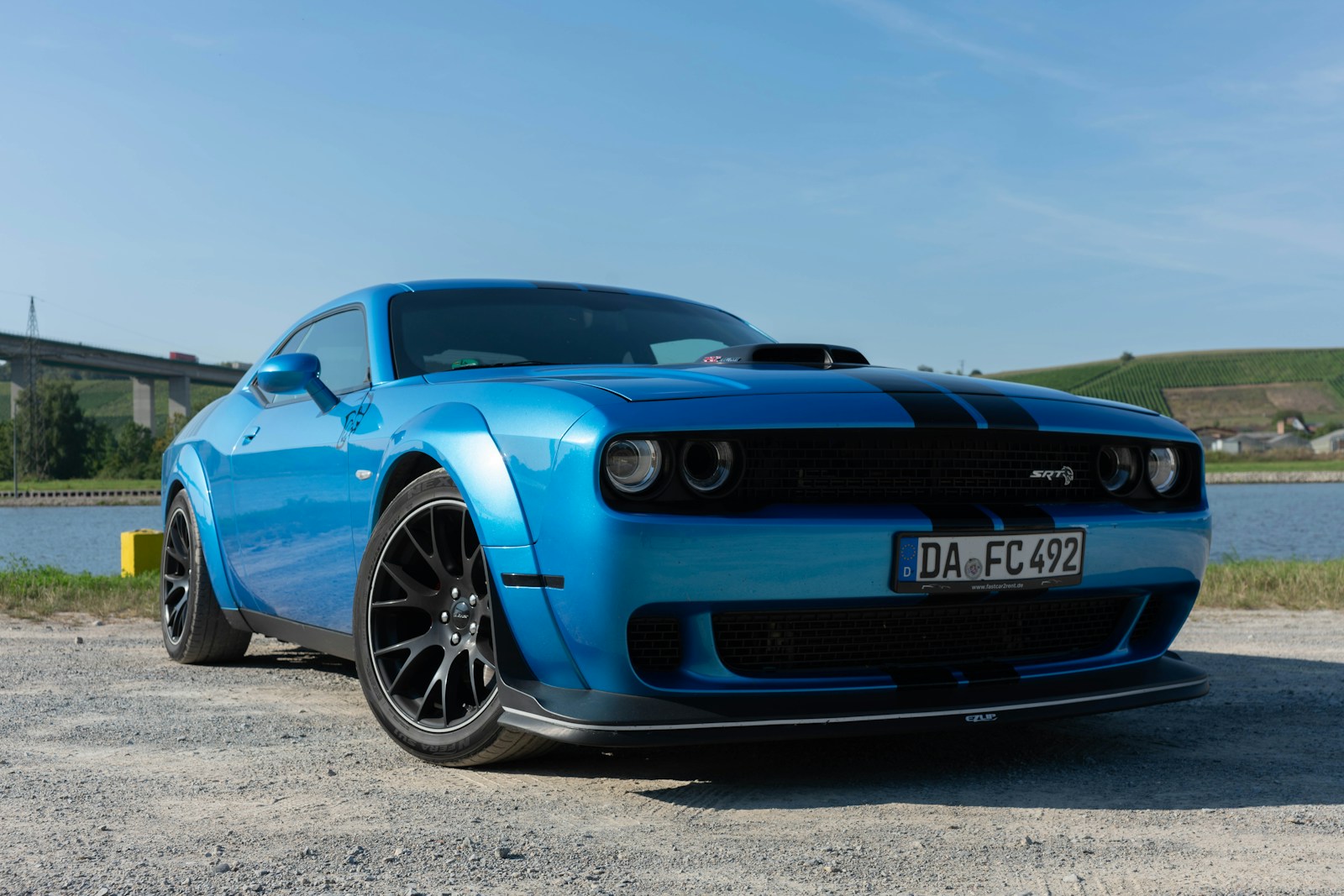
He wasn’t even trying to be the “cool dad,” at least not out loud. He kept framing it as practical: his 16-year-old had early morning commitments, the family schedule was a mess, and the kid was “responsible.” So on a random weekday, he handed over the keys to his Hellcat like it was a Corolla and told him to drive it to school.
The Hellcat, of course, is not a Corolla. It’s the kind of car that sounds like it’s picking a fight just idling, the kind of car other drivers glance at twice at stoplights, the kind of car that makes teenagers do that half-smile thing like they’ve just been handed a movie prop.
The dad figured the danger was hypothetical. “He knows better,” he kept saying whenever anyone side-eyed the choice. Then the phone call came: the car had been stopped, and it wasn’t coming home. Impounded. Not because of a parking ticket, not because it broke down, but because it got swept up in a street-racing stop like it was just another participant.
The Hand-Off: “He’s Mature, He’s Fine”
The morning started with the dad doing that casual, performative nonchalance parents do when they want to seem unbothered. He tossed out a few rules—don’t show off, don’t take friends, don’t floor it—then watched his kid back out of the driveway with the careful, tense movements of someone trying to look relaxed.
He’d apparently let the kid drive it before, just not alone and not to school. This time he convinced himself it was a test of trust, a little rite of passage. He also liked the idea of his son getting there on time without him rearranging his work schedule.
It didn’t help that the Hellcat had a weird status in their house. The dad talked about it like a reward he earned—long hours, years of saving, finally getting something fun—so any suggestion that it was an irresponsible choice felt, to him, like an insult. He wasn’t just lending a car; he was lending proof that he had “made it.”
School Drop-Off Energy and the Attention Spiral
By the time the kid pulled into the school parking lot, the day was already set up for trouble. Kids noticed. Teachers noticed. You don’t roll into a high school in a supercharged muscle car without instantly becoming a small event.
He did what most teenagers would do: tried to act like it wasn’t a big deal while soaking up exactly how big a deal it was. He parked, got out, and walked with that slightly too-confident pace that says he’s aware people are watching. It wasn’t necessarily malicious; it was just the gravity of showing up in something loud and expensive.
Then came the predictable ripple effect—friends asking for rides after school, people joking about “just one pull,” someone mentioning a spot where people “test” their cars. The kid didn’t even have to seek it out. The Hellcat did the social networking for him.
The After-School Detour That Wasn’t “Street Racing,” Technically
After the last bell, he didn’t head straight home. He told himself it was a harmless detour, that he was just going to drive around a little, maybe give one friend a quick ride, maybe swing by a popular strip where other cars gathered. In his mind, it wasn’t street racing unless there was an official countdown and a finish line.
The problem is that street-racing scenes don’t need a formal invitation. A couple of cars rolling together, a light turning green, a wide stretch of road, and suddenly everyone’s pretending they’re just “accelerating normally” while watching each other out of the corner of their eye.
Witnesses later described it the same way these things always get described: nobody admits to racing, but somehow multiple cars launch hard from a stop, engines screaming, and the traffic pattern looks more like a drag strip than a commute. The kid, in the Hellcat, wasn’t exactly invisible in that pack.
The Stop: Lights, Sirens, and a Car That Isn’t Going Anywhere
Law enforcement had apparently been watching the area because it wasn’t the first time it happened there. When the cars got lit up, it wasn’t just one patrol car pulling over one speeding driver. It was the coordinated kind of stop that makes everyone’s stomach drop—multiple vehicles, multiple units, everyone directed into a controlled pull-off.
The kid’s first mistake was thinking he could talk his way out of it with politeness and teenager innocence. He kept insisting he was just driving, just going home, just happened to be near other cars. The officers weren’t buying the “coincidence” angle, especially not with a high-powered car and the kind of acceleration they’d reportedly observed.
Then came the second problem: he was 16. Depending on the state and the exact license restrictions, he may have been violating minor-driving rules just by having passengers, being out at a certain time, or operating a car with that power under those conditions. Even if his paperwork was technically clean, the stop instantly turned the whole thing into a parent problem.
The impound decision was the part that shocked him. He seemed to expect a warning, maybe a ticket, maybe a lecture. Instead, the Hellcat got treated like evidence of a larger issue: reckless driving, suspected racing activity, public safety. The tow truck showed up with the slow inevitability of consequences arriving on schedule.
Dad Shows Up: Confident Walk, Then the Reality Check
The dad arrived like he was going to sort it out with a few firm sentences. He had that posture of someone who believes adulthood is a universal hall pass—like once he shows he’s the owner, the situation will downgrade itself. He kept asking variations of, “So what’s the issue here?” with the kind of tone that assumes the issue is a misunderstanding.
But the officers weren’t negotiating. They explained the stop, the suspected street-racing enforcement sweep, and the fact that the car was being impounded. The dad’s face did that quick shift from confident to irritated to genuinely confused, like someone watching a door fail to open even though they’re holding the right key.
He tried to reframe the narrative in real time. The kid is a good student. The kid was only borrowing the car. The car is expensive. The dad works hard. None of it mattered, because none of it addressed the observed behavior on the road, and none of it changed the policy the officers were operating under.
And here’s where it got awkward in a very human way: the dad clearly wanted to be mad at somebody, but the options were limited. He could be mad at the police, which didn’t help in the moment. He could be mad at his kid, but that meant admitting the decision to lend the Hellcat was a gamble. Or he could be mad at “other drivers,” the faceless influence, which is emotionally satisfying but doesn’t get the car back.
So he toggled between those choices, sometimes in the same sentence. One minute he was scolding his son with tight, clipped words, the next he was pleading with an officer about fees and logistics. The kid, meanwhile, stood there with that teenage blend of shame and defensiveness, staring at the tow hook like it was personally insulting him.
The Fallout: Fees, Paperwork, and a Bruised Family Story
Once the Hellcat was gone, the consequences stopped being theoretical. Impound fees stack fast. There’s paperwork, proof of ownership, sometimes court dates, sometimes mandatory classes, and always that lingering question of what’s on the kid’s record now.
Back at home, the dad’s shock hardened into a different kind of anger: not explosive, but simmering and stubborn. He fixated on the idea that the punishment didn’t “fit,” that they were making an example out of his son. And his son, instead of melting into apology, kept circling the same defense—he didn’t “race,” he didn’t “mean to,” he was just there.
Their argument got stuck in the worst possible place: the gap between intention and outcome. The dad wanted to punish the choice; the kid wanted to defend the story he was telling himself about that choice. They talked past each other, both clinging to a version of events that let them feel less foolish.
And looming over it all was the part nobody could say without it sounding petty: the dad’s pride was dented. Not just because the car was impounded, but because the situation made him look naïve—like he’d handed a loaded confetti cannon to a teenager and then acted surprised when it went off in the living room.
In the end, the Hellcat wasn’t just sitting behind a fence waiting for a payment and a signature. It had turned into a symbol neither of them could comfortably own: for the son, a glimpse of power he wasn’t ready to handle; for the dad, a decision he’d rather blame on bad luck than admit was predictable. And that’s the part that stayed unresolved—because getting the car out of impound is mostly money and paperwork, but getting the trust back is a different kind of bill, and neither of them seemed eager to pay it.