

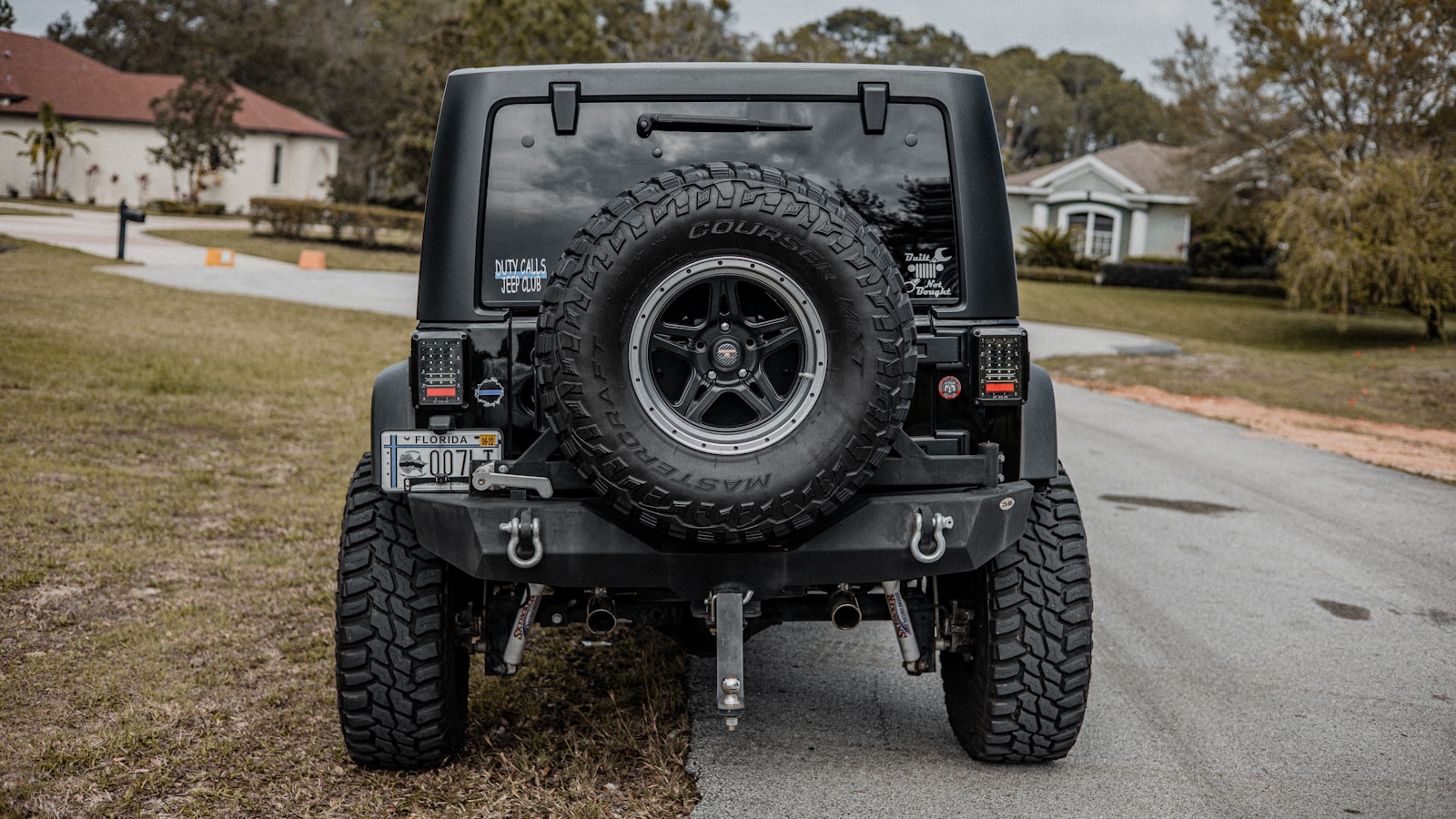
The Jeep Was Always “Her Car,” Until It Wasn’t
When Mara was sixteen, her dad started calling his old Jeep “your future ride” like it was already a done deal. It wasn’t some shiny midlife-crisis toy either—more like a sun-faded, slightly loud, stubborn little SUV with a cracked dash and a passenger window that needed persuasion. But to Mara, it had history: camping trips, late-night drives for milkshakes after bad days, her dad teaching her how to check oil with hands that smelled like motor grease and peppermint gum.
He didn’t put it in writing, but he said it enough times that it became a family fact. “When you’re ready,” he’d tell her, tossing the keys in the air like a promise you could catch. Mara’s mom had died a few years back, and the Jeep was one of those leftover anchors—something that still felt like the old life when everything else had shifted.
Then her dad remarried, and the Jeep stopped feeling like an anchor and started feeling like a bargaining chip. It didn’t happen with one big announcement. It was more like a slow, creeping change in who the Jeep “belonged” to whenever the house got tense.
The New Household Came With New Math
Her dad—Evan—married a woman named Paige after about a year of dating. Paige moved in with her son, Tyler, who was nineteen and had a messy backstory that was always hinted at but never fully explained in front of Mara. The phrasing was consistent: Tyler had “been through a lot,” Tyler “needed stability,” Tyler “was getting back on his feet.”
Mara wasn’t cruel about it, at least not at first. She tried to do the polite stepfamily thing, which mostly meant staying out of the way and pretending it didn’t sting when her dad started missing their usual routines. Paige had opinions about everything from the thermostat to how long Mara’s showers were, and Evan had this new habit of agreeing with Paige like he was afraid the marriage might evaporate if he disagreed.
The Jeep still sat in the driveway, still technically Evan’s, still occasionally driven to the hardware store. But Mara noticed little shifts: Paige would refer to it as “our Jeep.” Tyler would borrow it for quick errands and bring it back with the seat shoved so far back Mara couldn’t reach the pedals. Evan would laugh about it like it was a cute, normal adjustment instead of a boundary being quietly erased.
Graduation Season and the Promise That Got Repeated
Mara’s high school graduation brought the Jeep back into the center of everything. She’d been accepted into a community college nearby and planned to work part-time, and the Jeep—imperfect as it was—was the difference between independence and begging rides from people who already seemed annoyed she existed. Evan told relatives at her small graduation dinner, “We’re gonna get her set up with the Jeep soon,” like it was a proud dad moment.
Mara heard him say it and felt that brief, rare relief. It was comforting, almost childish, to think something he promised was still intact. Paige smiled tightly at the table, the kind of smile that looks friendly until you stare at it long enough and realize it never reaches the eyes.
After dinner, Mara brought it up in the kitchen while Evan rinsed plates. She didn’t even demand anything; she asked what “soon” meant. Evan nodded, said they’d handle the paperwork once he had time, and told her to start looking at insurance quotes so she’d be “responsible about it.” It sounded like the same dad she remembered.
The only weird part was that Paige hovered in the doorway the whole time, listening with her arms folded, like this was a negotiation happening on her property. When Mara glanced over, Paige jumped in with a casual, “We just have to make sure it all makes sense for everyone.” Evan didn’t correct her.
The “Fresh Start” Speech and the Keys That Disappeared
The blowup didn’t happen the day after graduation. It happened two weeks later, on a random Tuesday afternoon, when Mara came home from work and noticed the Jeep was gone. Not “out for errands” gone—her dad’s truck was still there, and Paige’s car was parked in the usual spot. The driveway looked wrong without the Jeep’s boxy shape.
She asked Paige first because Paige was the one in the living room, scrolling on her phone like she hadn’t rearranged Mara’s entire future in an afternoon. Paige didn’t even look up right away. She said, “Tyler took it,” like it was obvious, like the Jeep had always been Tyler’s to take.
Mara waited for the follow-up—he borrowed it, he’ll be back, he had an appointment. Instead, Paige added, “He needed a reliable vehicle for a job interview. It’s important for him to have a fresh start.” Then she looked up and gave Mara a small, satisfied nod, like she’d just delivered a reasonable explanation to a child who didn’t understand adult priorities.
When Evan got home, Mara went straight to him. Evan didn’t pretend to be confused. He just sighed, sat down heavily, and said he’d been meaning to talk to her. That phrase—meaning to talk—landed like a warning, because it always means a decision has already been made without you.
He told her Tyler “needs the Jeep more right now.” He said Tyler had an opportunity lined up and needed transportation that wouldn’t embarrass him. He said Mara had options—she could get rides, take the bus, “figure something out” until they could help her with a different car later.
When Mara reminded him of the years of promises, Evan’s face pinched like he was the one being unfairly pressured. He said, “I know what I said, but things change.” And then came the line that stuck in Mara’s throat: “Tyler needs a fresh start, Mara. He’s had it rough. You don’t get it.”
How It Got Justified, One Small Rewrite at a Time
Mara didn’t scream at first. She did that stunned, quiet thing people do when they’re trying to understand whether they misheard their own life. She asked if Tyler even had a license—Paige answered that question too quickly, saying of course, like it was insulting to ask, even though Mara had never actually seen Tyler drive anything but a shopping cart around the grocery store.
Evan shifted the story when Mara pushed. Suddenly it wasn’t “giving” Tyler the Jeep; it was “letting him use it for a while.” But when Mara asked where the title was, Evan admitted Paige had already talked to him about transferring it “to make insurance easier.” The words were smooth, practical, and slippery, like they’d been rehearsed.
Mara pointed out the obvious: if he’d wanted to let Tyler borrow it, he could’ve asked. He could’ve explained, set a timeline, offered something in return. Instead, she’d come home and found it gone, the keys removed from their hook by the door, the whole thing handled like she didn’t matter enough to consult.
Paige stepped in with that same calm voice, the one that sounds polite while it presses your face into the carpet. She said Mara was “making it about a car” when it was “about family.” She said Tyler had been “through trauma” and this was part of helping him rebuild. Evan nodded along, rubbing his forehead, like Mara was causing a headache rather than reacting to a betrayal.
That’s when Mara finally snapped—not a screaming meltdown, but the kind of sharp, shaking anger that makes your words come out too clear. She told Evan he’d promised her, repeatedly, for years. She told him the Jeep wasn’t just transportation; it was one of the few things that still felt like it belonged to her and him, not her and Paige and Tyler.
The Fallout: A House That Suddenly Felt Like Someone Else’s
Tyler came home late that night, and the Jeep’s engine could be heard before the headlights even turned into the driveway. He walked in like a guy who’d won something, tossing the keys onto the counter with a little extra clack. He didn’t thank Mara. He barely looked at her.
When Mara confronted him—asking if he knew it had been promised to her—Tyler shrugged and said Evan told him it was fine. That was his whole defense: permission from the authority figure. Paige immediately jumped in, scolding Mara for “interrogating” Tyler when he’d had a “big day.” Evan stood there, silent, looking at the floor like he’d misplaced something important and didn’t want to admit it.
Over the next week, the story kept changing depending on who was talking. Evan would tell Mara it was temporary, but Paige would talk about “Tyler’s car” in front of her like the decision was permanent. Tyler started leaving fast-food trash in the Jeep and parking it crooked, like he wanted to mark it as his. Mara stopped asking for rides in it because it made her stomach twist.
The practical consequences piled up fast. Mara’s work schedule got harder. She missed an orientation session at school because she couldn’t get a ride and the bus route was a mess. Evan offered vague help—“We’ll sort it out”—but nothing concrete. Every time Mara brought up the Jeep, Paige acted like Mara was obsessed, like she was clinging to a toy instead of a promise that had been yanked away.
And under all the car logistics was the uglier thing Mara couldn’t ignore: her dad’s priorities had been rewritten. He wasn’t just choosing Tyler’s “fresh start” over her stability. He was choosing the version of himself that kept Paige happy, even if it meant turning his own daughter into collateral damage.
By the time Mara started spending more nights at her aunt’s house, nobody stopped her. Evan asked once if she was “really going to be like that,” as if her leaving was the unreasonable part. Paige didn’t ask at all. Tyler kept driving the Jeep like it had always been his, and Mara kept staring at the empty hook by the door where the keys used to hang, trying to figure out how a promise could disappear so cleanly without anyone calling it what it was.