
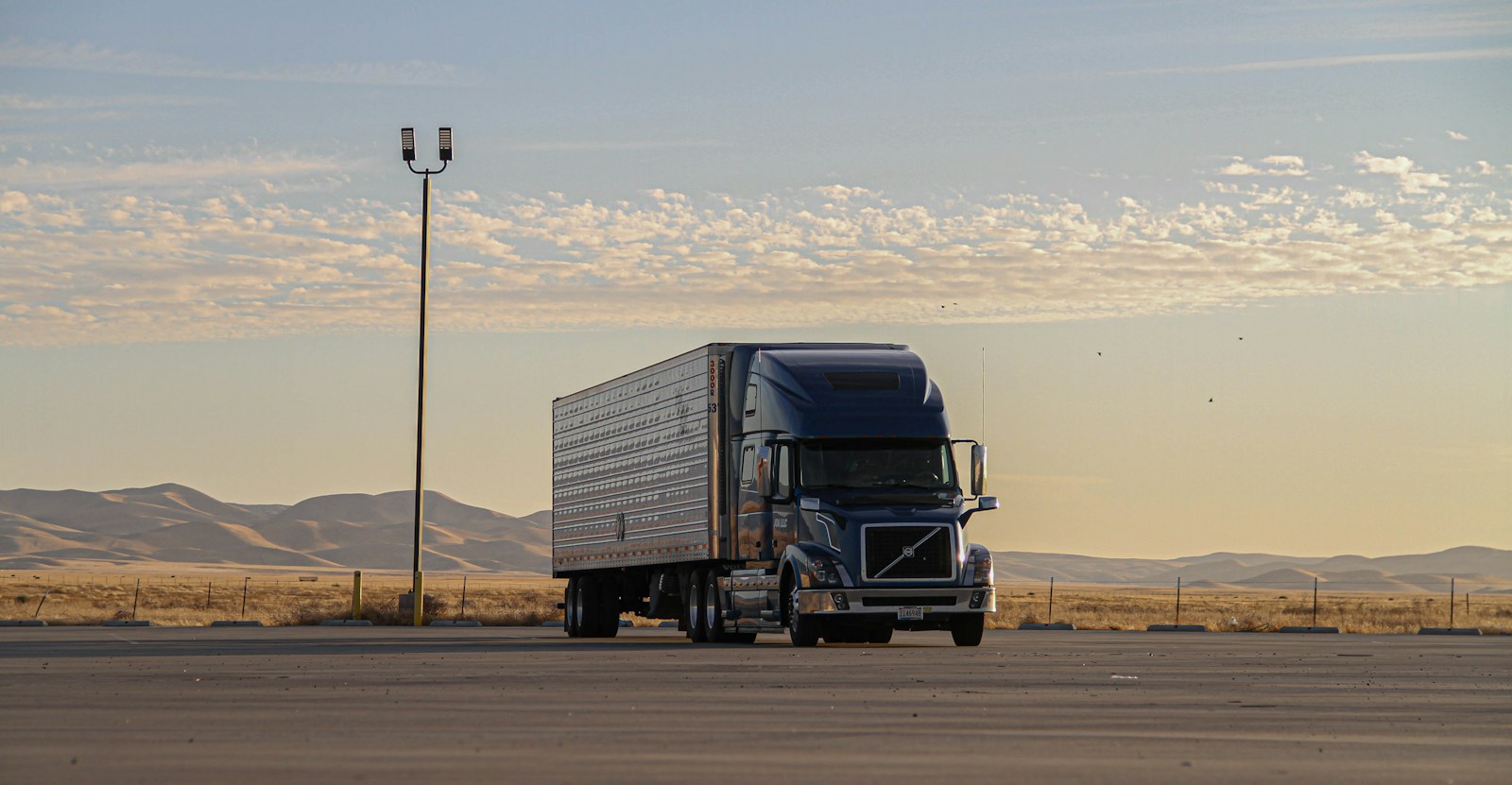

A loaded flatbed semi truck lost its brakes on the eastbound grade of Monteagle Mountain on Interstate 24 in Marion County, Tennessee, and steered straight into the mountain’s runaway truck ramp, kicking up a wall of dust but staying upright the whole way up. Tennessee Department of Transportation traffic cameras caught the entire thing, and it wasn’t an isolated moment, according to CDLLife’s report on the October 25, 2024 incident, which noted a similar runaway event had already happened at the same ramp earlier that year.
Monteagle Mountain has a reputation among truckers for a reason. The eastbound descent drops 1,161 feet over about 4.1 miles at a 6 percent grade, steep and long enough that a truck with fading brakes can build dangerous speed before the driver even realizes there’s a problem, according to documented grade and elevation data for the mountain. Speed limits drop to 45 mph for trucks on the way down, but brake fade doesn’t respect posted limits.
Key Points
- The ramp sits at mile marker 139.2 on eastbound I-24, built into the mountain’s steep, rocky left shoulder.
- It’s filled with pea gravel, which uses rolling resistance rather than a hard stop to slow a runaway truck, according to local ABC affiliate NewsChannel 9’s reporting on the ramps, which cited TDOT Director of Pre-Construction Rachel Gentry.
- TDOT placed the ramps on the left side of the interstate specifically because that’s where the terrain offered enough uninterrupted slope to actually stop a loaded truck.
- A major highway reconstruction between 1985 and 1989 straightened the eastbound lanes, reduced grades, and added an additional runaway ramp; accidents on the mountain fell from 54 in 1983 to just three by 1991.
- A truck brake adjustment station opened near the mountain in January 1992 to give drivers one more chance to catch a problem before the descent.

How the Ramps Actually Work
Most runaway ramps, including Monteagle’s, are what engineers call arrester beds: a lane of loose gravel or sand angled uphill, where the combination of incline and rolling resistance bleeds off a truck’s speed over a few hundred feet, according to a general engineering breakdown of arrester bed and mechanical-arrestor ramp design. The required length depends on how heavy the truck is, how fast it’s going when it enters, and how steep the bed itself is graded. Some newer designs use net-style mechanical arrestors that can stop a truck in less distance, but gravel beds remain the standard on older mountain corridors like I-24.
TDOT and local outlets don’t publish a running tally of exactly how many times the Monteagle ramps get used in a given year, but camera compilations covering just April 2024 through May 2025 show the ramp catching multiple dramatic saves in that window alone, plus the occasional confused passenger car driver who pulls in by mistake. The ramps exist because brake failure on a sustained 6 percent grade is common enough on this stretch of interstate to justify permanent, purpose-built infrastructure rather than relying on runaway trucks finding their own way to a stop.
What Drivers Should Know
- If you’re driving a car and see a runaway ramp is occupied or a truck is clearly struggling on a downgrade, give it as much room as possible and do not attempt to pass on the right.
- Truckers descending Monteagle or similar grades are advised to downshift before the descent begins, not after brakes start to fade.
- The brake adjustment station near the mountain exists specifically so drivers can check their rigs before committing to the grade; using it is free and takes only a few minutes.
Runaway ramps rarely make headlines when they’re not actively saving a truck from a crash, but Monteagle’s ramps have quietly been doing exactly that for decades. The dust cloud in a viral traffic-cam clip is really the visible tail end of an engineering decision made 40 years ago that keeps paying off one brake failure at a time.