
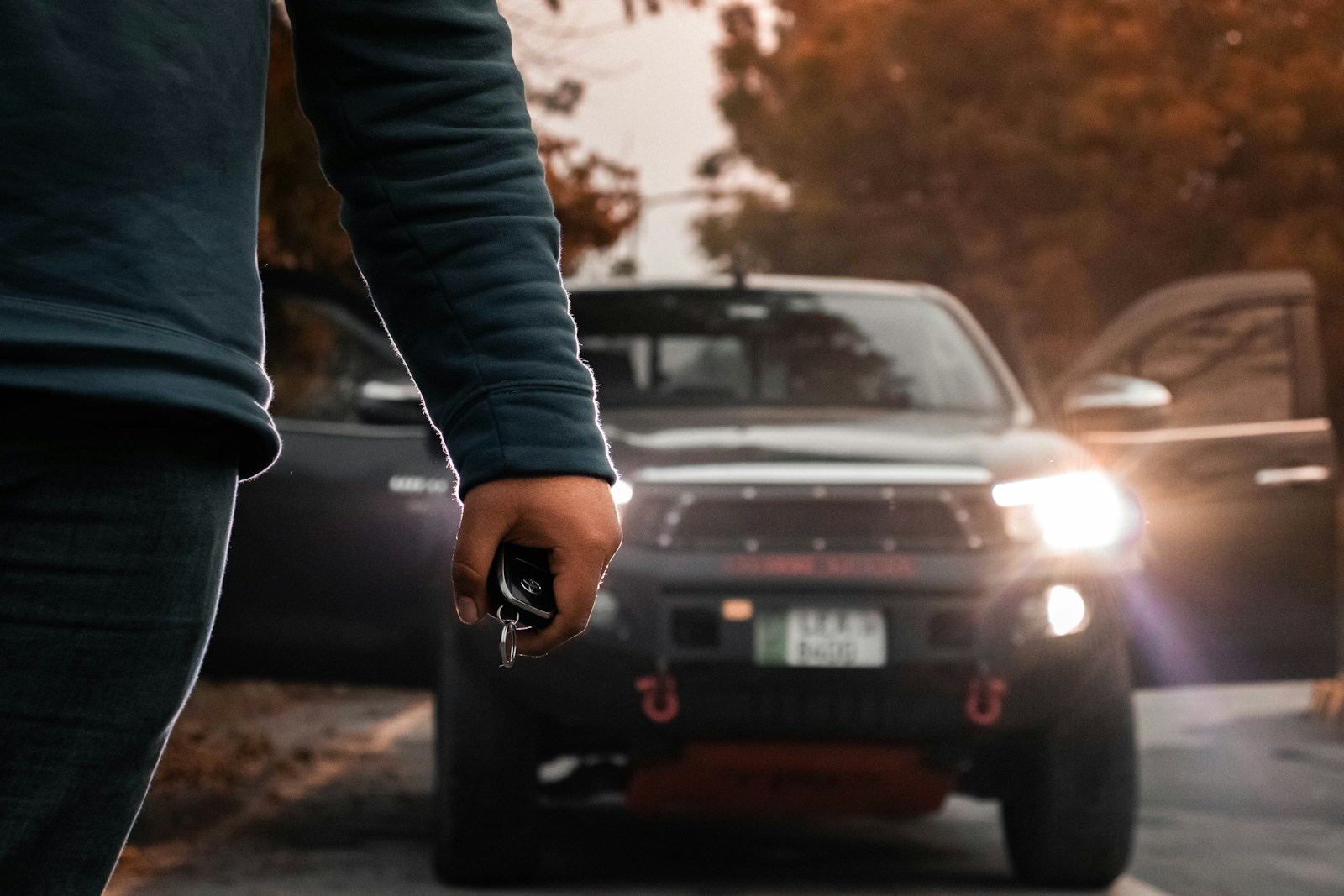

He wasn’t even shopping for a truck that day. He was killing time after work, doing that thing where you “just swing by” a dealership lot and end up walking rows like you’re browsing a menu. Then he spotted a clean-looking pickup parked up front with a price that was high enough to feel “nice,” but not so high it triggered his self-preservation.
The sales guy clocked him immediately and slid into that easy, friendly vibe dealerships train into people. The pitch was simple: one-owner truck, well cared for, no stories, no drama. The kind of vehicle you buy because you’re tired of mystery smells and warning lights and just want something dependable.
The buyer did the normal stuff—looked at the tires, checked the bed, peeked under the hood like he’d know what he was looking at if something was wrong. The truck looked straight, the paint matched, the interior didn’t look like it had hosted a hundred construction lunches. When the salesperson repeated “one owner” for like the third time, it started sounding less like a detail and more like a promise.

The deal happens fast, because it always does
They went inside, and the dealership did what dealerships do: put him in a chair, brought out paperwork in waves, and kept the momentum moving so there wasn’t much space to stop and think. The buyer asked about the history again, casually, like he was checking a box. The answer didn’t change—one owner, clean title, “no accidents that we know of.”
They showed him a vehicle history report, the kind that looks official enough to calm your nerves without really saying much. It didn’t scream “run,” and the finance guy acted mildly offended by the idea that anything could be off. By the time the buyer had a plate frame with the dealership’s logo on it, the whole thing felt settled.
He drove home feeling that rare adult satisfaction: he’d bought something practical without getting wrecked. He parked it in the driveway and did the little walk-around again in his own light, like the truck was a new appliance. His neighbor even wandered over, nodded approvingly, and asked the usual question: “So, what’d you pay?”
The first crack: a random search that turns into a spiral
The next day, he did what a lot of people do now—he typed the VIN into Google. Not because he distrusted the dealership, exactly, but because the internet has trained everyone to double-check everything. He expected maybe a couple of parts listings, an old service ad, nothing dramatic.
Instead, the search results came back with a weird mix of car auction links and image thumbnails that looked… off. The truck in the photos had the same wheels, the same color, the same trim badges. But in the auction shots, the front end looked like it had been introduced to something solid at speed.
He clicked, and that’s when the mood shifted from “curious” to “wait, what?” The auction listing wasn’t vague—there were photos from every angle, including close-ups of crumpled sheet metal and deployed airbags. The kind of damage you don’t forget once you’ve seen it, even if it’s been repaired well enough to sell.
Now he’s sitting there staring at his laptop, then looking out the window at the truck, trying to reconcile the two images. Because the vehicle sitting in his driveway looked fine. But the one in those pictures looked like it had been in a fight it didn’t win.
A “one owner” truck with a whole extra life
The buyer kept digging, because once you see something like that, you don’t just close the tab and go make dinner. Another site had the same truck listed through an auction lane, with a salvage designation and notes about “front-end damage.” There were dates, too—recent enough that the timeline didn’t make sense if this was truly some gently used one-owner situation.
He started building the story backward, like a detective with a sinking feeling. There was a report showing an insurance total loss event. Another entry referenced a state title brand, the kind that usually doesn’t show up on a cheerful window sticker.
The worst part was how specific the proof felt. It wasn’t just a line item on a report. It was photos: the same truck, same color, same trim, sitting in an auction lot with a big lot number written on the windshield, looking very much not “accident-free.”
He went out to the driveway with his phone and started comparing little tells. A panel gap on the front fender that suddenly looked less “normal.” A headlight that seemed a shade newer than the other. Bolts under the hood that looked like they’d been touched by tools recently.
The dealership phone call that goes nowhere, fast
He called the dealership and didn’t lead with accusations. He tried the calm approach first: “Hey, I’m seeing some stuff online tied to the VIN. Can you help me understand this?” The person on the phone immediately got cautious, like they’d heard the tone shift.
They transferred him to someone who sounded like a manager but introduced himself in that vague way people do when they don’t want to be pinned down. The buyer explained the auction photos, the salvage history, the accident reports, and how none of that matched “one owner” and “clean title.” There was a pause long enough to feel deliberate.
The manager’s first move was to challenge the sources. Online reports weren’t always accurate, photos could be misattributed, VINs get entered wrong, “you’d be surprised.” He offered to “take a look” if the buyer brought the truck in, which sounded less like help and more like an attempt to pull the conversation onto dealership turf.
When the buyer asked directly whether the truck had ever had a salvage title, the answer got slippery. “As far as our paperwork shows…” “We disclose what we have…” “We sell a lot of vehicles…” The buyer wasn’t hearing a denial so much as watching someone dodge a straight line.
Back to the lot, where everyone suddenly forgets things
He drove the truck back and parked it in the same place he’d first seen it, which felt weirdly symbolic. Inside, the same sales guy who’d been so upbeat the day before suddenly acted like he was dealing with a complicated warranty claim. He looked at the buyer with that careful half-smile people use when they’re trying not to show annoyance.
The buyer pulled up the auction photos on his phone and slid it across the desk. The sales guy leaned in, squinted, and did the long exhale of someone pretending this is new information. Then came the classic line: “I’ve never seen that before.”
They brought out the manager again, and the manager did the same dance but in person. He acknowledged the photos looked bad, but suggested it might have been repaired before their dealership ever touched it, which wasn’t the point. The point was that the truck had been sold as “one owner” and “clean,” and now it looked like it had lived an entirely different life between those two words.
The buyer asked for a simple resolution: unwind the deal, take the truck back, refund everything. The manager started talking about inspections, policies, how they’d have to “review the file,” and how the buyer had signed paperwork acknowledging the vehicle was sold as-is. He wasn’t yelling, but he was leaning hard on that signature like it was a shield.
Receipts, screenshots, and the ugly part of “as-is”
At home, the buyer started assembling everything like he was preparing for court, because he might’ve been. Screenshots of the auction listing, copies of the accident report, the salvage branding, time-stamped photos, and the dealership’s own ad language emphasizing “one owner.” The more he lined it up, the less it looked like a misunderstanding and the more it looked like a story someone hoped wouldn’t be checked.
He reread the paperwork and found the little phrases that always matter: “dealer makes no guarantees,” “buyer acknowledges,” “prior damage may exist.” But he also remembered the spoken promises, the repeated “one owner,” the confidence with which it was sold. There’s a big difference between “it’s used” and “it was totaled and ran through auction.”
When he contacted the dealership again with the compiled evidence, they didn’t suddenly become cooperative. They offered to “evaluate” the truck, maybe propose a trade toward another vehicle, maybe “work something out.” It sounded like they were trying to reframe the problem as a customer service issue instead of a misrepresentation issue.
And that’s where the tension hung: the buyer still had the truck, still had the payment, and now had a digital trail that didn’t match what he’d been told across a desk. The dealership wasn’t confessing to anything, just nudging him toward options that kept the money in their ecosystem. The last thing he said to a friend about it was basically the whole mood in one sentence: it wasn’t the crash history that made him furious—it was how casually they’d bet he’d never look.