

An overheating engine is one of the scariest warning signs a driver can see, and it is also one of the easiest to overspend on. A temperature gauge in the red can mean a failed water pump, a bad radiator, a blown head gasket, or something much smaller. A mechanic who posts as @cgmerkz shared a case where the quote he says a customer got from a dealership was about $2,000, and the actual trouble turned out to be a loose hose.
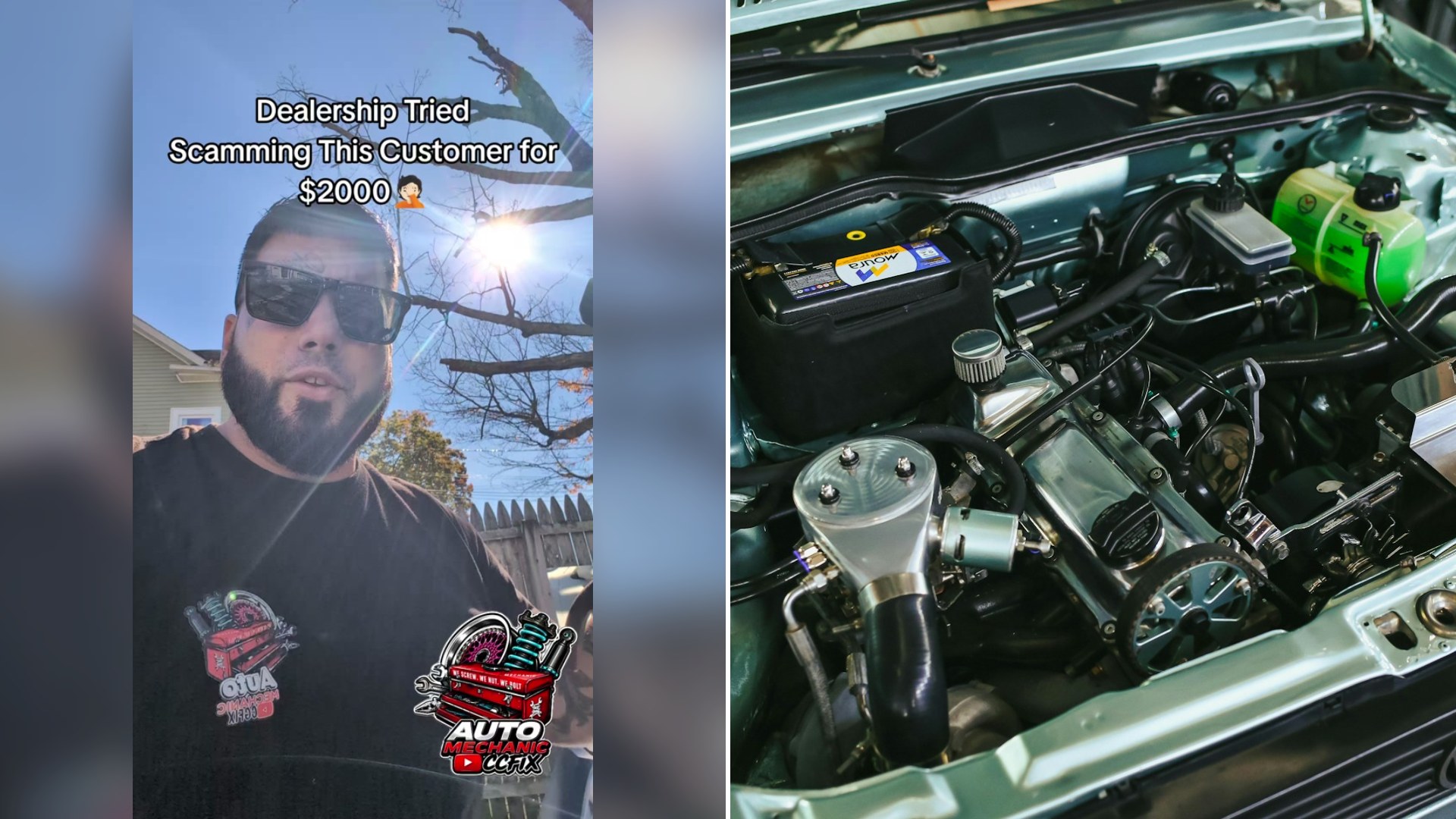
According to his short walkthrough, the dealership wanted to charge the owner roughly $2,000 to replace the radiator, the thermostat and the hoses on a car that was overheating. The car appears to be a Honda, based on the hashtags he used. He calls the situation hard to believe and goes on to show what he found.
@cgmerkz
What the independent mechanic found
He explains that he noticed the car was leaking and figured it was obviously a cooling system leak. He could see how rusty one area was, and the area was wet, which made him suspect it was the source. Then he followed one of the hoses with his hand and eyes, and that is where the answer showed up.
An entire line had come loose from the thermostat housing. The clamp was only halfway on, which means the hose was not sealed. Coolant had been escaping from that connection, and that would explain the overheating. As he puts it, the dealership was charging $2,000 for something that was just a hose that needed to be reconnected and clamped properly.
He ends with a blunt message to viewers, telling them to bring their cars to him if they want the work done right and to avoid dealerships because he believes they are trying to rip people off. That is a strong opinion from one mechanic about a whole industry, and it is worth remembering that it is based on a single car. Plenty of dealership technicians do excellent work. Still, the story is a good reminder of why checking the simple things first matters.
What the video does not tell us
It is fair to point out a few things that are not stated. The creator does not say what he charged for his fix, so we do not know the final bill. We also do not know exactly what the dealership inspected before giving its estimate, or whether it had concerns beyond the loose hose. An estimate that lists a radiator, thermostat and hoses might be the result of a standard recommendation after a diagnosis, or it might be a larger job than the problem required. What we can say is that, in the creator’s account, a disconnected hose and a half seated clamp were the real cause of the leak.
How a cooling system works, in plain terms
Understanding the basics makes it much easier to judge an estimate. Your engine makes a lot of heat, and a liquid mixture of coolant and water carries that heat away. A pump pushes the liquid through passages in the engine, out through hoses to the radiator, where air cools it, and back again. The thermostat is a small valve that stays closed while the engine warms up and opens to let coolant flow once it reaches the right temperature.
The system is sealed and pressurized, which raises the boiling point of the coolant. Any leak, even a slow seep at a hose connection, lets pressure drop and coolant escape. When the level gets low enough, the engine overheats. That is why a loose hose can cause the same warning light as a failed radiator.
What to do if your car starts overheating
If the temperature gauge climbs or a warning light comes on, pull over safely as soon as you can and turn the engine off. Driving even a short distance while overheated can warp parts and turn a small repair into a very large one.
Never open the radiator cap or coolant reservoir cap while the engine is hot. The system is under pressure, and scalding coolant can spray out. Wait until the engine has cooled completely.
Once it is cool, look for obvious clues. Check the coolant level in the reservoir, look under the car for puddles, and look at the hoses for wetness, crusty residue or loose connections. Coolant is often green, orange or pink and has a sweet smell. White or colored crust around a joint often shows a slow leak.
If you are not comfortable inspecting the car yourself, have it towed. That is cheaper than a ruined engine.
Smart ways to avoid an expensive misdiagnosis
Ask for the cause, not just the parts list. A good shop can explain what test led them to recommend each part. If a quote lists several components, ask which one is actually leaking or failing and what the evidence is.
Request to see the problem. Many honest shops will show you the failed part or the leak. If something looks too simple, ask to look at it together.
Get a second opinion on any big repair. A second shop will usually charge a modest inspection fee, and that may save you hundreds or even thousands. Bring the written estimate from the first shop.
Do the easy maintenance checks yourself. Keep an eye on the coolant level when the engine is cold, and have hoses and clamps examined during routine service. Hoses age, clamps loosen over time, and catching a problem early keeps it small.
The lesson from @cgmerkz is not that every dealership is out to take your money. It is that big repair quotes deserve a few questions, and that sometimes the fix is as simple as a hose and a clamp. A little skepticism and a second opinion can protect your wallet.