

Washing a car seems simple enough: grab a bucket, a sponge and a hose and go. But professional detailers will tell you the order in which you do things matters just as much as the soap you use. A detailer on the page @sealsuds shows his exact order of operations for a full exterior detail, using a BMW M4 as the example, and the very first rule is to clean the wheels first.
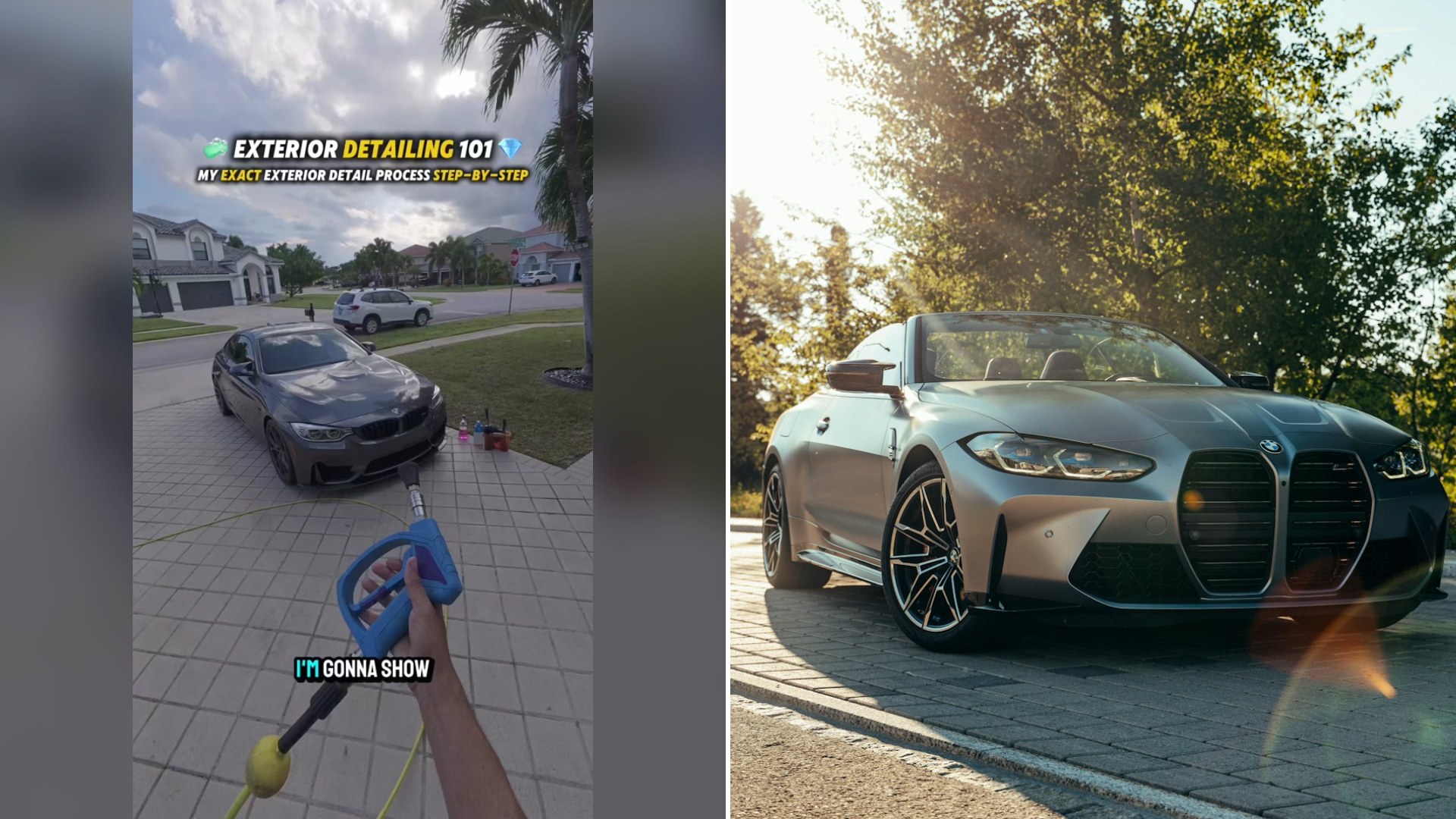
His caption explains why a solid process is so important: it produces consistent, professional results, protects the finish, removes contaminants safely and builds trust with customers. Here is his routine, step by step, along with the reasoning behind it.
@sealsuds
Step one: the wheels
He says the first thing you always want to do is clean the rims. In his example, it is not hot outside and the rims are cool to the touch, so he can skip a pre rinse. That lets him spray the wheel cleaner at full strength onto dry wheels, without it getting watered down. He sprays the rims, hits the tires too, and then goes right into the fender wells.
He lets the wheel cleaner sit for about thirty seconds. Then he foams it up with contact wash soap and starts scrubbing in a clear order:
- The barrels, which are the inner part of the wheel.
- The fender wells, using the same tool.
- The tires, with a tire brush.
- The brake calipers, with a detail brush.
- The face of the wheel, with a wash mitt.
- The lug nuts, which he says he forgot to mention, with the detail brush.
Finally he rinses the wheel off.
Why wheels go first
The wheels are the dirtiest part of any car. They collect brake dust, road grime and tar. If you wash the paint first and then clean the wheels, the splashes and drips from the wheel work can land on your clean paint. If you do the wheels first, any mess lands on a car that is about to be washed anyway. It also keeps the dirty wash tools for the wheels away from the paint, which is where scratches can start. Many pros use separate brushes and mitts for wheels and keep them far away from the body of the car.
Step two: the pre rinse or pre wash
He explains that in most cases, a pro will use an alkaline soap for a pre wash, which helps loosen dirt before any touching. In this case, though, he only does a pre rinse with water, because the M4 is already ceramic coated. Ceramic coatings are a hard clear layer applied over paint that helps repel dirt and water, so a gentle rinse is often enough on a car with a good coating.
Step three: the contact wash and rinse
With the pre rinse done, he goes straight into the contact wash, which means washing the paint by hand with soap and a mitt. After the whole car is washed, he rinses it thoroughly.
Step four: protection
Next he applies a layer of protector wax. He points out that even though the car has a ceramic coating, the water beading is a little weak right now, so the wax helps revive it. He lets the wax sit for a good amount of time and then rinses it off.
Step five: drying and finishing
He uses a blow dryer to blow most of the water off the car, which gets water out of mirrors, trim and crevices where it would otherwise drip later. Then he finishes drying with a towel. The final touch is tire dressing, which gives the tires a clean, finished look. In his words, that is how you do a full exterior detail.
Bring the pro routine to your driveway
You do not need a professional shop to borrow his ideas. Here is a home version of the same order.
- Work in the shade. Hot paint and hot wheels dry soap too fast and leave spots. He notes that his rims were cool to the touch, which is ideal.
- Wheels first, with their own tools. Use a dedicated brush and mitt for the wheels and never use them on the paint.
- Rinse before you touch. A good rinse removes loose grit that would scratch paint if rubbed in.
- Wash from the top down. The lower panels are the dirtiest, so do them last.
- Use clean water and soap made for cars. Dish soap can strip wax and coatings, so choose a car wash soap.
- Rinse thoroughly. Leftover soap can leave streaks.
- Dry gently. A soft, clean towel or a leaf blower reduces the chance of swirl marks.
- Finish with protection. A spray wax or sealant keeps water beading and shields paint from the sun.
Common mistakes to avoid
- Washing in direct sun, which causes water spots.
- Using an old kitchen sponge or a dirty rag, which can scratch paint.
- Dropping a mitt on the ground and then using it on the car without cleaning it.
- Skipping the door jambs, which hold dirt that can drip out later.
- Letting wheel cleaner dry on the surface. Always follow the directions on the label and rinse promptly, and check that the product is safe for your type of wheel finish.
Why a process matters
His caption makes the point that a good system keeps cars looking their best, prevents rework and sets a pro apart. The same is true for anyone washing the family car on a Saturday morning. When you follow the same order every time, you get better results in less time and you are less likely to scratch the paint or miss a spot.
The takeaway is easy to remember: wheels first, then rinse, wash, protect and dry. Follow that order and your car will look like it came from a pro, even if the only shop is your own driveway.