

He’d been bragging about this setup for weeks: heavy-duty diesel, fresh service, big brakes, and a 14,000‑pound camper that “tows like a dream.” The kind of guy who doesn’t just say he’s going camping—he says he’s “taking the rig through the pass” like it’s a test of character.
The day it went sideways, they were already committed. A long grade, thin air, and that familiar tow-haul howl as the truck held a steady pull up toward 9,500 feet, with the camper pushing behind like a stubborn shopping cart. His partner was watching the temps and the road, trying not to be the person who ruins the vibe by asking the same question again: “Are you sure this is fine?”
Then, mid-climb, the truck made a sound that didn’t match any of the normal diesel noises. Not the turbo whistle, not the fan clutch roar, not even the angry downshift bark. More like a heavy, wet stumble—one sharp hiccup that turned into a sick, uneven rhythm, like the engine had suddenly forgotten how to count.
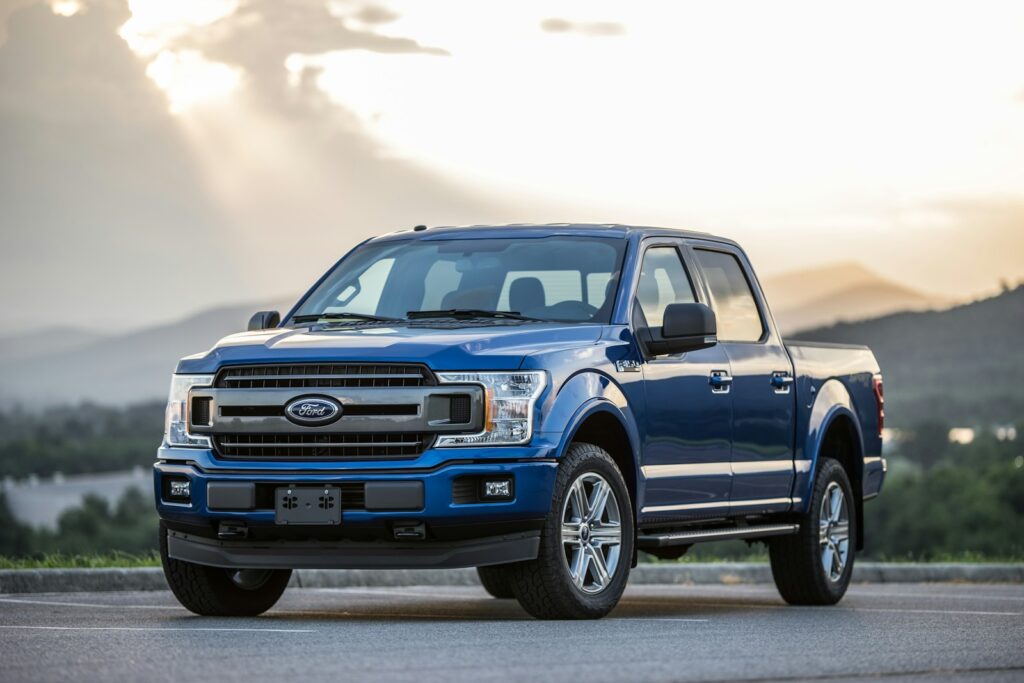
The climb that turned into a limp
At first, he did what almost everyone does: he tried to drive through it. He eased out of the throttle, waited for the transmission to settle, then rolled back into it—because sometimes a diesel just doesn’t like a certain load point, right? But it didn’t smooth out; it got worse, and the truck started vibrating in a way you feel in your teeth.
He glanced at the dash like the gauges had personally betrayed him. The check engine light wasn’t doing anything helpful, the temps weren’t screaming, and nothing was obviously leaking. The only clear message was coming from the seat and the steering wheel: a cylinder was gone.
The grade didn’t care that the engine was now running like it had a boot in it. The camper didn’t care either; it just kept being 14,000 pounds. He bumped the flashers on and started drifting toward the shoulder, trying to find a patch wide enough to stop without turning the trailer into a road hazard.
Awkward shoulder math at 9,500 feet
Mountain shoulders always look bigger until you’re the one trying to fit a truck and a house-on-wheels onto them. He got it mostly straight, but not comfortably so, the trailer tires closer to the white line than anyone likes to admit. When he put it in park, the whole rig did that long, settling groan, brakes holding back gravity like a hand on a shopping cart full of bricks.
His partner’s first move was to get out and walk the rig, partly to check for smoke and partly to release the stress that’s got nowhere to go inside a cab. He stayed in the driver’s seat, hand on the key, listening. The idle sounded wrong—lumpy and uneven—but what made it truly unsettling was how “wet” the exhaust smelled, sweet and sharp like something wasn’t combusting and was just getting shoved out the back.
They had the short, tense conversation people have when things break far from home. “We can’t just leave it here.” “We can’t tow it with this.” “We can’t exactly turn around either.” He tried restarting once after a minute, hoping it was an electrical gremlin, and immediately regretted it—because the engine didn’t just misfire, it fought itself, like it was trying to spin with something solid in the way.
The diagnosis starts as a hunch
He was the type who owned tools that lived in the truck, not because he was always prepared, but because he liked the identity of being prepared. Hood up, thin air making everything feel louder, he started doing the basic checks: any obvious boost leaks, any broken charge pipe, any disconnected sensor. Everything looked annoyingly normal.
The problem was the way it sounded and how abruptly it happened. A slow failure makes a different story—heat soak, fuel starvation, limp mode, a gradual drop in power. This was like someone flipped a switch and stole one cylinder’s ability to cooperate.
He had a scan tool that pulled codes, but codes are petty like that. Sometimes they tell you exactly what’s wrong. Sometimes they say something vague and smug, like “misfire cylinder X” and leave you to do the real work. He got the misfire, sure, and a fuel-related code that didn’t scream “stop right now” in a way that made him feel better.
His partner was less focused on the mystery and more focused on the setting: narrow shoulder, altitude, trucks blasting by, and the creeping idea that they might be sleeping in this turnout with a camper they couldn’t move. There was a moment where she asked if they should call for a tow and he made a face—because towing a heavy camper off a mountain pass is the kind of sentence that comes with commas and dollar signs.
The ugly part: the cylinder that wouldn’t move
He did what diesel guys do when they suspect something internal but don’t want to say it out loud: he started isolating cylinders. He cracked lines, listened for changes, tried to figure out which hole wasn’t contributing. One of them barely changed the idle at all, which is never comforting because it means that cylinder already checked out of the conversation.
Then came the moment where it stopped being “a misfire” and became “we might have a dead engine.” He hit the starter again, just for a brief bump, and the crank didn’t roll clean. It sort of hit a wall, like it turned a fraction and then refused, the starter straining in a way that makes your stomach tighten.
That’s when the word “hydrolock” entered the situation, and you could feel the mood shift. Hydrolock isn’t a cute problem. Hydrolock is the engine trying to compress something that doesn’t compress—usually coolant, sometimes fuel—and something has to give: a connecting rod, a piston, a ring land, your wallet.
They had to decide what kind of bad day they wanted. Keep cranking and risk turning a maybe-fixable problem into a “your engine is now modern art” problem, or stop and accept that this was now a waiting game on the side of a mountain. He chose to stop, and it was one of the few calm decisions left available.
How an injector turns a cylinder into a bucket
The eventual diagnosis—pieced together from what he could check, plus what a shop later confirmed—was brutal in its simplicity: an injector had failed open. Not “leaking a little,” not “spraying poorly,” but stuck open enough to dump fuel into one cylinder like a faucet, especially under sustained load climbing at altitude.
In normal operation, fuel goes in at the right time, atomized properly, and combustion does what it’s supposed to do. With an injector stuck open, you’re basically pouring diesel in until there’s more liquid than the chamber can deal with. The piston comes up, expects air and maybe a mist of fuel, and instead finds a puddle that might as well be a steel plate.
That’s the nightmare: it can happen fast, it can happen without dramatic warnings, and it doesn’t care how new your filters are. He kept replaying the last few minutes in his head, searching for signs he “should’ve noticed,” like the truck owed him a clearer warning. But the truth was, once that injector decided to quit responsibly, the timeline got short.
His partner heard the technical explanation and latched onto the part that mattered to her: “So it wasn’t you overloading it?” He hesitated, because he’d been the one insisting the rig was fine, and now the whole mountain was giving them a lecture. He didn’t want it to be his fault, but he also didn’t want to admit how much of this hobby is just gambling with expensive parts.
The tow, the bill, and the part nobody wants to argue about
Getting off the pass was its own mess. They had to coordinate a tow that could handle the combined weight and the awkward location, and every minute on that shoulder felt like a reminder that “adventure” is a marketing word. By the time the rig was secured and moving, it was dark enough that the reflective tape on the camper looked like something stranded and blinking for help.
The shop part wasn’t cinematic; it was just expensive and slow. Injector failure, fuel in the cylinder, and the looming question of whether it bent a rod. The mechanic’s tone, from what he relayed later, had that practiced neutrality of someone who’s seen this movie and knows the ending varies between “new injector and an oil change” and “you’re pricing long blocks.”
And of course, the relationship tension didn’t disappear just because the truck was now someone else’s problem. He was defensive about maintenance—he’d serviced it, he’d done everything “right.” She was stuck on the decision-making—why they didn’t stop sooner, why he tried restarting, why the whole trip had to be a stress test in the first place.
The last detail that stuck with people who heard the story wasn’t the technical failure or even the altitude. It was the way he described the sound: that single moment where the truck “dropped a cylinder,” and how he knew instantly it wasn’t a sensor or bad fuel. He could feel the engine become uneven, like a missing heartbeat, and the rest of the climb was just him trying to negotiate with physics and pride at the same time.
They got a ride down the mountain, but the trip didn’t really end there. The camper was still theirs, the bill was still coming, and the argument about whether this was “bad luck” or “the risk he pretends isn’t there” was still waiting in the quiet spaces between conversations. What made it linger was how random it felt: one injector stuck open, one cylinder filled, and suddenly the whole identity of being the person with the capable rig didn’t mean much at 9,500 feet.
More from Steel Horse Rides: