
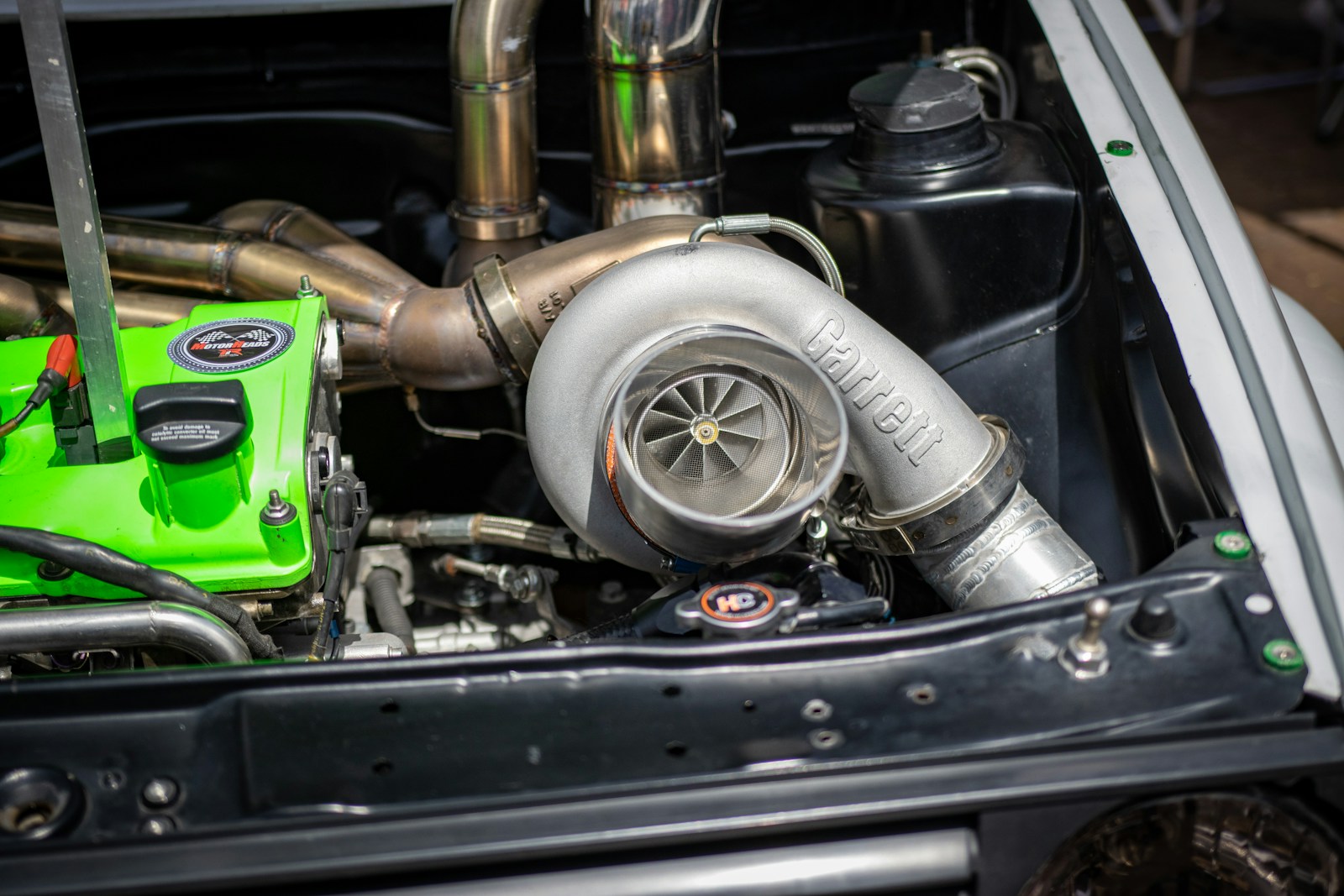

He’d been on the interstate long enough for the whole rig to feel like one machine: heavy-duty diesel humming, 5th wheel tracking straight, cruise set just under the “please don’t notice me” speed. The kind of tow where you can almost forget you’re dragging a small apartment behind you, because the truck is built for it and the day is cooperating.
Then the sound changed. Not a gentle “something’s off” change either—more like the turbo decided it had one last opera note in it. A rising spool that turned sharp and angry, a scream that made him tighten both hands on the wheel, and then… nothing. Not quiet, exactly, but that dead, hollow silence where boost used to be.
He didn’t get a dramatic bang or a plume of smoke in the mirror, just an immediate feeling that the truck had turned into a naturally aspirated brick. The 5th wheel didn’t care, of course. Gravity and momentum kept the whole train rolling while the driver’s brain did the math: uphill ahead, traffic around him, and a diesel that suddenly felt like it was trying to breathe through a straw.
The Tow That Started Like Any Other
Earlier that morning, the owner had done the stuff people swear they do: checked tire pressures, looked for anything dangling, eyeballed the hitch, listened for odd noises. He wasn’t new to towing, and he wasn’t the guy doing 85 in the left lane with a trailer swaying like a drunk shopping cart. This was supposed to be a boring, competent haul—get on the highway, knock out miles, stop for fuel, repeat.
The truck itself was the kind people brag about in parking lots: big torque, big cooling stack, big confidence. It had some miles, sure, but it was maintained, and it had pulled the 5th wheel plenty of times before. If anything, he’d been feeling smug about how stable everything felt, like he’d finally dialed in the perfect setup.
That’s what made the change so jarring. When something breaks on a tow rig, it isn’t just mechanical—it’s instantly personal. It’s your vacation, your schedule, your money, and a couple tons of trailer behind you all getting held hostage by a noise you can’t un-hear.
The Scream, the Silence, and the Panic Check
When the turbo screamed, his first thought was overspeed. Not the “I’m going a little fast” kind, but the “the compressor wheel is doing something it was never meant to do” kind. He lifted off the throttle hard, because instinct says stop feeding it, and the engine response was immediate—flat, weak, wrong.
He glanced at the gauges like they might explain what his ears already knew. Boost dropped to nothing and stayed there, EGTs did their own weird dance, and the truck started losing speed in a way that made the 5th wheel feel heavier by the second. The traffic around him didn’t care about any of that; people kept flowing past like he was just another slow rig they needed to get around.
He eased on the hazards and started hunting for a safe way out. Shoulders on interstates are never as wide as you remember, and towing makes every lane change feel like you’re asking permission from physics. By the time he got over, the engine sounded like it was working hard just to idle cleanly, and every little vibration felt like it could be “the big one.”
On the Shoulder, It Didn’t Look That Bad
From the outside, it was almost insulting. No oil geyser, no shredded belt hanging like a vine, no dramatic puddle forming under the front bumper. The 5th wheel sat there obediently, the truck’s hood line looked normal, and if you didn’t know what to listen for, you might’ve assumed he was just taking a phone call.
He popped the hood anyway, because that’s what you do when you’re trying to wrestle control back from a situation. The engine bay had that hot-metal smell you get after long pulls, but nothing screamed “catastrophe” at first glance. No obvious boost leaks, no hose completely off, no intercooler pipe dangling like a broken arm.
The problem was that the turbo wasn’t going to announce itself with a neon sign. You don’t see a shattered compressor wheel from ten feet away. You see clues: a little oil mist where it doesn’t belong, a coupler that looks like it coughed, a faint metallic glitter that makes your stomach drop once you notice it.
The Tear-Down Reveal: Aluminum Everywhere
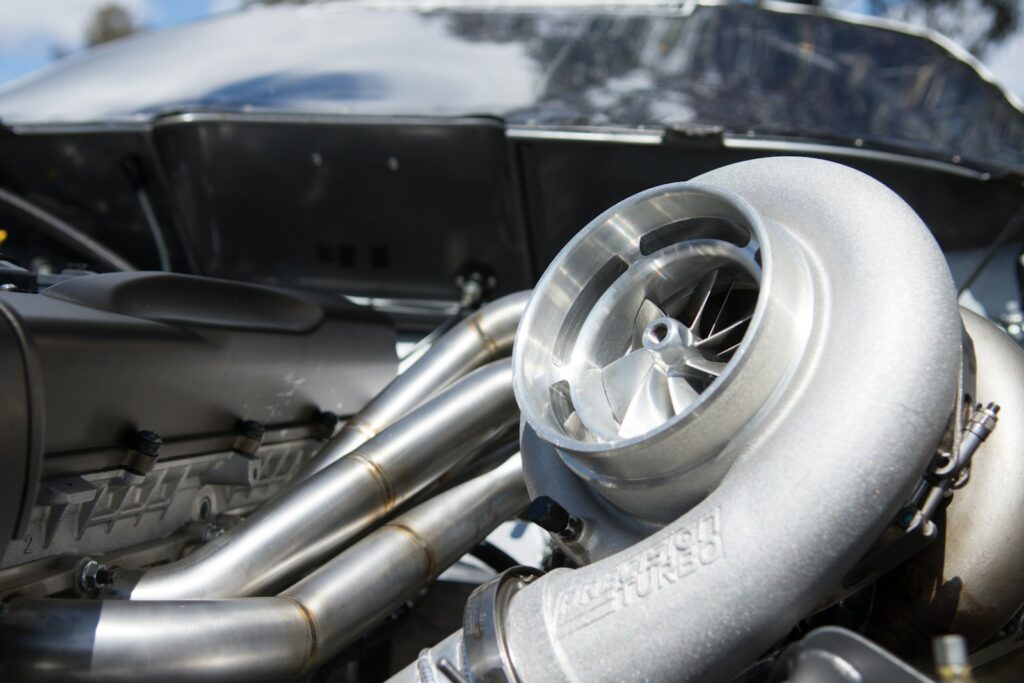
Once he got the truck to a shop—slow, careful miles or a tow depending on how brave he was feeling—the real story came out. The turbo’s compressor wheel had shattered, not cracked politely or chipped a corner, but fragmented. The kind of failure that turns a precision part into confetti at high RPM.
And because the turbo lives upstream of the charge air plumbing, those fragments didn’t just stay put. They went on a trip. Aluminum pieces got shoved out into the intercooler path, peppering the intercooler fins and collecting in places you can’t see until you start pulling boots and pipes off like you’re disarming a bomb.
The shop guys did that slow, careful mechanic thing where they don’t say much at first, just lay parts out and let the evidence do the talking. One of them held a section of piping at an angle so the light caught it, and there it was: metallic dust and tiny bright flecks like someone had shaken a glitter bottle inside the charge tube. That’s when it stopped being “a turbo” and became “a system full of shrapnel.”
The intercooler looked okay from the outside, but inside it had taken the hit. Even if the engine hadn’t ingested anything yet, it was now a question of what made it through, what got caught, and what would get sucked in later if they didn’t clean it perfectly. The owner’s face did that thing where someone is trying to stay calm while mentally spending money they don’t have.
The Messy Part: Who’s Responsible and What “Should’ve” Happened
Here’s where it got tense in a way only truck problems can. The owner had receipts—recent service, inspections, the kind of paper trail people keep when they’ve been burned before. He wasn’t trying to blame the world, but he also wasn’t interested in eating a multi-thousand-dollar failure without asking why a compressor wheel turned into a blender mid-tow.
Depending on the truck, there are a dozen directions the argument can go: Was it a worn bearing that finally let go? Overspeed from a boost leak or a stuck vane? Foreign object damage? A tuning issue? He knew enough to ask pointed questions, which can be great for clarity and terrible for shop vibes if anyone hears it as an accusation.
The shop didn’t promise a clean answer. They talked about possibilities and the need to inspect everything downstream—intake manifold, sensors, maybe even a borescope into the cylinders if there were signs it swallowed metal. The owner heard all of it, but what stuck was the uncertainty. He wanted a single smoking gun he could point at, a clear “this caused that,” and instead he got a list of maybes.
Meanwhile, the trip was dead in the water. The 5th wheel was either sitting in a lot like an abandoned suitcase or being shuffled around to keep it out of the way. If he had family with him, they were now doing that strained teamwork where everyone’s trying not to snap while hungry, tired, and stuck somewhere they didn’t plan to be. If he was alone, it was worse in a different way—hours of silence where you can only refresh your banking app and stare at the ceiling of a cheap motel.
By the time the turbo failure was fully understood—compressor wheel shattered, aluminum through the intercooler—the problem wasn’t just replacing a part. It was the question hanging over everything: how much damage had already been done, and how much was still hiding in places they hadn’t opened yet. The truck might run again with a new turbo, but that’s not the same as trusting it to tow your whole life down the interstate, listening for the next scream that might end in silence.
More from Steel Horse Rides: