
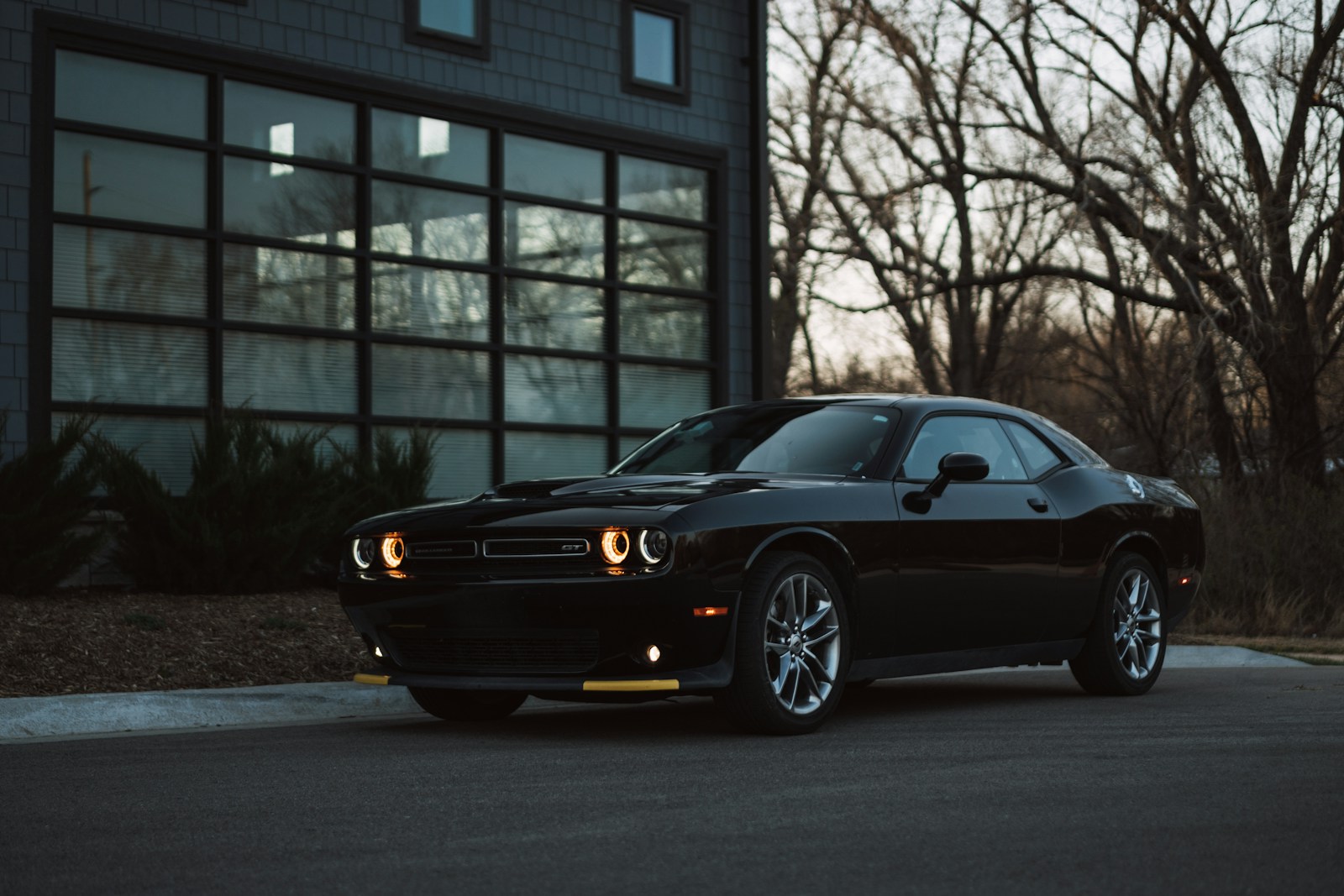

Dodge’s own numbers for the Challenger SRT Demon 170 read like a typo the first time you see them: 8.91 seconds in the quarter mile at 151.17 mph, and 0 to 60 in 1.66 seconds. Stellantis’s own press materials describe it as the world’s most powerful muscle car, and Dodge has called it the first factory production car to break nine seconds in the quarter mile. What most people don’t clock until they’ve already signed the paperwork is that hitting any of those numbers depends on a fuel most owners have never put in a car before.
The number that made NHRA send a letter
An 8.91-second quarter mile isn’t just fast for a factory car, it’s fast enough to trip a real regulatory threshold. NHRA rules generally require a certified roll cage once a car dips below the 9.99-second mark in sanctioned competition, a line built for purpose-built race cars rather than showroom vehicles with airbags and back seats. Dodge’s own account of the record run confirms the car received a formal NHRA violation notice tied specifically to that sub-nine-second elapsed time, an unusual acknowledgment that a street car sold with a factory warranty had out-accelerated the assumptions built into drag racing’s own rulebook.

The fuel that unlocks the number
None of that performance shows up on the fuel most Demon 170 owners have been putting in cars their whole lives. According to Dodge’s own specifications, the supercharged 6.2-liter Hemi V8 makes its full 1,025 horsepower and 945 lb-ft of torque only on E85, a blend that needs to register above roughly 65 percent ethanol content before the engine’s control software allows peak output and displays a blue fuel-pump icon in the cluster. Drop below that threshold and the car automatically dials itself back rather than risk detonation on a fuel blend it wasn’t tuned for at full boost.
Run the same car on ordinary 91-octane pump gas, or any standard E10 blend most gas stations sell by default, and the numbers drop hard. Dodge’s own figures put E10 output at 900 horsepower and 810 lb-ft, a reduction of 125 horsepower from the E85 peak, enough to meaningfully change the elapsed time even if the car remains, by any conventional measure, absurdly quick. The instrument cluster shows a white icon rather than blue when the ethanol content falls short, a small dashboard cue that tells the driver, in real time, which version of the car they’re actually piloting that day.
The car’s rarity adds another layer most buyers weigh alongside the fuel question. Dodge capped Demon 170 production at 3,000 units for the U.S. and 300 for Canada, with every car required to finish assembly by the end of 2023 as the automaker wound down V8 Challenger production entirely. At an as-tested price north of $100,000 once the destination charge and a $2,100 gas-guzzler tax were added in, buyers were paying a premium for a specific, numbers-backed performance claim, one that only fully materializes with the right fuel in the tank.
Living with a car that has two personalities
E85 isn’t sold at every corner station the way regular unleaded is, which means owners who bought the Demon 170 expecting to casually chase its headline numbers on a Tuesday commute often discover the nearest E85 pump is a planned errand rather than a given. Dodge built the fuel-detection system specifically so the car wouldn’t damage itself running the wrong blend, a sensible engineering choice that also means the advertised record run isn’t the car’s default behavior. It’s the car’s best behavior, available on demand to anyone willing to track down the right pump first.
That two-tier performance profile is unusual even by modern muscle car standards, where most factory horsepower claims hold regardless of what’s in the tank. The Demon 170 was Dodge’s farewell to the naturally-aspirated-turned-supercharged V8 Challenger before the nameplate moved toward electrification, and the automaker built its last word on the format around a genuinely record-setting run that most buyers will only see a handful of times, on a fuel they’ll need to seek out deliberately rather than one that happens to already be in the tank.
None of that undercuts the underlying claim. Even the reduced, pump-gas version of the car, a 900-horsepower Challenger, remains one of the quickest factory-warrantied vehicles sold in America regardless of what’s in the tank on a given day. The record quarter mile is real, it was certified, and it belongs to a production car buyers could walk into a dealership and order. It just isn’t the number every Demon 170 owner sees on a random Tuesday commute run on whatever fuel happened to be closest.
What makes the Demon 170’s case unusual isn’t that a car needs premium fuel to perform, which is common enough across modern high-output engines. It’s the size of the gap between the two states and how directly Dodge chose to expose it to the driver, rather than quietly detuning in the background the way most manufacturers handle octane sensitivity. The blue-versus-white icon in the cluster turns a fuel receipt into a performance disclosure, telling the driver exactly which version of the record-setting car they’re currently sitting in.