
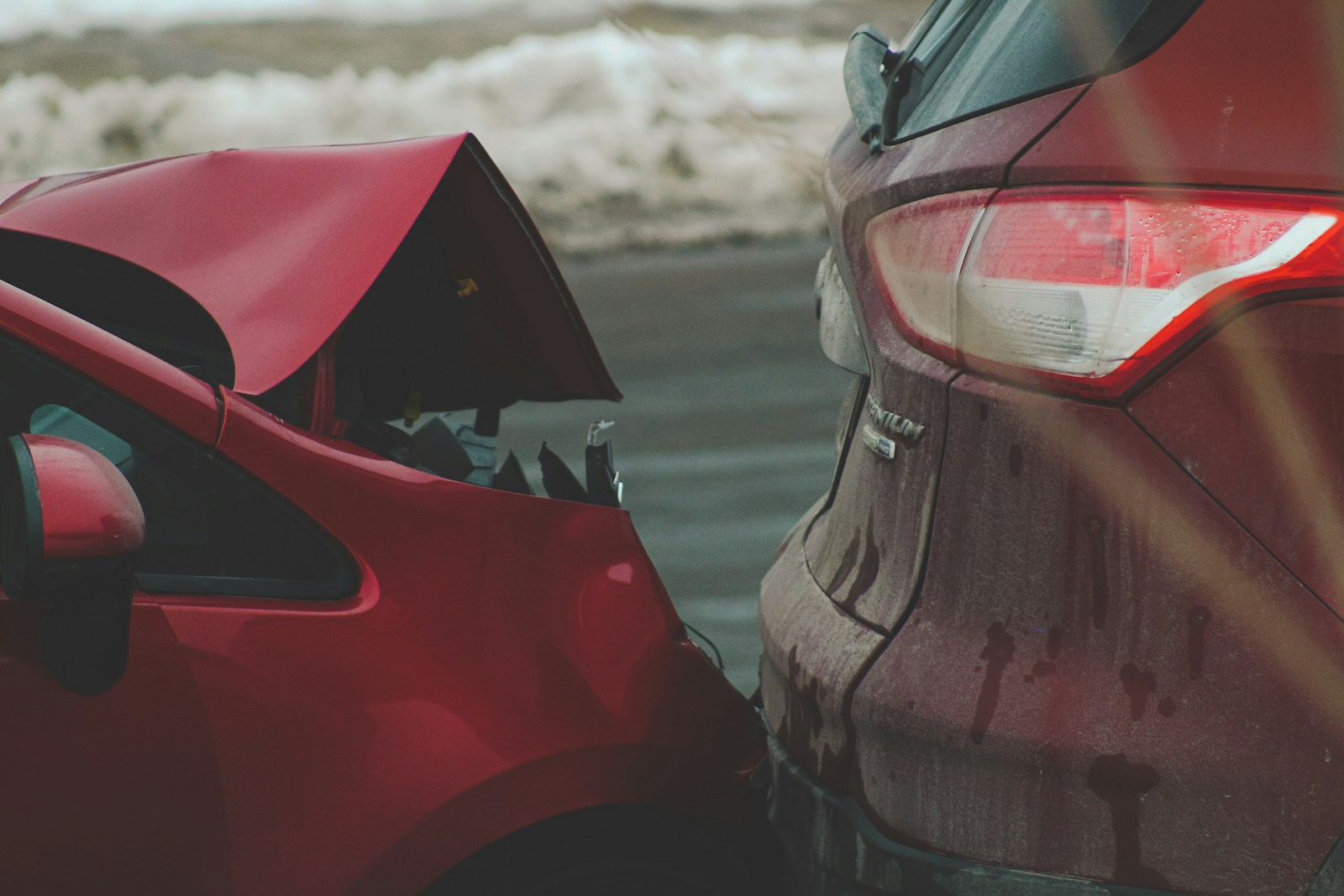

He was doing the most boring kind of driving: weekday errands, radio low, nothing on his mind except getting through a few lights and back home. The road was the usual mix of delivery vans, impatient commuters, and people creeping up on crosswalks like they’re negotiating with the paint. When he rolled up behind a silver SUV at a red light, he left a normal gap—enough space to see the tires, not enough to invite someone to cut in.
The light had been red long enough that everyone had settled into that dead, quiet pause where you’re not even watching the signal anymore. His foot was on the brake, his car still, and the dashcam was doing its silent little job like it always did. Then the SUV’s reverse lights blinked on, and for a split second his brain tried to come up with a reason that made sense.
There wasn’t one. The SUV rolled backward like the driver had just decided, casually, to undo the last ten feet of their life—and tapped right into his front bumper. It wasn’t a huge crunch, more like a firm shove, but it was enough to jolt him and make his stomach drop. The kind of moment where you’re immediately annoyed, then immediately worried you’ll somehow be blamed anyway.
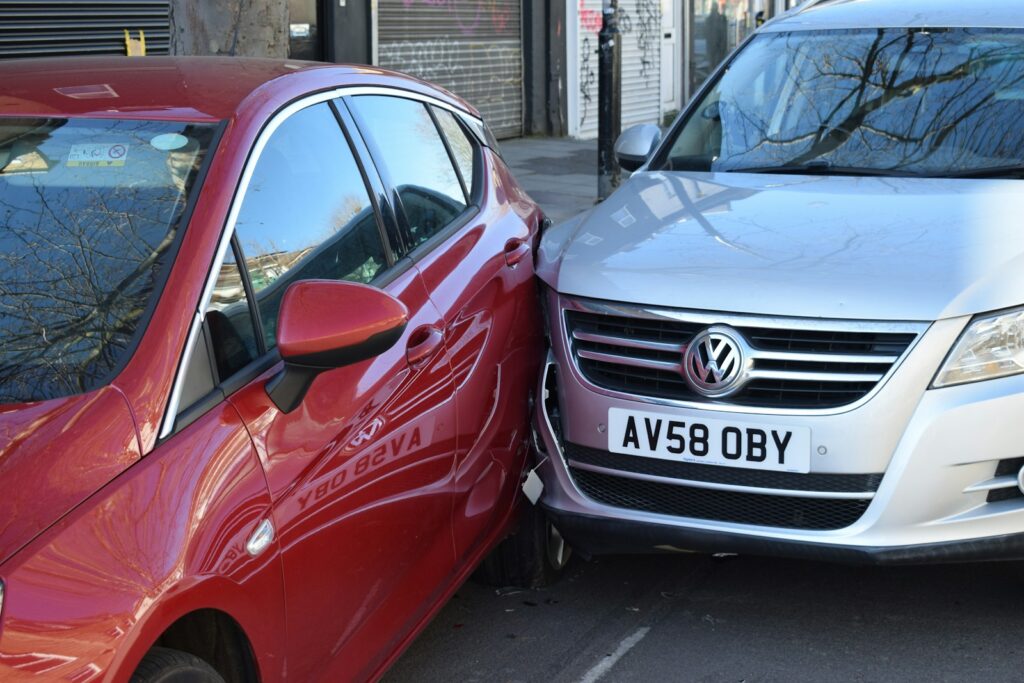
The weirdest “sorry” he’s ever heard
They both pulled into a nearby gas station lot, because that’s what people do when they don’t want to block traffic and get honked into another dimension. The guy in the SUV got out fast, shoulders tight, already gesturing like he was narrating a completely different incident. He walked straight to the front of the other car, looked at the bumper, and made a face like he’d just discovered betrayal.
The driver who got hit tried to keep it calm. He asked the obvious question—“Why were you reversing?”—and the SUV driver answered with the kind of shrug that wasn’t really a shrug. Something about “I thought I had room,” and “You were too close,” said with that tone people use when they’re trying to make their mistake sound like a shared project.
It got awkward fast, because the damage didn’t match the story the SUV driver was drifting toward. The SUV’s rear bumper had a scuff, and the other car’s front license plate bracket had a crack, but nothing screamed catastrophic. Still, the SUV driver kept circling his own car like he expected hidden damage to reveal itself if he stared hard enough, and every few seconds he’d glance up with this look that said, Are you going to admit it yet?
They exchanged insurance information, because you do that even when the other person is acting like they’re trying to workshop an alternate reality. The dashcam driver mentioned—casually, not as a threat—that the incident was on video. The SUV driver’s eyes flicked for a moment, just long enough for the dashcam driver to clock it, and then the guy recovered and started talking louder about “following too close” like volume could rewrite physics.
When the insurance call doesn’t go the way you expect
At first, it seemed like a routine claim. The dashcam driver filed his report, sent photos, and figured the footage would make it a non-issue. He had that almost smug relief people get when they know they’ve got receipts—because in traffic disputes, being right doesn’t always help, but having proof usually does.
Then the insurer called back with questions that made his eyebrows climb. They asked whether he’d “rolled forward,” whether he’d “tapped the SUV first,” and whether he’d been “distracted.” The rep wasn’t accusing him outright, but the script had that subtle shape: someone else had described a different crash, and now he was being fitted into it.
He sent the dashcam clip in full, not just the impact. The video showed the red light, his stationary hood line, the SUV’s reverse lights popping on, and the SUV drifting backward into him like it was no big deal. There was even a clear moment where the SUV paused after contact, as if the driver was deciding whether to pretend nothing happened, before finally pulling forward again.
That should’ve been the end. Instead, it became the start of the part where things stop feeling like an accident and start feeling like a plan.
The lawsuit shows up like an unwanted subscription
A few weeks later, the dashcam driver got the kind of envelope that makes your chest go hot before you even open it. Legal-looking, heavy paper, his name printed in a way that felt too official for something this dumb. The SUV driver was suing him—claiming injuries, claiming vehicle damage, claiming he’d been rear-ended while stopped.
It wasn’t just a “pay for my bumper” situation. The paperwork leaned into the dramatic stuff: neck pain, missed work, ongoing treatment. The sort of language that makes you picture a clipboard and a chiropractor’s office and someone saying “on a scale of one to ten” with a sympathetic nod.
The dashcam driver read it twice, mostly because his brain kept rejecting the premise. He wasn’t even the one who moved. He was stopped at a red light, minding his own business, and the other guy backed into him—slowly, deliberately, with the reverse lights on like a neon sign.
He called his insurance again, and now the conversation had that clipped seriousness that comes with the word “lawsuit.” They told him not to respond directly, to forward everything, to let their legal team handle it. He asked the question everyone asks in that moment: “But… you saw the video, right?” The answer was yes, but the tone wasn’t relief—it was preparation.
How a simple clip turns into the whole case
The dashcam footage suddenly mattered in a way it hadn’t when it was just a scuffed bumper and a tense conversation in a gas station lot. His insurer’s attorney wanted the original file, not a screen recording, not a trimmed version. They asked about the timestamp, whether the camera had GPS, whether it had been edited, and whether he had any other angles.
He handed over everything he had: the raw file, the metadata, the photos he took afterward, and even the tiny detail that the SUV driver’s reverse lights had been on for a full beat before the car moved. He wrote a statement describing the light, the stop, the reverse motion, and the way the other driver acted afterward—more defensive than confused, more insistent than apologetic.
And because lawsuits are rarely satisfied with one neat piece of reality, the SUV driver’s side pushed back. They floated the idea that the dashcam driver had “closed the gap” and caused the contact, as if his stopped car had somehow lunged forward into the SUV’s retreating bumper. They hinted at “camera distortion,” the classic move where a wide-angle lens becomes a magical excuse for why the video shows the opposite of what they’re claiming.
But the clip wasn’t ambiguous. The hood line didn’t shift. The SUV’s movement was smooth and backward. The red light was visible, and the cross traffic in the distance kept flowing, which meant there was no reason for anyone to be reversing in the first place.
The uncomfortable part: why would someone do that?
Once you accept that the video shows what it shows, the only question left is the one that makes everyone uneasy. Was the SUV driver just panicking and too proud to admit they messed up? Or was this one of those deliberate “swoop and squat” style scams people talk about—only sloppier, because who reverses at a red light with their reverse lights blazing like a warning label?
The dashcam driver couldn’t stop replaying the moment in his head, not just the impact but the body language afterward. The way the guy immediately went into blame mode, the way he kept talking about following distance, the way his eyes darted when the dashcam got mentioned. It didn’t feel like someone embarrassed by a mistake; it felt like someone trying to set a stage.
And now, instead of a minor insurance claim, he was stuck in the slow churn of legal procedure. Phone calls he couldn’t miss, forms that asked the same questions three different ways, and that constant, low-grade anger that comes from being accused of something you didn’t do. Even with the footage, he still had to spend time proving he wasn’t lying.
That’s the part that stuck with him—the mismatch between how simple the incident was and how heavy it became once someone decided to escalate. A red light, a reverse gear, a little bump. And then weeks of paperwork, legal language, and the lingering feeling that if he hadn’t spent money on a dashcam, he’d be staring at the same lawsuit with nothing but his word against someone else’s story.
The case didn’t end with a satisfying cinematic mic-drop, at least not right away. It turned into a waiting game, where the dashcam driver kept driving past the same intersection and feeling his jaw tighten every time he saw brake lights stack up. The most unsettling part wasn’t the damage or even the lawsuit—it was realizing how casually one stranger could try to hand him a fake version of events, and how much work it took just to drag the truth back into the room.
More from Steel Horse Rides: