
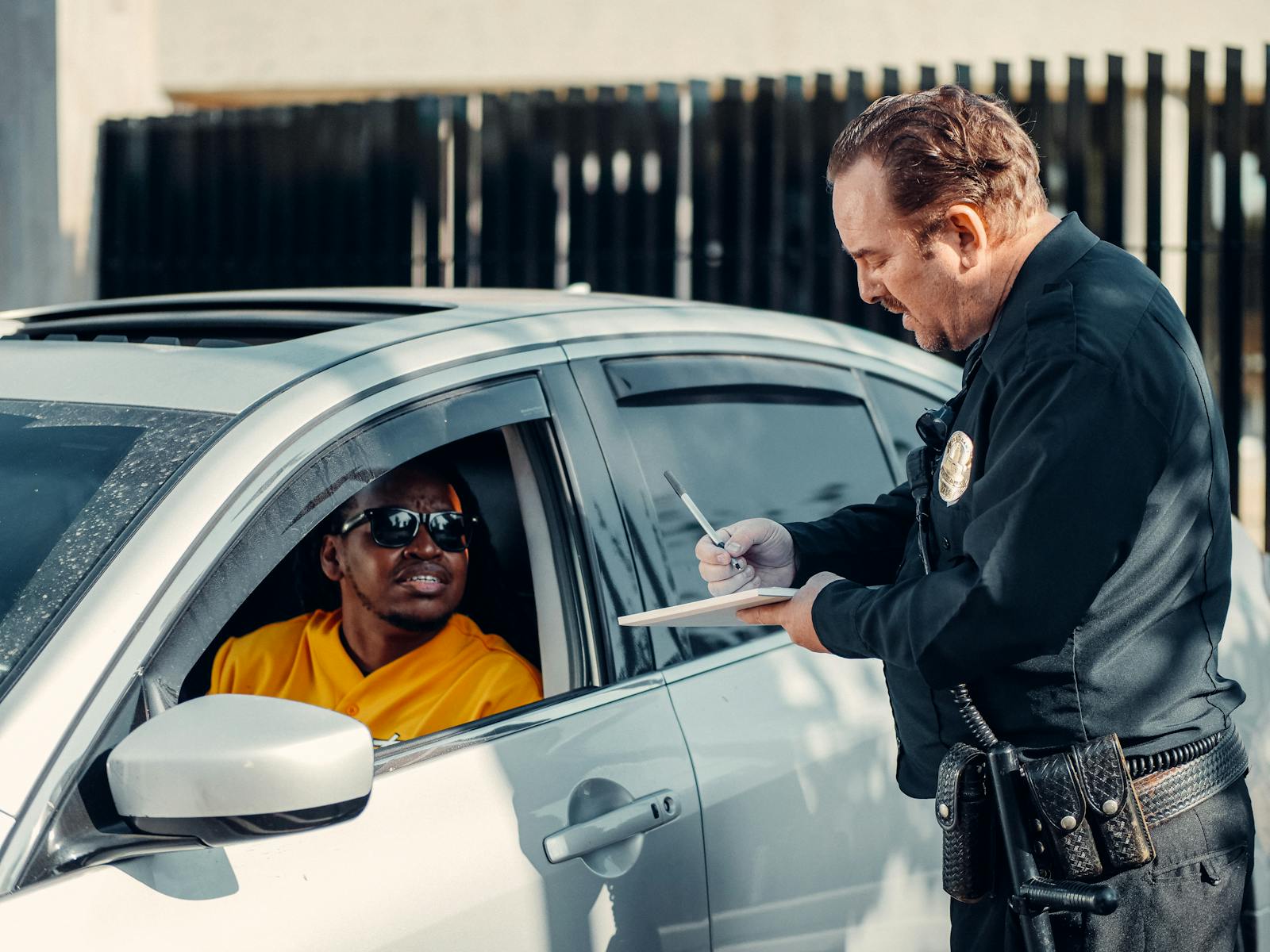

He wasn’t speeding, wasn’t swerving, wasn’t doing anything that screams “pull me over.” He was just driving home in a late-model sedan with dark window tint—dark enough that you could tell it was tinted, but not “rolling around in a private nightclub” dark. Still, the lights popped on behind him as he merged into the right lane, and the whole vibe of the night immediately shifted.
At first, it felt like one of those stops you can predict down to the punctuation. The officer walked up slow, flashlight angled into the cabin even though it wasn’t that late, and opened with the classic: tint’s too dark, license and registration. The driver did the routine—hands visible, documents ready, polite voice—because he knew this sort of thing can go sideways fast if you give an officer any reason to decide you’re “difficult.”
But then the officer stopped talking about the tint. Not gradually, not subtly, but like he’d flipped a mental switch. Suddenly the questions weren’t about windows at all, and the driver could feel the stop turning into something else—one of those “we’re just chatting” situations where every answer feels like a trap and every pause gets treated like guilt.
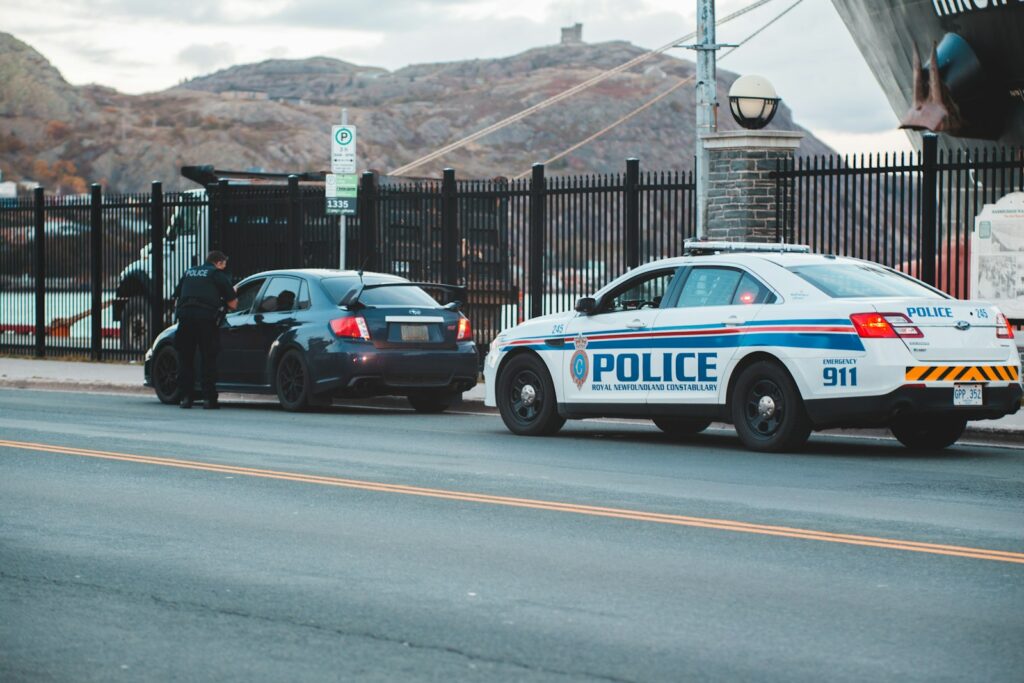
The tint spiel that lasted about thirty seconds
The officer started the stop with the expected script: the tint “looked illegal,” he “couldn’t see inside,” and it was “a safety thing.” He asked where the driver was coming from, and the driver gave a boring answer—work, then the grocery store, now home. The officer nodded like he was listening, but his eyes kept drifting past the driver’s shoulder, scanning the interior like he was searching for a reason to keep the conversation going.
The driver offered what most people do when they’re trying to be agreeable: he said the tint came with the car when he bought it and he’d be fine getting it checked. That should’ve been the off-ramp—either a warning, a ticket, or “fix it and have a good night.” Instead, the officer leaned in a fraction and asked if there was “anything in the vehicle” he should know about.
It’s one of those questions that always lands wrong because it’s so broad it’s basically a dare. The driver said no, nothing illegal, just normal stuff. The officer didn’t move on; he just let a silence hang there long enough to make it feel like the wrong answer.
Small talk that didn’t feel small
Then came the questions that weren’t questions, more like suggestions the driver was supposed to confirm. Had he been drinking tonight? Was he coming from a bar? Did he have any weapons in the car? The driver kept his tone even and said no, no, and no again, trying not to sound annoyed and trying not to sound too eager either.
The officer asked where he lived, then asked again like he didn’t believe the first answer. He asked if the car was in the driver’s name, and when the driver said yes, the officer wanted to know why the registration address didn’t match the driver’s current address. The driver explained he’d moved recently and hadn’t updated it yet, which was true—and also the kind of minor mismatch that can turn into an all-night ordeal if the officer decides it’s “suspicious.”
The flashlight beam kept moving, lingering on the center console, the passenger seat, the back floorboard, like he expected contraband to materialize out of awkwardness. The driver could feel himself getting hyper-aware of every object: a phone charger, a hoodie, a half-empty water bottle. Ordinary clutter suddenly felt incriminating just because it was being examined like evidence.
The “mind if I take a look?” pivot
After running the license, the officer came back with the kind of energy that suggests he hadn’t found what he wanted, but he also wasn’t ready to let the stop end. He mentioned the tint again—briefly—then immediately pivoted to, “You don’t have anything illegal, so you won’t mind if I take a look, right?” It was phrased like a friendly request, but it didn’t sound optional.
The driver hesitated, because he knew the rules in the fuzzy way most people do: you can say no, but saying no can make things worse in the moment. He asked, carefully, if there was a reason for a search since the stop was for tint. The officer’s expression shifted—still calm, but sharper—and he said he was “just trying to make sure everything’s okay,” like the driver’s question was a personal insult.
That’s when the stop got that tense, suspended feeling where nobody is yelling, but everything is loaded. The driver said he didn’t consent to a search. The officer didn’t argue directly; he just nodded slowly and took a step back, like he’d been waiting for that response.
Dragging it out until something gives
Instead of writing the tint ticket or giving a warning, the officer started stretching time. He asked the driver to step out, then stand near the rear of the car, then asked him again about weapons and drugs as if repetition might shake loose a confession. The driver stayed polite but tight-lipped, answering in short sentences and watching the officer’s hands.
Now the officer was making radio calls that sounded performative—calling for a second unit, talking about “continuing the investigation,” using vague language that made it sound like there was more going on than a tint violation. The driver asked if he was being detained or if he was free to go. The officer didn’t answer cleanly; he said something like, “Just hang tight,” which is the kind of phrase that can mean ten minutes or two hours.
When the second officer arrived, the dynamic shifted again. Two sets of eyes on one person, two uniforms standing at slight angles like they’d practiced it. One of them chatted in that overly casual voice—where you headed next, what do you do for work—while the other kept circling the car, peering through the dark windows like tint itself was probable cause.
The driver kept trying to bring it back to the original reason for the stop. “Is this about the tint? Because I can get it checked tomorrow.” The first officer’s response wasn’t “yes” or “no”; it was a shrug and another question: “You sure you don’t have anything you want to tell us about before this gets more complicated?”
The tint becomes an excuse, not a reason
At some point the officer produced a little tint meter, but it felt like theater. He took a reading, frowned, and declared it was over the legal limit. The driver didn’t argue the number; he just said okay, write the ticket. The officer didn’t write the ticket immediately, though, which is what made the whole thing feel less like enforcement and more like leverage.
The conversation kept sliding back into fishing. Who else drives the car? Has anyone borrowed it? Does he have “anything in the trunk” that might surprise them? The driver said no, no, and no, and you could practically hear the officer getting frustrated that he wasn’t providing an easy hook—no weed smell, no open containers, no outstanding warrant, no nervous babbling confession.
Then the officer tried a different angle: implied consequences. If the driver just cooperated, this could be “quick.” If he didn’t, they could “call a dog.” The driver asked if they had reasonable suspicion to do that or if it was just because he wouldn’t consent. The officer didn’t answer directly, again, and that non-answer said more than any threat.
Eventually—after enough awkward standing around for it to feel punitive—the officer handed him a citation for tint and a warning for the address mismatch. No contraband magically appeared, no secret crime unraveled, and the driver was finally told he could leave. But the way it ended wasn’t relief; it was that sour feeling of having been messed with and having no clean way to prove it.
Driving away, the driver kept replaying the stop in his head like a loop he couldn’t shut off. The tint was real, sure, and maybe it was technically too dark, but that wasn’t what the stop became. What stuck with him was how quickly a simple equipment violation turned into a prolonged attempt to find something—anything—else, and how powerless it felt to watch the goalposts move while being told, over and over, to “hang tight.”
More from Steel Horse Rides: