
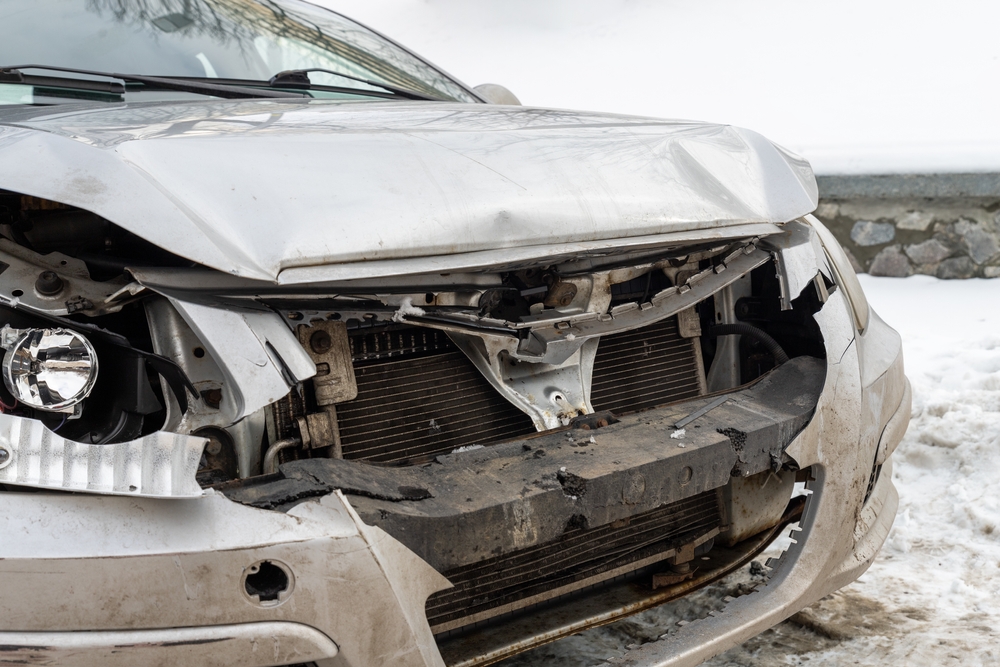

It started the way a thousand boring parking-lot accidents start: a slow roll, a little crunch, and that immediate sinking feeling when you realize you’re about to lose an hour of your life exchanging info with a stranger. The driver in this story—let’s call him Marco—was pulling out of a crowded strip-mall lot on a gray weekday afternoon, already running late and already annoyed. He felt the light tap before he even saw the other car: the softest, most dismissible contact, like someone bumping a shopping cart into your ankle.
The other car was a faded silver sedan, angled weirdly as if it had been waiting for that exact moment to slide into his path. Marco got out expecting the normal ritual: “You okay? I’m okay. Let’s take pics.” Instead, the driver of the sedan, a man in his thirties with a spotless hoodie and an anxious smile, stepped out acting like he’d been rear-ended on the freeway at 60. He stared at the barely scuffed bumper, then at Marco, then back at the bumper like the damage might grow if he looked hard enough.
Marco hadn’t even pulled up his camera app yet when the first “witness” appeared—like a stagehand stepping into a scene at exactly the wrong time. A woman came speed-walking from between two parked cars, phone already in hand, and announced she “saw everything.” She said it with this practiced certainty that made Marco pause, because she definitely hadn’t been standing anywhere obvious a second earlier.
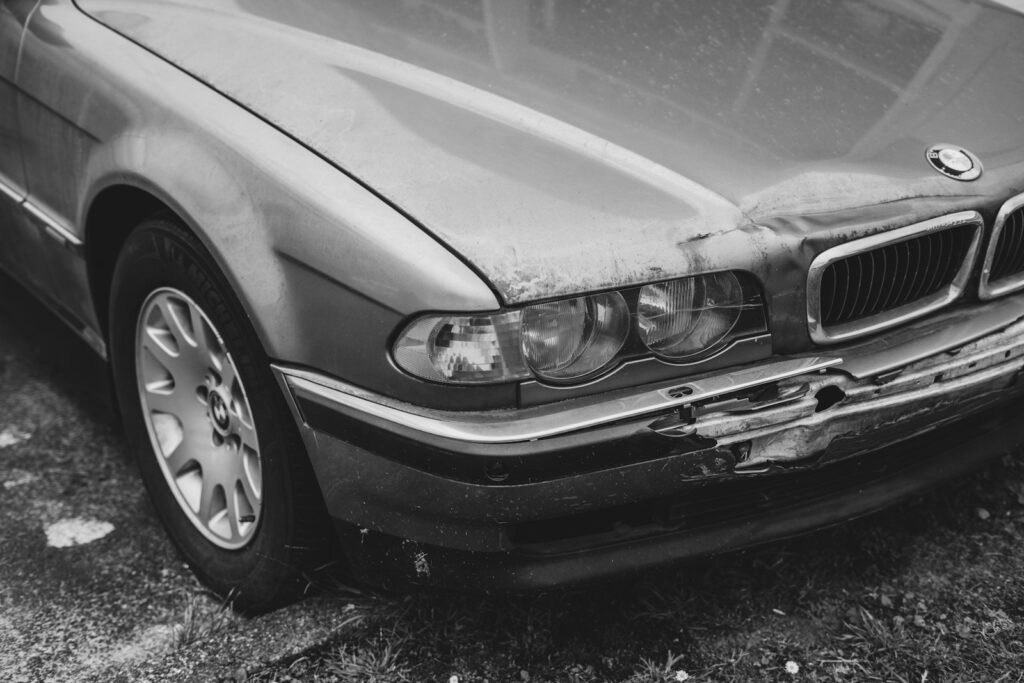
The tap that turned into a performance
Marco did what most people do: he stayed polite and tried to de-escalate. He asked if everyone was okay, pointed out it was low-speed, and offered to swap insurance info. The sedan driver kept nodding, but he wasn’t listening—he was scanning the lot, eyes flicking around like he was waiting for someone.
That’s when a second person drifted over, then a third, like they’d been summoned. One guy claimed he was in the car behind Marco and saw Marco “accelerate” into the sedan. The other, a woman with oversized sunglasses, said she’d been walking past and watched Marco “not even brake.” None of this matched reality, because Marco’s car was practically idling, and the point of impact was so minor the dust on the bumper wasn’t even disturbed evenly.
Marco tried to keep it straightforward: photos, insurance cards, driver’s license, done. The sedan driver—who introduced himself as Devin—kept pushing for something else. “Let’s not get insurance involved,” Devin said, then immediately pivoted to “Actually, my neck’s already feeling it,” while rubbing the side of his throat like he’d just remembered it existed.
Three witnesses, all too eager
The “witnesses” didn’t just offer statements; they hovered. They stood close enough to see Marco’s screen when he took pictures and close enough to hear his phone call when he rang his insurance. They kept repeating their names out loud, slowly, like Marco was supposed to be writing them down on a clipboard.
Marco asked the first woman where she’d been standing. She pointed vaguely toward the storefronts and said she was “right there,” which didn’t make sense given the angle and the parked SUVs blocking the view. When he asked the guy who claimed he was behind Marco what car he was driving, the guy answered with a make and model, but he couldn’t point to it. He just gestured toward the far end of the lot and said, “Over there somewhere.”
It wasn’t just the weirdness of three strangers volunteering to help Devin. It was the way they agreed too quickly, the way they spoke in tidy little sentences, and the way they seemed more invested in Marco admitting fault than in what actually happened. Marco felt the vibe shift from annoying to unsafe, like he’d walked into the middle of something and everyone else had the script.
So he did the one thing scammers hate: he slowed down and started documenting everything. He took wider shots showing the parking lines, the skid-free pavement, the lack of debris, and the fact that Devin’s car was angled as if it had edged out to block him. He photographed each person standing there, not in a confrontational way, just in a “for the record” way, and that’s when the second woman suddenly decided she didn’t want to be on camera.
The stories start sliding around
When Marco called the non-emergency police line to ask if an officer could come document the incident, Devin’s tone changed. A second ago, Devin was injured enough to talk about “whiplash.” Now he was irritated, saying it was “too much,” saying Marco was “making a big thing out of nothing.” The witnesses echoed it, telling Marco he was wasting everyone’s time.
Marco asked Devin directly: did Devin pull forward into Marco’s lane, or was Devin stationary? Devin said he was completely stopped. Then, not even five minutes later, when Marco asked again while recording notes on his phone, Devin said he was “creeping forward” because he “had the right of way.” Those are two different accidents, and Devin didn’t even seem to notice he’d switched versions.
The first witness—the one who arrived like she’d been waiting behind a curtain—also changed her story. At first, she said Marco hit Devin from behind. Later, she said Devin was “already halfway out” and Marco “cut the turn too sharp.” Marco didn’t argue; he just let her talk and watched her trip over details. She kept using the phrase “halfway out” like it was a key point she’d been told to include.
Meanwhile, the guy witness started giving Marco a full breakdown of “what insurance is going to do,” which is not something normal, random bystanders typically do. He advised Devin to “get checked out” and said words like “pain and suffering” in a parking lot, in broad daylight, with a straight face. Marco noticed Devin’s eyes flick to him whenever the guy said something like that, like Devin was taking cues.
The insurance setup becomes obvious
Devin then suggested they “just go to this clinic” nearby—he even named it, like it was a place he’d been before, like it was part of a routine. Marco didn’t react outwardly, but internally it clicked: this wasn’t about the bumper. This was about turning a tap into a claim, and turning a claim into a payout.
Marco asked for Devin’s insurance card. Devin handed it over, but he covered part of it with his thumb in a way that felt weirdly intentional. Marco asked him to hold it still for a photo, and Devin hesitated, then finally moved his thumb, revealing a policy number that looked like it had been rewritten with pen. It could’ve been innocent, but paired with everything else, it felt like one more little “huh.”
Then the third witness—the quietest one so far—finally spoke up and gave Marco her name. It sounded rehearsed, but what really threw Marco was when she offered her phone number and spelled her last name twice, slowly, like she was making sure he got it right. Marco typed it into his phone, then looked up and realized she wasn’t watching him; she was watching Devin, waiting for his reaction. Devin gave the tiniest nod, and she stepped back like she’d completed her assignment.
Marco asked a simple question: “Do you all know each other?” It wasn’t accusatory; it was almost curious. The immediate chorus of “No” was so fast and so perfectly timed it sounded like a group answering roll call, and the woman in sunglasses actually laughed—this quick, sharp laugh that didn’t match the situation at all.
When documentation becomes the whole fight
The longer Marco stayed calm, the more the group seemed to resent him for it. Devin began pushing for Marco to say “it was my fault,” explaining it would “make it easier.” The witnesses started adding pressure, telling Marco he’d “obviously” hit Devin and should “be a man” about it, which is a wild thing to say over a parking-lot scuff.
Marco didn’t bite. He told Devin he’d filed a claim, gave him the claim number, and said his insurer would contact him. That’s when Devin’s whole posture shifted from performatively injured to annoyed and transactional, like a customer realizing the store won’t take a return without a receipt.
When Marco mentioned he had a dashcam, the temperature dropped. It wasn’t dramatic—no one shouted—but you could feel the air change, like someone had opened a freezer. One of the witnesses immediately said dashcams “don’t show everything,” and Devin suddenly wanted to “just leave” and “handle it later.” The same guy who’d been preaching “pain and suffering” five minutes earlier started saying they should all “move on.”
They dispersed almost as quickly as they’d arrived. The witnesses peeled off in different directions, not toward cars Marco could identify, but into the flow of the strip mall like they were evaporating into errands. Devin lingered long enough to take one more photo of Marco’s plate—framed tight, deliberate—then got in his sedan and pulled away with zero hesitation, no neck rub, no wince, no limp.
Marco drove home with that jittery feeling you get after an argument you didn’t technically have, replaying every detail and wondering what, exactly, he’d just avoided. Over the next couple days, he got the expected calls: Devin reporting “injury,” Devin upgrading the story, Devin claiming Marco “came out of nowhere.” The part that stuck with Marco wasn’t even the claim—it was the choreography of it, the way three strangers materialized, the way the narrative kept slipping, and the way everyone got irritated the moment he started collecting facts.
Nothing wrapped up neatly. Marco’s insurer asked for the dashcam footage and the photos, and Devin’s side kept insisting there were witnesses, plural, who “confirmed” the bigger version of the accident. And Marco was left staring at the same tiny scuff in his own bumper, thinking about how a tap in a parking lot somehow came with three “witnesses,” two shifting stories, and the unmistakable feeling that if he’d been a little more flustered—or a little less careful—he’d have signed his name to someone else’s script.
More from Steel Horse Rides: