

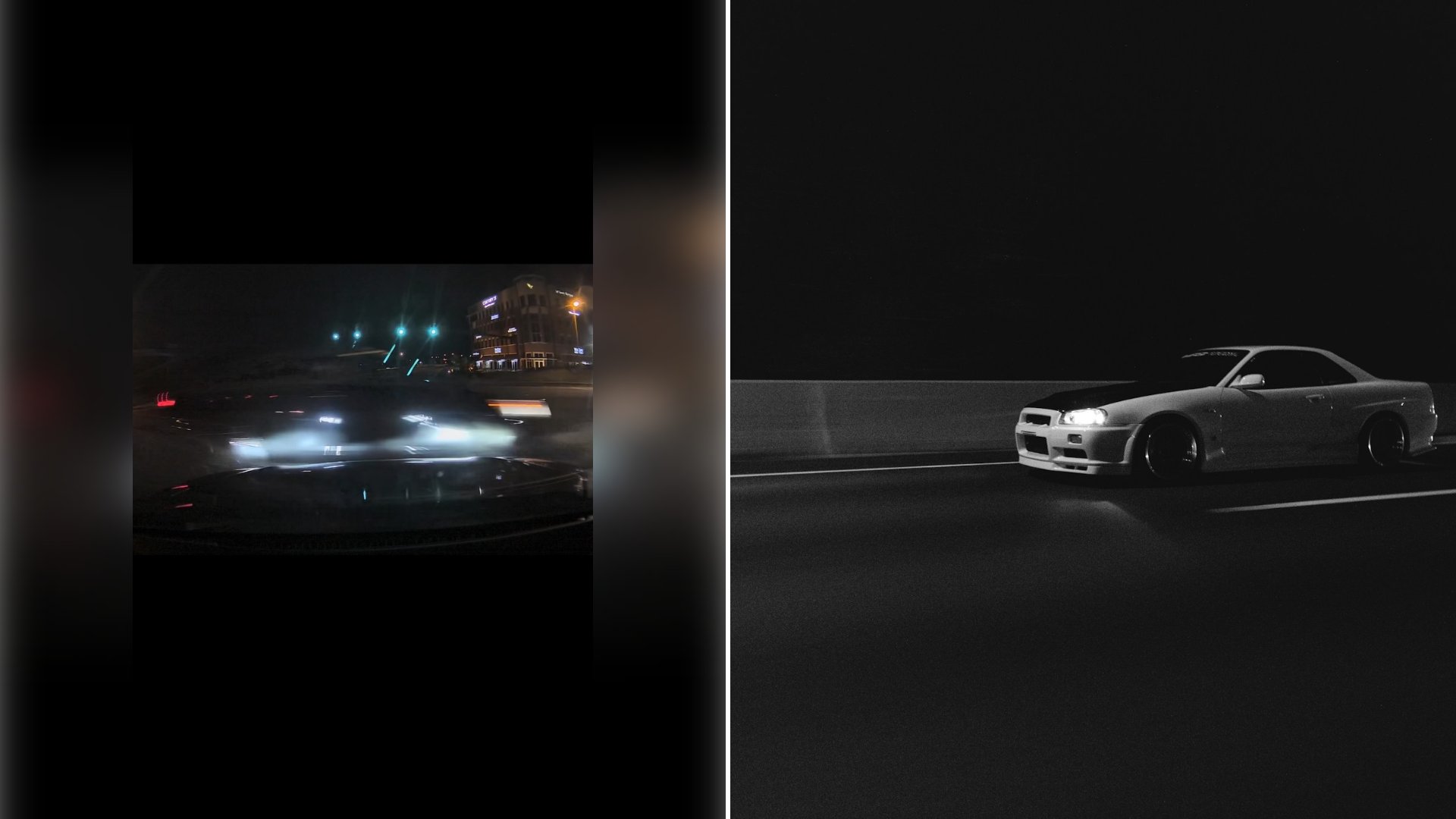
The caption on @evojuu‘s Instagram reel is short and wry: “Red light runner almost took me out.. almost missed out on GTA 6.” The hashtags underneath read #hondacivic, #crash and #dashcam. The reel runs about twenty seconds and, in that time, moves from a quiet night drive to the wreckage left at the roadside.
It opens on the dashcam view through the windshield. The road is dark, a few red tail lights glow ahead, and the lane markings pick up the headlights as the car rolls forward. Around the fourth second a crosswalk comes up, and the traffic signals beyond it show up as small teal and amber points of light against a building in the distance.
Then the picture changes in an instant. At the intersection a streak of white headlight sweeps across the frame from the side, a blur of light and motion crossing the path the dashcam car is taking. The clip then cuts away from the dashcam. The reel carries no on-screen text, so the caption is the creator’s account of what the footage shows: that another driver ran a red light.
What follows is phone footage shot after the fact, in the dark. The front of a dark sedan faces the camera at the roadside with its bumper cover torn away, loose pieces hanging from the nose and the grille area open. Then the camera moves to the rear passenger area through an open door. Red leather seats are visible, and a large piece of torn dark body material lies folded across the back seat with a green bag nearby. The final five seconds show only flashing red and blue lights far off down a road at night.
The creator does not say in the caption whether anyone was hurt, who was at fault in a legal sense, or what happened with the other driver. Those details are not in the reel, so they are not reported here. What the clip does show is the sequence a dashcam is meant to preserve: the approach, the crossing vehicle, and the condition of the car afterward.
The dashcam car is traveling straight with signals ahead of it, and the other vehicle arrives from the side, which is the pattern of a right angle intersection collision.
The scale of the problem is documented. The Federal Highway Administration’s red light camera resource page, which reports 2004 data, says more than 9,100 people died in intersection related crashes in the United States and that red light running caused as many as 854 of those deaths. The same page says about 1.5 million people were injured in intersection related crashes, with red light running responsible for more than 168,000 of those injuries. It also notes that roughly 40 percent of all crashes are intersection related. The figures are older, but they come from the federal agency responsible for the nation’s highways.
The same FHWA page describes how red light cameras work. A sensor in the pavement detects a vehicle that crosses it after the signal turns red, and the system takes two photos, one of the front of the vehicle entering the intersection and one of its rear while in the intersection. Officials review the photos, and a citation is mailed to the registered owner, who can contest it if someone else was driving. In a seven jurisdiction study the agency cites, cameras were associated with a 25 percent decrease in total right angle crashes and a 16 percent reduction in injury right angle crashes. The agency also reports that rear end crashes rose, by 15 percent in total and 24 percent for injury crashes, so the trade is not one sided.
For a driver, the footage points to a few practical habits. A dashcam only helps if it is recording and the clip is saved, so keep the original file rather than only a phone copy. Photograph all four sides of the car and the interior damage the way the creator did, and note which intersection and signal you were approaching.
More from Steel Horse Rides
- Driver Asks Did I Overreact Over Dashcam Footage of an Oncoming Silver Car Coming at Him Near the Center Line, Then Shows His Face Barely Moving the Entire Time
- One Porsche GT3 Owner Was Simply Driving Down the Highway When a Truck Suddenly Swerved Into His Lane, and What He Caught on His Own Dashcam Afterward Is Even Wilder Than the Impact Itself
- Driver Films His Hellcat Nose First Against an Interstate 20 Guardrail in Douglasville, Picks Up a Torn Piece of Trim From the Road and Says Nobody Was Hurt